Kimchi: The Korean Fermented Vegetable Staple at the Center of Modern Gut-Health Science
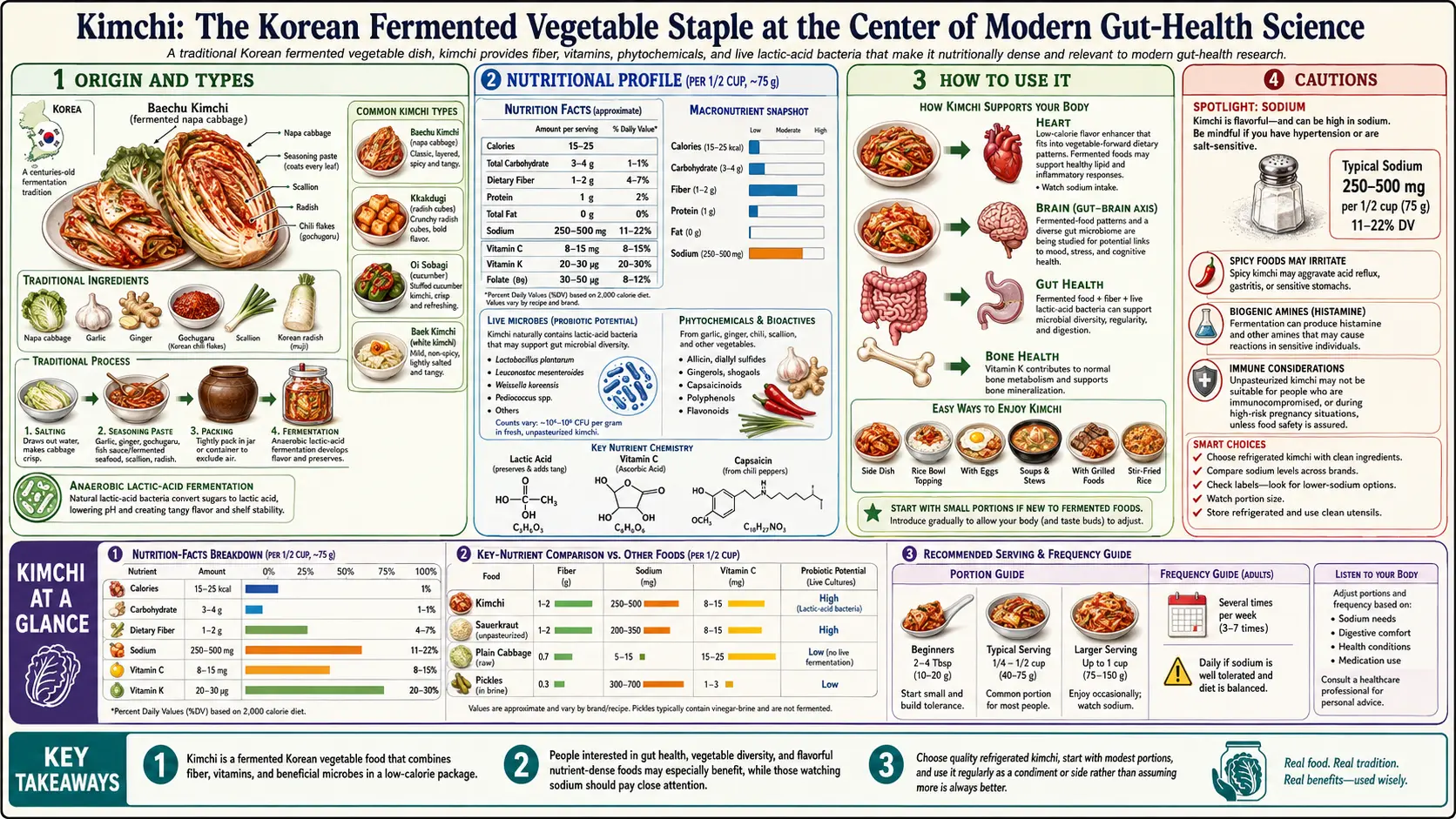
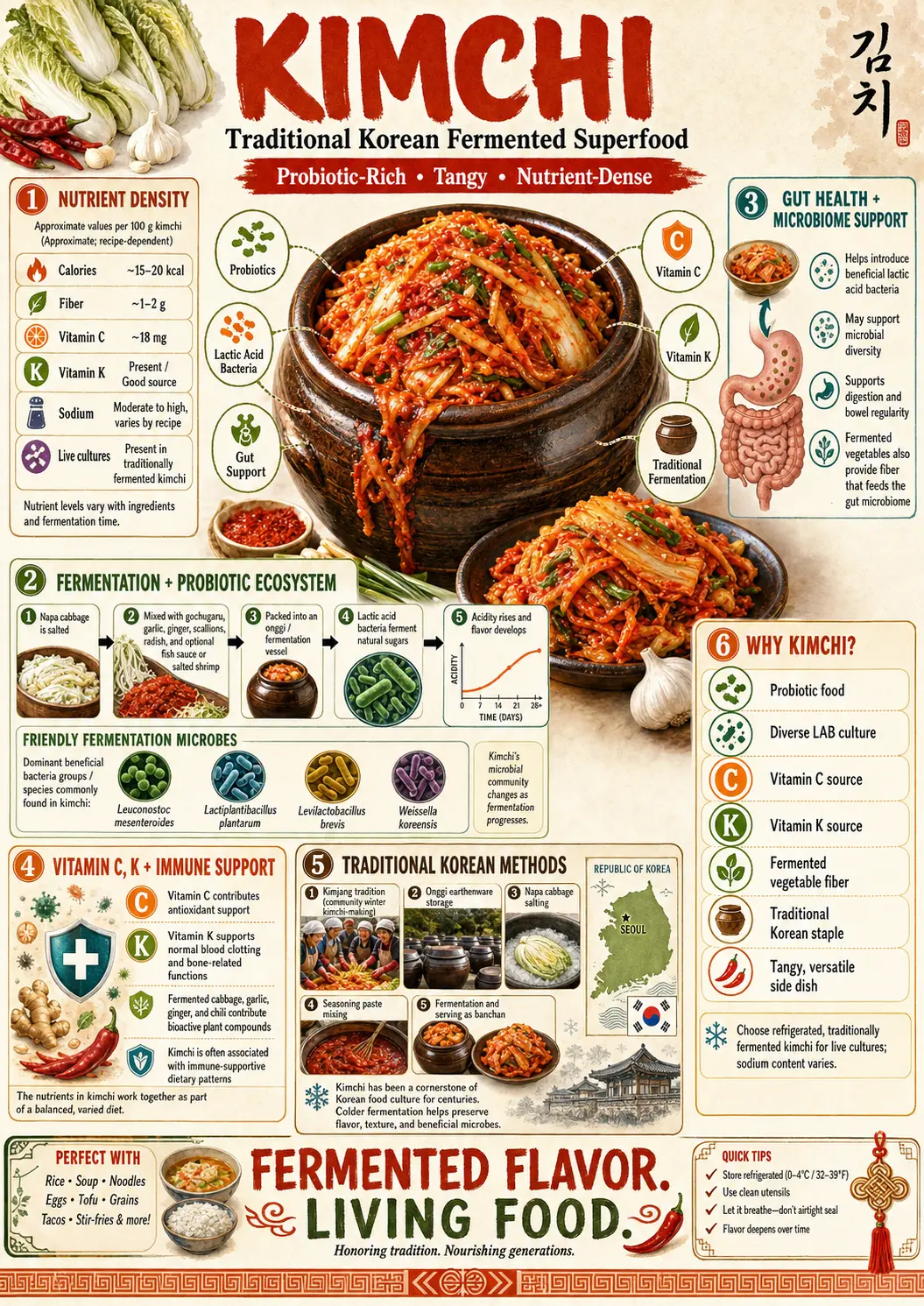
Kimchi is the collective name for Korean fermented vegetable dishes — most famously baechu-kimchi made from napa cabbage — typically spiced with Korean chili pepper (gochugaru), garlic, ginger, scallions, fish sauce or salted seafood, and sometimes apple or pear. Like many fermented foods kimchi has been consumed for centuries, but unlike many it has been the subject of vigorous modern scientific study thanks to the Korean government’s sustained investment in researching this national dish. The 2024 Stanford University trial led by Christopher Gardner showed that a diet high in fermented foods — kimchi, kefir, yogurt, sauerkraut, and kombucha — increased gut microbial diversity and decreased inflammatory cytokines, a finding that catapulted these foods into contemporary health discourse.
Table of Contents
- Origin and Types
- Fermentation Process
- Nutritional Profile
- Probiotic and Microbial Content
- Health Evidence
- How to Use It
- Making Kimchi at Home
- Cautions
- Connections
- Research Papers
- Featured Videos
Origin and Types
Kimchi began as a way to preserve vegetables — radishes first, later cabbages — through harsh Korean winters, a salted, soured tradition roughly two thousand years old; its now-iconic red chili is a New World latecomer that arrived only after the 16th century. More than 180 regional and seasonal varieties exist, from baechu-kimchi (napa cabbage) and kkakdugi (cubed radish) to baek-kimchi (“white” kimchi without chili). — the fuller story is told in the dedicated History article.
Fermentation Process
Kimchi fermentation proceeds through three overlapping microbial stages. Initially, Leuconostoc species dominate, producing carbon dioxide and mild acidity. As pH drops, Lactobacillus species — especially L. sakei, L. plantarum, and Weissella — take over. Fermentation continues slowly under refrigeration for weeks or months; well-aged kimchi has a deep sourness and is particularly suited to stews and fried rice. Optimal ferment time for probiotic content is 2–3 weeks at refrigerator temperature.
Nutritional Profile
A 100-gram serving of traditional baechu-kimchi provides:
- Calories: ~15
- Vitamin C: 20% DV
- Vitamin K1: 55% DV
- Folate, B6, iron, potassium
- Carotenoids from chili pepper, including capsaicin
- Allyl sulfides from garlic
- Gingerol from ginger
- Sodium: 500–1000 mg (varies widely)
Probiotic and Microbial Content
Fresh-fermented kimchi contains roughly 10 × 106 to 109 CFU per gram of lactic-acid bacteria, varying with age and storage. Commercial pasteurized kimchi has had the live cultures killed; look for refrigerated, unpasteurized kimchi for probiotic benefit. The diversity is comparable to the most complex commercial probiotic formulations and comes with the prebiotic fiber and polyphenols of the vegetable substrate.
Health Evidence
Published randomized and prospective studies of kimchi have shown:
- Reduced body fat and waist circumference in overweight adults consuming ~180 g/day.
- Improved markers of insulin resistance and blood sugar in prediabetic adults.
- Lower LDL and total cholesterol in metabolic-syndrome patients.
- Modest reductions in systolic blood pressure.
- Improved bowel regularity and reduced constipation.
- Increased gut microbial diversity and reduced circulating inflammatory cytokines, as in the Stanford Gardner trial.
- An interesting 2023 observational signal: people with the highest kimchi intake had roughly 11% lower risk of obesity in a large Korean cohort, with a dose-response relationship.
How to Use It
- As a side dish (banchan) with Korean meals.
- In fried rice (kimchi-bokkeum-bap).
- In stews (kimchi-jjigae) — though cooking kills live cultures.
- Added to grain bowls, tacos, sandwiches, and scrambled eggs.
- Alongside rich fatty foods like roast pork or short ribs — the acidity balances the fat.
Making Kimchi at Home
- Quarter a napa cabbage, salt heavily (about 1/4 cup sea salt for a large cabbage) to draw out water for 2–4 hours. Rinse thoroughly.
- Prepare the paste: gochugaru (Korean chili flakes), garlic, ginger, fish sauce or salted shrimp, a little sugar or grated pear.
- Mix in sliced radish, scallions, and optional carrot.
- Coat the cabbage with the paste (wear gloves), pack tightly into a glass jar leaving headroom.
- Ferment at room temperature for 1–5 days (longer in cool weather, shorter in warm), then refrigerate.
- Flavor deepens over weeks. It keeps for months refrigerated.
Cautions
- Sodium. High — not ideal for salt-sensitive hypertension without portion control.
- Histamine intolerance. Fermented foods are high histamine.
- Capsaicin sensitivity. Red-pepper varieties can trigger reflux in some people; white kimchi is an alternative.
- Gastric cancer. High salt-pickled-vegetable intake has been associated with gastric cancer risk in some Korean cohorts — the salt content rather than fermentation appears to be the concern; modern lower-salt kimchi is a better choice.
- Immunocompromise. Live-culture foods require extra caution.
Connections
- All Food
- Fermented Foods
- Probiotics
- Kefir
- Natto
- Yogurt
- Gut Healing
- Gut-Brain Axis
- Anti-Inflammatory Diet
- Irritable Bowel Syndrome
- Inflammatory Bowel Disease
- Garlic
- Ginger
- Gut Microbiome
- Hypertension
- Cancer
Research Papers
The following curated PubMed topic searches lead to the peer-reviewed primary literature and systematic reviews that underpin the health claims discussed on this page. Each link opens PubMed in a new tab.
- Kimchi and metabolic syndrome: meta-analysis
- Kimchi fermentation and Lactobacillus species
- Kimchi and gut microbiome diversity
- Fermented foods and inflammatory cytokines (Stanford 2021)
- Kimchi and obesity
- Kimchi and blood pressure
- Kimchi consumption and type 2 diabetes risk
- Capsaicin from gochugaru in kimchi
- Kimchi and cholesterol levels
- Kimchi sodium content and hypertension concerns
Browse all PubMed citations for “Kimchi”
This content is provided for informational purposes only and does not constitute medical advice. Consult a qualified healthcare provider for personalized dietary guidance.