Microplastics and Nanoplastics: What We Know About Sources, Body Burden, and Emerging Health Risks
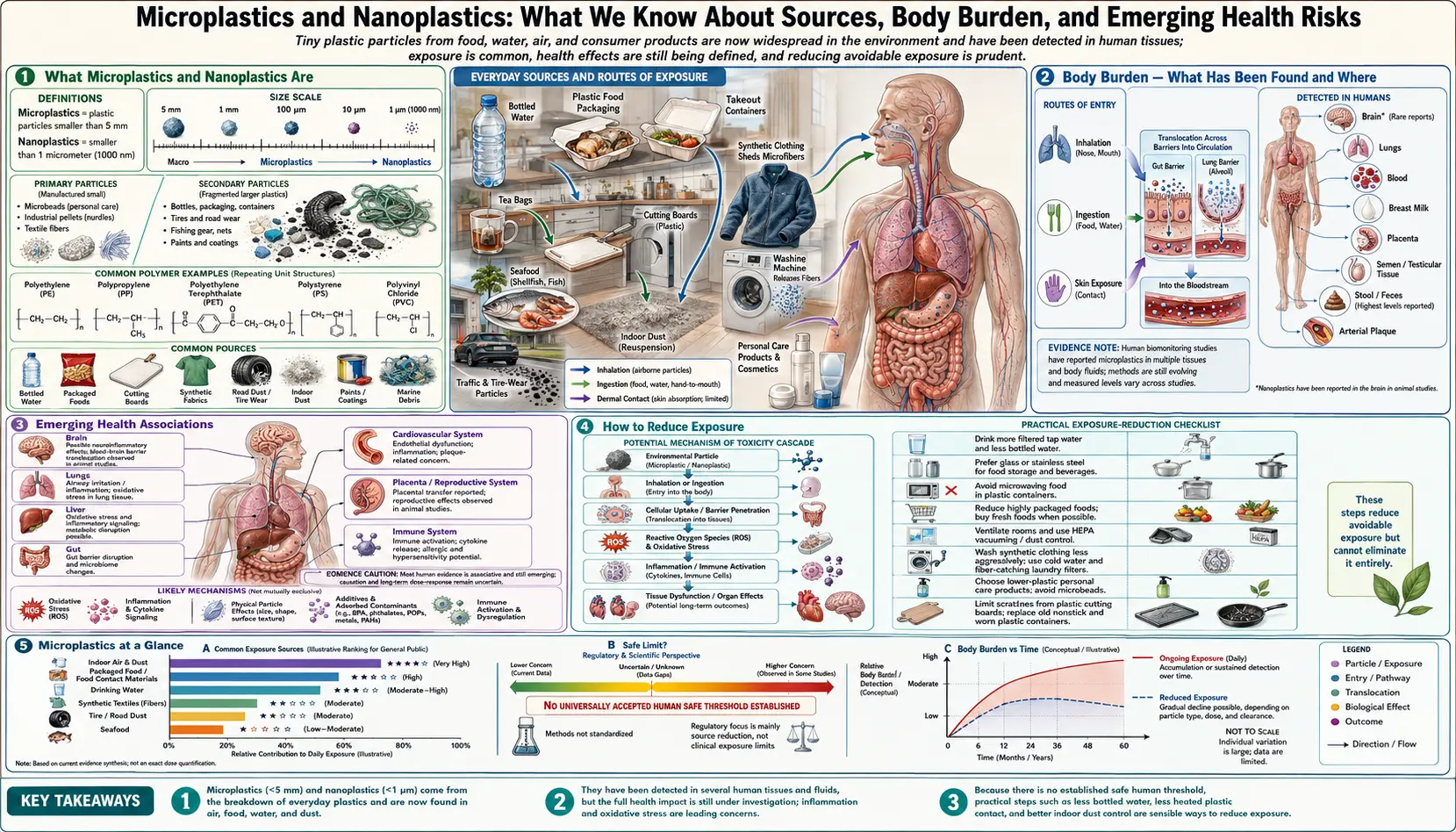
Microplastics — plastic fragments smaller than 5 mm — and their smaller siblings nanoplastics (smaller than 1 µm) are now found in essentially every environmental compartment measured and nearly every human tissue sampled. In just the past two years, studies have documented microplastics in blood, lungs, placenta, testes, breast milk, liver, kidney, and atherosclerotic plaque. A landmark 2024 paper in the New England Journal of Medicine linked the presence of microplastics in carotid-artery plaque to a 4.5-fold higher risk of heart attack, stroke, or death over three years. The research is moving rapidly, and while many mechanisms remain provisional, the cumulative picture warrants taking exposure reduction seriously.
This article explains what microplastics and nanoplastics are, where they come from, how they enter the body, what is known about their health effects, and the evidence-informed steps an individual can take to reduce exposure without chasing impossible zero.
Table of Contents
- What Microplastics and Nanoplastics Are
- Major Exposure Sources
- Body Burden — What Has Been Found and Where
- Emerging Health Associations
- Proposed Mechanisms
- How to Reduce Exposure
- Connections
- Featured Videos
What Microplastics and Nanoplastics Are
Plastics degrade through UV light, mechanical stress, and heat into progressively smaller fragments. Primary microplastics are manufactured small (microbeads, pellet feedstocks). Secondary microplastics form from larger plastics breaking down — tire wear, synthetic-textile laundry fibers, degrading plastic bottles, and plastic food packaging. Below one micrometer the particles are called nanoplastics; they are harder to measure but more biologically active because they can cross cell membranes and the blood-brain barrier.
Major Exposure Sources
- Bottled water. A 2024 study found on average 240,000 plastic particles per liter of bottled water — mostly nanoplastics — roughly 10–100 times prior estimates.
- Heated food in plastic. Microwaving plastic containers, hot coffee in plastic-lined cups, and hot food in plastic takeout containers produce substantial leaching.
- Tea bags. Nylon or PET “silken” pyramid tea bags release billions of microplastic particles into a single cup of hot tea.
- Synthetic textiles. Polyester, acrylic, and nylon clothing shed microfibers that reach the air, the wash water, and ultimately the food chain.
- Household dust and indoor air. Carpet fibers, upholstery fibers, and tire-wear infiltrate the home.
- Seafood. Shellfish, in particular, concentrate particles.
- Salt. Sea salt contains more microplastic than mined rock salt.
- Plastic cutting boards. Every chop releases particles into food.
- Chewing gum. Most gum base is synthetic polymer.
Body Burden — What Has Been Found and Where
- Microplastics in human blood (every sample of a healthy-donor cohort).
- Microplastics in placenta and meconium of newborns.
- Microplastics in testicular tissue, correlating with reduced sperm counts.
- Microplastics in human brain tissue, in higher concentrations in brains of people with dementia than controls.
- Microplastics in breast milk.
- Microplastics in lung tissue at biopsy.
- Microplastics in atherosclerotic plaques.
Emerging Health Associations
The 2024 NEJM atherosclerosis-plaque study is the most robust clinical signal to date: patients with detectable polyethylene and polyvinyl chloride in their carotid plaque had a 4.53-fold higher composite risk of MI, stroke, or death over 34 months compared with patients whose plaques were plastic-free. Associations have also been reported with inflammatory bowel disease severity, reduced sperm parameters, and placental dysfunction. These are preliminary correlations; mechanistic and intervention studies are ongoing.
Proposed Mechanisms
- Chronic low-grade inflammation. Plastic particles in tissue activate macrophages and persist.
- Endocrine disruption. Plasticizers (phthalates, bisphenols) on the particles release over time.
- Oxidative stress. Nanoplastics generate reactive oxygen species at biological interfaces.
- Chemical carrier effect. Particles concentrate persistent organic pollutants, pesticides, and heavy metals on their surfaces.
- Microbiome disruption. Gut bacteria colonize particles and community composition shifts.
How to Reduce Exposure
The goal is reasonable minimization, not obsession. Simple, high-yield changes:
- Filter tap water with a reverse-osmosis or activated-carbon-block filter rated for particulate removal. Prefer filtered tap over bottled.
- Stop heating food in plastic. Transfer takeout to glass or ceramic before reheating; use glass storage containers; avoid plastic-lined coffee cups for hot drinks.
- Switch to loose-leaf tea or paper tea bags without plastic sealing.
- Wear natural fibers where possible (cotton, linen, wool). Use a microfiber-capture laundry bag (Guppyfriend) or external filter for synthetic loads.
- Ventilate and vacuum regularly — HEPA vacuums reduce indoor microplastic dust burden.
- Use wood or stainless cutting boards rather than plastic.
- Avoid microwaved plastic entirely.
- Choose glass or stainless-steel water bottles.
- Reduce shellfish if a concentrated source in your diet; prefer wild over farmed.
Connections
- All Toxins
- BPA and Plastics
- Microplastics (BPA)
- PFAS
- Heavy Metals
- Pesticides
- Food Additives
- Cardiovascular Disease
- Stroke
- Dementia
- Detox Protocols
- Liver Cleansing
- Inflammatory Bowel Disease
- Atherosclerosis
- Oxidative Stress