Metastatic Cancers
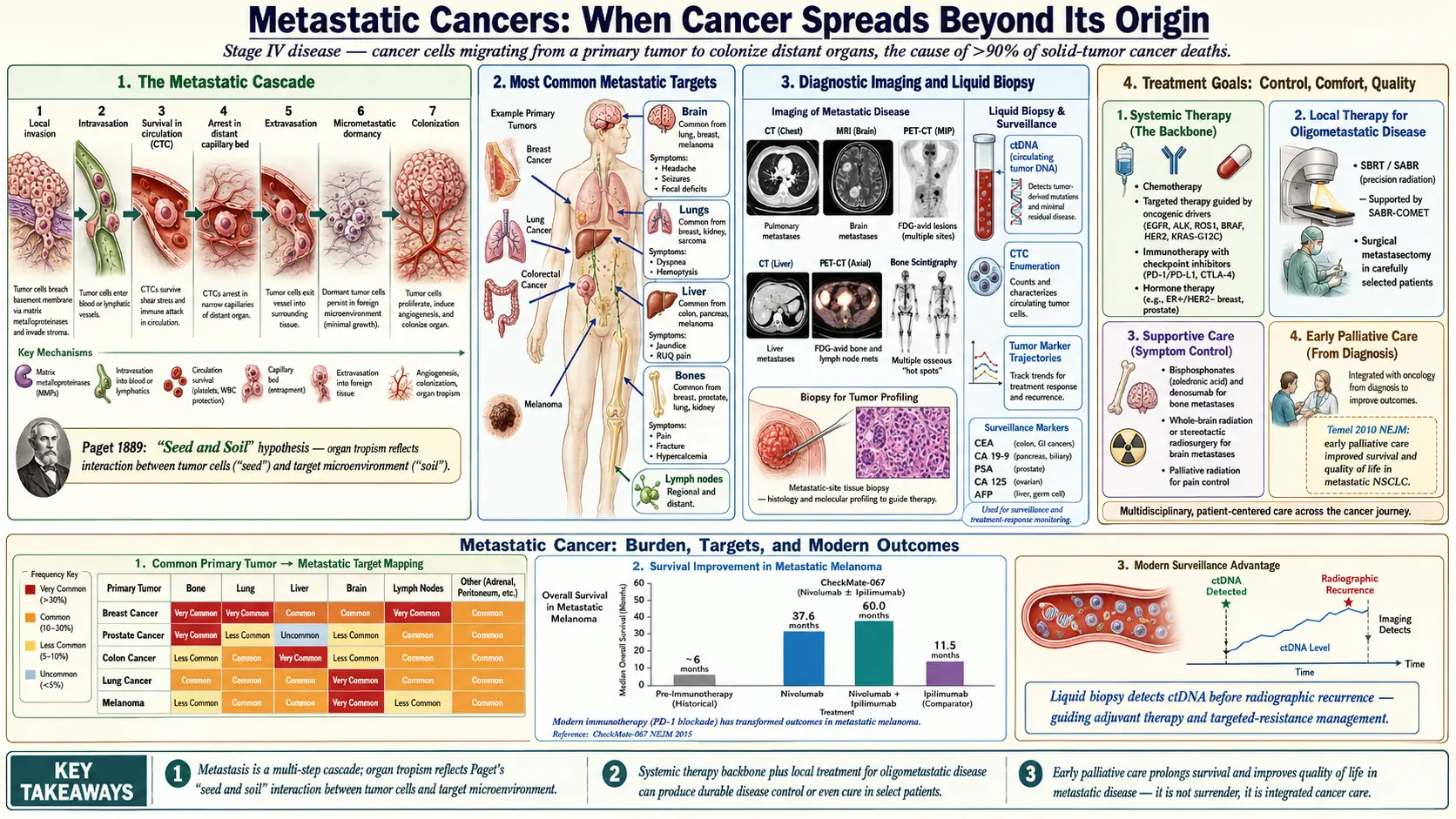
Table of Contents
- What are Metastatic Cancers?
- How Does Metastasis Occur?
- Common Sites for Metastasis
- Symptoms of Metastatic Cancers
- Diagnosis of Metastatic Cancer
- Treatment Options
- Prognosis
- Research Papers
- Connections
- Featured Videos
What are Metastatic Cancers?
Metastatic cancer refers to cancer that has spread from its original (primary) site to other parts of the body. This type of cancer is also called stage IV or advanced cancer. While metastatic cancer can affect various organs and tissues, it is still named after the primary cancer (e.g., metastatic breast cancer).
How Does Metastasis Occur?
Metastasis involves the movement of cancer cells from the original tumor to other parts of the body through:
- Bloodstream: Cancer cells enter blood vessels and travel to distant sites.
- Lymphatic system: Cancer cells spread through lymph nodes and the lymphatic network.
Once cancer cells reach a new location, they may grow and form new tumors that interfere with the function of the affected organs.
Common Sites for Metastasis
Cancer can metastasize to almost any part of the body, but some common sites include:
- Lungs
- Liver
- Bones
- Brain
- Lymph nodes
Symptoms of Metastatic Cancers
The symptoms of metastatic cancer depend on the location of the metastasis and may include:
- Lung metastasis: Shortness of breath, chest pain, and persistent cough.
- Liver metastasis: Jaundice, abdominal pain, and loss of appetite.
- Bone metastasis: Bone pain, fractures, and high calcium levels.
- Brain metastasis: Headaches, seizures, and neurological symptoms such as dizziness or vision problems.
Diagnosis of Metastatic Cancer
Diagnostic Procedures
Diagnosis may involve a range of tests, including:
- Imaging tests: Such as CT scans, MRI, PET scans, and X-rays to locate metastases.
- Biopsy: Taking a tissue sample from the metastatic site to confirm cancer type.
- Blood tests: To check for markers that indicate the spread of cancer.
Treatment Options
Treatment for metastatic cancer focuses on controlling the spread, relieving symptoms, and improving quality of life. Options may include:
- Systemic therapies: Such as chemotherapy, targeted therapy, immunotherapy, and hormone therapy to address cancer throughout the body.
- Radiation therapy: Used to reduce pain and manage symptoms in specific areas.
- Surgery: Sometimes performed to remove metastatic tumors if feasible.
- Palliative care: Aims to enhance comfort and support during treatment by managing pain and other symptoms.
Prognosis
The prognosis for metastatic cancer varies widely based on factors such as the type of primary cancer, location and number of metastases, and response to treatment. Although metastatic cancer is generally considered incurable, advancements in treatment have improved survival rates and quality of life for many patients.
References & Research
Historical Background
The concept of metastasis was first described by French surgeon Joseph Recamier in 1829, who coined the term to describe the spread of cancer from one organ to another. Stephen Paget's "seed and soil" hypothesis of 1889, proposing that cancer cells (seeds) preferentially colonize certain organs (soil), remains a foundational concept in metastasis research. Isaiah Fidler's work in the 1970s further established the biology of tumor heterogeneity and metastatic colonization.
Key Research Papers
- Hanahan D, Weinberg RA. Hallmarks of cancer: the next generation. Cell. 2011;144(5):646-674.
- Massague J, Obenauf AC. Metastatic colonization by circulating tumour cells. Nature. 2016;529(7586):298-306.
- Topalian SL, Hodi FS, Brahmer JR, et al. Safety, activity, and immune correlates of anti-PD-1 antibody in cancer. N Engl J Med. 2012;366(26):2443-2454.
- Chaffer CL, Weinberg RA. A perspective on cancer cell metastasis. Science. 2011;331(6024):1559-1564.
- Andre F, Ciruelos E, Rubovszky G, et al. Alpelisib for PIK3CA-mutated, hormone receptor-positive advanced breast cancer (SOLAR-1). N Engl J Med. 2019;380(20):1929-1940.
- Lambert AW, Pattabiraman DR, Weinberg RA. Emerging biological principles of metastasis. Cell. 2017;168(4):670-691.
- Brahmer J, Reckamp KL, Baas P, et al. Nivolumab versus docetaxel in advanced squamous-cell non-small-cell lung cancer (CheckMate 017). N Engl J Med. 2015;373(2):123-135.
- Palma DA, Olson R, Harrow S, et al. Stereotactic ablative radiotherapy versus standard of care palliative treatment in patients with oligometastatic cancers (SABR-COMET). The Lancet. 2019;393(10185):2051-2058.
- Turajlic S, Sottoriva A, Graham T, Swanton C. Resolving genetic heterogeneity in cancer. Nat Rev Genet. 2019;20(7):404-416.
- Ganesh K, Massague J. Targeting metastatic cancer. Nat Med. 2021;27(1):34-44.
- Swain SM, Miles D, Kim SB, et al. Pertuzumab, trastuzumab, and docetaxel for HER2-positive metastatic breast cancer (CLEOPATRA). N Engl J Med. 2015;372(8):724-734.
- Pantel K, Alix-Panabieres C. Liquid biopsy and minimal residual disease: latest advances and implications for cure. Nat Rev Clin Oncol. 2019;16(7):409-424.
Research Papers
The following PubMed topic searches surface the current peer-reviewed literature on Metastatic Cancer. Each link opens a live PubMed query; results update as new papers are indexed.
- PubMed search: metastatic cancer
- PubMed search: cancer metastasis mechanism
- PubMed search: bone metastasis
- PubMed search: brain metastasis treatment
- PubMed search: liver metastasis
- PubMed search: lung metastasis
- PubMed search: circulating tumor cells metastasis
- PubMed search: metastatic cancer immunotherapy
- PubMed search: metastatic cancer targeted therapy
- PubMed search: oligometastatic disease SBRT
- PubMed search: metastatic cancer palliative care
- PubMed search: metastasis tumor microenvironment
Connections
- Oncology
- Cancer Overview
- Sarcoma
- Multiple Myeloma
- Thyroid Cancer
- Leukemia
- Lymphoma
- Turmeric
- Vitamin D3
- Pleural Effusion
- Gerson Therapy Cancer Treatment
- Kidney Disease
- Shortness of Breath
- Jaundice
- Loss of Appetite
- Cancer Prevention
- Lung Cancer
- Breast Cancer
- Colorectal Cancer
- Prostate Cancer
- Pancreatic Cancer
- Skin Cancer
- Ovarian Cancer
- Cervical Cancer
- Liver Cancer
- Stomach Cancer
- Esophageal Cancer
- Kidney Cancer
- Endometrial Cancer