Uterine Fibroids
Uterine fibroids (leiomyomas, myomas) are benign monoclonal smooth-muscle neoplasms of the uterus and represent the most common pelvic tumor in women of reproductive age. Their clinical impact ranges from incidental findings to severe menorrhagia, pelvic pressure, reproductive dysfunction, and quality-of-life impairment warranting surgical intervention.
Table of Contents
- Overview
- Epidemiology
- Pathophysiology
- Etiology and Risk Factors
- Clinical Presentation
- Diagnosis
- Treatment
- Complications
- Prognosis
- Prevention
- Recent Research
- References
1. Overview
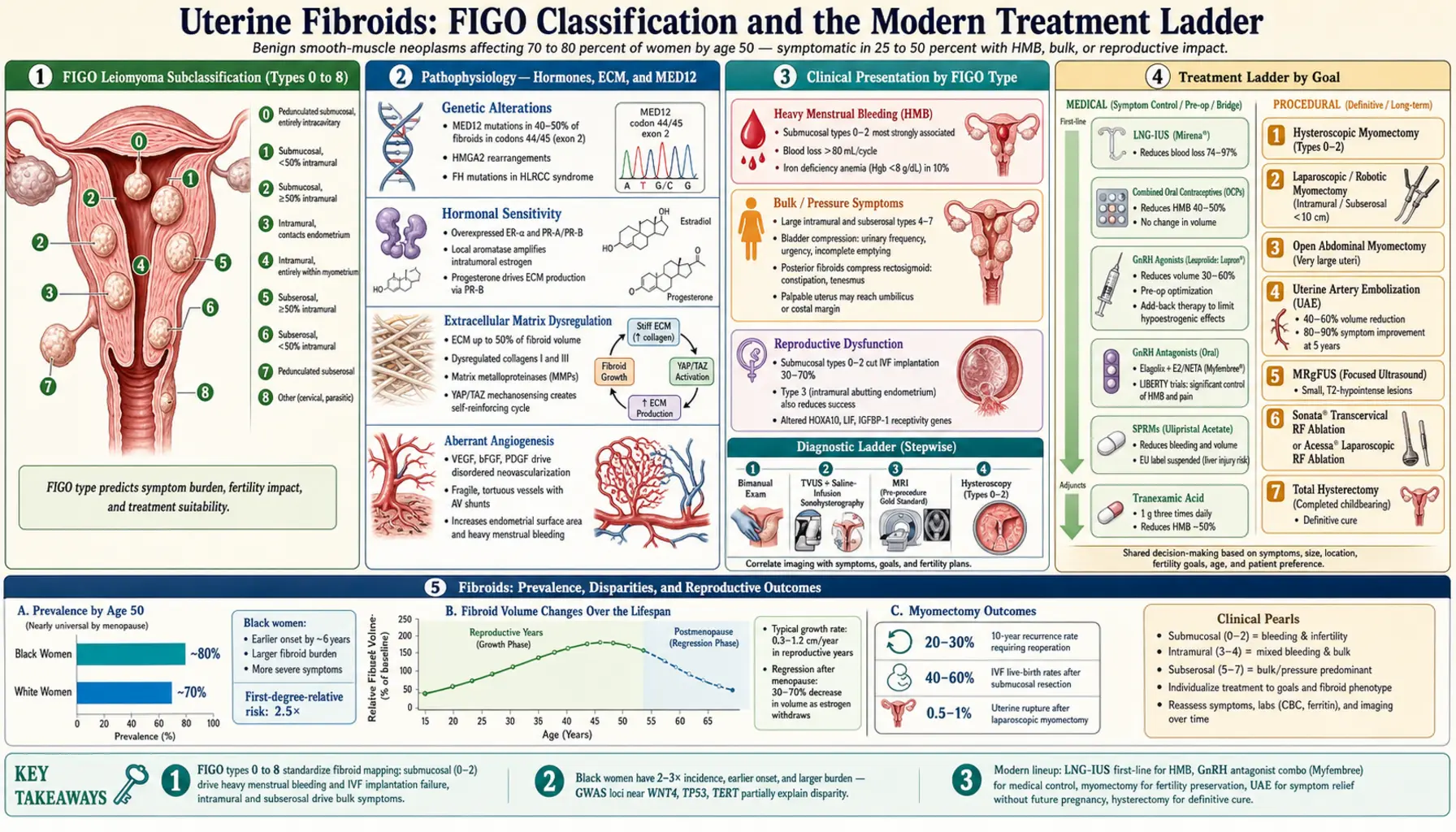
Uterine fibroids arise from the myometrium and consist of extracellular matrix (ECM) components — primarily collagen types I and III — along with disorganized smooth-muscle cells. They are estrogen- and progesterone-sensitive and typically regress after menopause. Fibroids are classified by location relative to the myometrium using the FIGO (Federation of Gynecology and Obstetrics) leiomyoma subclassification system, which provides a standardized anatomical framework guiding clinical decision-making.
The FIGO classification assigns types 0–8:
- Type 0: Pedunculated submucosal — entirely within the endometrial cavity
- Type 1: Submucosal, less than 50% intramural
- Type 2: Submucosal, 50% or more intramural
- Type 3: Intramural, contacts the endometrium
- Type 4: Intramural, entirely within the myometrium
- Type 5: Subserosal, 50% or more intramural
- Type 6: Subserosal, less than 50% intramural
- Type 7: Subserosal pedunculated
- Type 8: Other (cervical, parasitic)
The FIGO system replaces older descriptive nomenclature and correlates with symptom burden, fertility impact, and suitability for specific interventions. Hybrid types (e.g., 2–5) indicate fibroids spanning two compartments.
2. Epidemiology
Uterine fibroids affect an estimated 70–80% of women by age 50, though only 25–50% are symptomatic. Prevalence is strikingly higher among Black women, with cumulative incidence approaching 80% by age 50 compared to 70% in White women, and Black women experience earlier onset, larger fibroid burden, and more severe symptoms.
- Global prevalence among reproductive-age women: 20–40% by ultrasound
- Annual direct healthcare costs in the United States exceed $34 billion when accounting for surgery, medical management, and lost productivity
- Fibroids account for approximately one-third of all hysterectomies performed annually in the United States
- Incidence peaks in the fourth and fifth decades; rare before menarche and regress post-menopause
- Nulliparous women have a 1.5–2-fold higher risk than parous women
3. Pathophysiology
Fibroids originate from a single transformed myometrial smooth-muscle cell (monoclonal origin confirmed by cytogenetic studies). Key pathophysiological mechanisms include:
Genetic Alterations
Approximately 40–50% of fibroids harbor somatic mutations in MED12 (mediator complex subunit 12), found in codons 44 and 45 of exon 2. Other recurrent alterations include rearrangements of HMGA2 (high-mobility group A2), deletions of chromosome 7q, trisomy 12, and mutations in FH (fumarate hydratase) associated with hereditary leiomyomatosis and renal cell cancer (HLRCC) syndrome.
Hormonal Sensitivity
Fibroids overexpress estrogen receptors (ER-alpha) and progesterone receptors (PR-A and PR-B) relative to adjacent myometrium. Estrogen promotes cellular proliferation and upregulates PR expression. Progesterone, acting via PR-B, drives ECM production and fibroid growth — a mechanism exploited therapeutically by selective progesterone receptor modulators (SPRMs). Fibroids produce local aromatase activity, amplifying intratumoral estrogen concentrations independent of circulating levels.
Extracellular Matrix Dysregulation
ECM constitutes up to 50% of fibroid volume. Dysregulated expression of collagens, fibronectin, and matrix metalloproteinases (MMPs) creates a stiff, fibrotic microenvironment. ECM stiffness activates mechanosensing pathways (YAP/TAZ, TGF-beta), promoting further ECM deposition in a self-reinforcing cycle. This ECM excess underlies the characteristic firmness on palpation and resistance to many systemic therapies.
Angiogenesis and Vascular Remodeling
Fibroids exhibit aberrant neovascularization driven by vascular endothelial growth factor (VEGF), basic fibroblast growth factor (bFGF), and platelet-derived growth factor (PDGF). The disordered vasculature contributes to the heavy menstrual bleeding characteristic of submucosal and intramural fibroids by disrupting normal endometrial hemostasis and increasing endometrial surface area.
4. Etiology and Risk Factors
Non-Modifiable Risk Factors
- Race/Ethnicity: Black women have 2–3-fold higher incidence, earlier onset (average 6 years earlier), larger fibroids, and greater symptom burden; genetic studies implicate differences in GWAS loci near WNT4, TP53, and TERT
- Family history: First-degree relatives of affected women have a 2.5-fold increased risk; hereditary HLRCC (FH mutation) confers high penetrance for multiple cutaneous and uterine leiomyomas
- Menarche age: Early menarche (before age 10) increases risk by approximately 1.5-fold due to prolonged cumulative estrogen exposure
Modifiable and Reproductive Risk Factors
- Nulliparity: Pregnancy induces involutional changes in the myometrium and reduces lifetime estrogen exposure; each pregnancy confers approximately 20% risk reduction
- Obesity: Adipose tissue is a major extragonadal source of estrogen via aromatase; BMI above 30 kg/m² is associated with 20–30% increased risk
- Diet: High consumption of red meat increases risk; high intake of green vegetables and vitamin D-rich foods appears protective
- Vitamin D deficiency: Epidemiological and mechanistic data support a protective role for vitamin D3 via anti-proliferative effects on fibroid cells
- Hypertension: Associated with 40% increased risk, possibly mediated through shared vascular and hormonal mechanisms
- Uterine trauma: Prior dilation and curettage (D&C) has been associated with increased risk in some cohorts
5. Clinical Presentation
Up to 50% of fibroids are asymptomatic and discovered incidentally. Symptomatic fibroids present with a constellation of findings largely determined by fibroid location, size, and number.
Abnormal Uterine Bleeding (AUB)
The most common symptom, occurring in 30% of women with fibroids. Submucosal fibroids (FIGO 0–2) are most strongly associated with heavy menstrual bleeding (HMB), defined as blood loss exceeding 80 mL per cycle or subjective soaking through pads/tampons at least hourly for several consecutive hours. Proposed mechanisms include increased endometrial surface area, impaired uterine contractility, venous ectasia of the endometrium overlying the fibroid, and dysregulated prostaglandin/thromboxane balance. Resulting iron deficiency anemia may be severe (hemoglobin below 8 g/dL) in advanced cases.
Pelvic Pressure and Bulk Symptoms
Large intramural and subserosal fibroids produce pressure on adjacent organs. Bladder compression causes urinary frequency, urgency, and incomplete emptying; posterior fibroids compress the rectosigmoid causing constipation and tenesmus. Dyspareunia is reported in up to 30% of symptomatic women. Abdominal distension and a palpably enlarged uterus (may reach the umbilicus or costal margin) are classic findings with a large fibroid uterus.
Reproductive Dysfunction
Fibroids are found in 5–10% of infertile women and may be the sole identifiable cause in 1–3%. Submucosal fibroids (FIGO 0–2) consistently impair implantation and live birth rates in IVF cycles, with relative reductions of 30–70% in implantation and clinical pregnancy rates. Type 3 intramural fibroids (abutting the endometrium) also appear to reduce IVF success. The mechanisms include altered endometrial blood flow, endometrial compression, distortion of tubal ostia, and dysregulation of endometrial receptivity genes (HOXA10, LIF, IGFBP-1).
Pain
Dysmenorrhea occurs in approximately 25% of symptomatic patients. Acute pelvic pain may signal fibroid degeneration — most commonly during pregnancy when rapid growth outstrips blood supply, leading to central hyaline, cystic, red (carneous), or septic degeneration. Red degeneration presents with acute pain, low-grade fever, and uterine tenderness, typically managed conservatively with NSAIDs.
6. Diagnosis
Clinical Assessment
History should characterize menstrual cycle length, duration, and volume (pictorial blood assessment chart, PBAC score), pelvic pressure symptoms, urinary and bowel function, reproductive history, and desire for future fertility. Bimanual examination reveals an irregularly enlarged, firm, non-tender uterus; parametria and adnexa should be assessed to exclude co-existing pathology.
Transvaginal Ultrasound (TVUS)
First-line imaging modality. Fibroids appear as well-circumscribed hypoechoic or heterogeneous masses with shadowing. TVUS sensitivity for intracavitary lesions is improved with saline infusion sonohysterography (SIS), which delineates the submucosal component and assigns FIGO type with accuracy comparable to hysteroscopy. Limitations include poor visualization in large, multi-fibroid uteri and operator dependence.
Magnetic Resonance Imaging (MRI)
The gold standard for fibroid mapping, particularly pre-procedure. MRI provides superior delineation of fibroid number, size, location (precise FIGO typing), relationship to the endometrial cavity and serosa, and signal characteristics predicting treatment response. On T2-weighted sequences, fibroids are typically hypointense relative to myometrium; cellular fibroids are T2 hyperintense; degenerating fibroids show variable signal. MRI is mandatory before uterine artery embolization (UAE) to exclude contraindications (submucosal fibroids near the cavity in fertility-preservation candidates, pedunculated serosal fibroids with narrow stalk, suspected malignancy).
Hysteroscopy
Diagnostic and potentially therapeutic for FIGO type 0–2 fibroids. Direct visualization allows biopsy of irregular endometrium and operative resection during the same procedure. Office hysteroscopy under local anesthesia is preferred when available.
Laboratory Investigations
- Complete blood count: assess anemia severity
- Serum ferritin, iron, TIBC: evaluate iron stores
- Thyroid-stimulating hormone: exclude thyroid causes of AUB
- Coagulation panel (PT, aPTT, von Willebrand factor antigen and activity): exclude inherited bleeding disorders, present in up to 13% of women with HMB
- Endometrial biopsy: indicated in women over 45 years or those with risk factors for endometrial hyperplasia/carcinoma to exclude malignancy
- Pregnancy test prior to any intervention
7. Treatment
Treatment selection is individualized based on symptom severity, fibroid location and size, reproductive intent, patient age, and proximity to menopause.
Medical Management
GnRH Agonists
Leuprolide acetate, nafarelin, goserelin — depot formulations suppress pituitary gonadotropins, inducing a hypoestrogenic state that reduces fibroid volume by 30–60% over 3–6 months. Used pre-operatively to reduce uterine size, facilitate a minimally invasive approach, correct anemia, and reduce intraoperative blood loss. Long-term use is limited by hypoestrogenic side effects (vasomotor symptoms, bone mineral density loss — approximately 6% per year); add-back therapy with low-dose estrogen/progestogen or tibolone mitigates these effects. Fibroids regrow to pre-treatment size within 3–6 months of cessation.
GnRH Antagonists
Elagolix (Oriahnn) — oral non-peptide GnRH receptor antagonist approved for HMB associated with fibroids. Achieves rapid, dose-dependent suppression of LH and FSH without an initial flare. Elagolix 300 mg twice daily combined with add-back estradiol/norethindrone acetate (1 mg/0.5 mg) significantly reduces HMB (ELARIS UF-1 and UF-2 trials: approximately 68–71% responder rates). Approved for up to 24 months. Linzagolix (Yselty) and relugolix are additional options with comparable efficacy profiles.
Selective Progesterone Receptor Modulators (SPRMs)
Ulipristal acetate (UPA, Esmya) — 5 mg daily for 3-month intermittent courses achieves amenorrhea in up to 80% and fibroid volume reduction of 25–40%, with effects persisting beyond cessation (unlike GnRH agonists). Regulatory approval has been restricted in some jurisdictions (EU label suspension 2020) due to rare but serious hepatotoxicity (idiosyncratic liver injury in less than 1 in 10,000). Where available, liver function testing is mandatory. UPA causes a reversible endometrial histological change (PAEC — progesterone receptor modulator-associated endometrial changes) that must be distinguished from hyperplasia.
Hormonal Contraceptives and Progestins
Combined oral contraceptives reduce HMB by 40–50% and improve dysmenorrhea but do not reduce fibroid volume. The levonorgestrel-releasing intrauterine system (LNG-IUS, Mirena) is highly effective for HMB (reduces blood loss by 74–97%) and improves hemoglobin levels; however, expulsion rates are higher with submucosal fibroids or a markedly enlarged uterine cavity. Tranexamic acid (antifibrinolytic, 1 g three times daily during menstruation) reduces HMB by approximately 50% without hormonal effects and is suitable for women with contraindications to hormonal therapy.
Iron Supplementation
Oral ferrous sulfate 325 mg twice or three times daily for iron-deficiency anemia. Intravenous iron (ferric carboxymaltose, iron sucrose) is preferred for severe anemia (Hgb below 8 g/dL), poor oral tolerance, or when rapid correction is required prior to surgery. Erythropoiesis-stimulating agents may be considered for severe anemia refractory to iron in selected patients.
Surgical Management
Myomectomy
Surgical removal of fibroids with uterine preservation — the preferred option for women desiring future fertility or uterine conservation. Routes of access:
- Hysteroscopic myomectomy: Standard of care for FIGO type 0–2 submucosal fibroids. Performed using a monopolar or bipolar resectoscope, or morcellation device. En-bloc extraction preferred for type 0; stepwise resection for type 1–2. Intrauterine adhesion prophylaxis (estrogen supplementation, IUD insertion) may be considered post-resection for large or multiple submucosal fibroids.
- Laparoscopic myomectomy: Suitable for intramural and subserosal fibroids, generally up to 8–10 cm and limited in number (typically fewer than 4–5). Robotic-assisted laparoscopic myomectomy offers improved ergonomics and suturing capability for deep intramural fibroids. Uterine closure must be meticulous — multi-layer closure of the myometrium is essential to ensure uterine integrity for subsequent pregnancy.
- Open (abdominal) myomectomy: Indicated for very large uteri, multiple deep intramural fibroids, or when laparoscopic approach is not feasible. Allows comprehensive fibroid removal and optimal uterine closure. Temporary uterine artery occlusion (clamp or tourniquet) reduces intraoperative blood loss.
Myomectomy vs. hysterectomy: Myomectomy preserves fertility and the uterus but carries a 20–30% cumulative 10-year reoperation rate due to fibroid recurrence. Hysterectomy provides definitive cure and is appropriate for women who have completed childbearing and prefer a permanent solution, particularly when the fibroid burden is high or symptoms severe.
Hysterectomy
Definitive treatment eliminating recurrence. Preferred route is minimally invasive (laparoscopic total or supracervical hysterectomy, or vaginal hysterectomy) when technically feasible; open abdominal hysterectomy for very large uteri or when adnexal pathology requires simultaneous management. Decision for oophorectomy should be individualized — bilateral salpingo-oophorectomy in pre-menopausal women eliminates ovarian hormonal drive but induces surgical menopause with cardiovascular and skeletal consequences.
Uterine Artery Embolization (UAE)
An image-guided, minimally invasive procedure performed by interventional radiology. Under fluoroscopic guidance, a catheter is advanced via femoral or radial arterial access into both uterine arteries, and embolic particles (typically tris-acryl gelatin microspheres, 500–700 microns) are injected to occlude fibroid vasculature, inducing ischemic necrosis and volume reduction of 40–60% over 6–12 months. Symptomatic improvement (HMB, bulk symptoms) is reported in 80–90% of patients.
Patient selection for UAE: Ideal candidates are pre-menopausal women with symptomatic fibroids who wish to avoid surgery and have no desire for future pregnancy (though pregnancy after UAE is possible, evidence on fetal and obstetric outcomes is less robust than after myomectomy). Contraindications include pedunculated subserosal fibroids (stalk necrosis risk), desire for pregnancy (relative), suspected uterine or cervical malignancy, active pelvic infection, contrast allergy, and renal insufficiency. Post-embolization syndrome (fever, pelvic pain, nausea) is expected in the first 48–72 hours and managed with NSAIDs and antiemetics.
Other Interventional Approaches
- Magnetic resonance-guided focused ultrasound (MRgFUS / ExAblate): Non-invasive outpatient procedure using focused ultrasound to thermally ablate fibroid tissue under MRI guidance. Achieves modest volume reduction (15–30%) and symptom improvement; best results in small, solitary, T2-hypointense fibroids. Lower durability than UAE; reintervention rates are higher.
- Transcervical radiofrequency ablation (Sonata system): Ultrasound-guided intrauterine device delivers bipolar radiofrequency energy to ablate fibroids via a transcervical approach. Approved for FIGO types 1–6 (3–10 cm). Outpatient procedure with rapid recovery and significant HMB reduction at 12 months.
- Laparoscopic radiofrequency ablation (Acessa ProVu): Laparoscopic ultrasound-guided radiofrequency ablation for intramural and subserosal fibroids. Reduced blood loss, shorter recovery versus myomectomy; reintervention rates lower than MRgFUS.
8. Complications
- Severe iron deficiency anemia: Hemoglobin below 8 g/dL in up to 10% of symptomatic women; may require blood transfusion, IV iron, or urgent intervention
- Urinary tract obstruction: Large posterior fundal fibroids may compress the ureters causing hydronephrosis; rare but requires urological evaluation
- Deep vein thrombosis / pulmonary embolism: Large fibroids compress iliac veins, increasing DVT risk; uterine size above 14–16 weeks confers highest risk
- Reproductive complications: Recurrent miscarriage, preterm labor, placenta previa, placental abruption, fetal malpresentation, cesarean delivery, and postpartum hemorrhage are all increased with fibroids, particularly submucosal types
- Fibroid degeneration: Hyaline (most common), myxoid, cystic, carneous (red — especially in pregnancy), and septic degeneration; rarely calcification
- Leiomyosarcoma (LMS): Malignant transformation is rare (estimated incidence 0.1–0.3 per 1000 women undergoing surgery for presumed fibroids); cannot be reliably distinguished from benign fibroids on imaging — rapid growth and unusual MRI signal (T2 hyperintensity, contrast enhancement) should raise suspicion but lack sufficient sensitivity/specificity
- Surgical complications: Myomectomy carries risks of intraoperative hemorrhage requiring transfusion (5–15%), uterine rupture in subsequent pregnancy (0.5–1% after laparoscopic myomectomy), and intrauterine adhesion formation
- Post-UAE complications: Non-target embolization (ovarian failure reported in up to 3% of women, higher in those over 45), fibroid expulsion, endometrial atrophy, and premature menopause
- Featured Videos
9. Prognosis
The natural history of uterine fibroids is variable. Most fibroids grow slowly (mean 0.3–1.2 cm per year) though rapid growth may occur in the early reproductive years. Post-menopause, fibroid volume decreases by 30–70% due to estrogen withdrawal; new fibroid development is rare after menopause. Symptoms resolve in most women after menopause without intervention.
For women who undergo surgical or interventional treatment, outcomes are generally excellent. Hysterectomy is curative with near-zero recurrence and high long-term patient satisfaction. Myomectomy has a 20–30% rate of clinically relevant fibroid recurrence requiring reoperation within 10 years; recurrence is higher in younger patients and those with multiple fibroids. UAE provides durable symptom relief in 80–90% at 5 years, with a 20–30% reintervention rate. Fertility outcomes following myomectomy are comparable to general population rates for women with otherwise unexplained infertility attributable solely to fibroids, with live birth rates of 40–60% in IVF programs following submucosal fibroid resection.
10. Prevention
No definitive primary prevention strategy exists, but modifiable risk reduction includes:
- Parity: Completed pregnancies are protective; breastfeeding may further reduce risk through sustained post-partum hypoestrogenism
- Weight management: Maintaining healthy BMI reduces peripheral estrogen production via adipose aromatase
- Diet: Mediterranean-style diet rich in vegetables, fruit, whole grains, and fish; reduced red and processed meat consumption; adequate dietary calcium and vitamin D
- Vitamin D supplementation: Observational data support vitamin D sufficiency (serum 25-OH-D above 20 ng/mL) in reducing fibroid risk; randomized trial data are emerging
- Alcohol avoidance: Alcohol increases circulating estrogen levels; reduction may lower risk
- Minimizing exogenous estrogen exposure: Judicious use of estrogen-containing medications; reducing exposure to environmental endocrine disruptors (bisphenol A, phthalates) where feasible
11. Recent Research
The fibroid research landscape has expanded considerably in the past five years across genomics, medical therapy, and minimally invasive techniques:
- MED12 and tumor microenvironment: Single-cell RNA sequencing studies have identified distinct fibroid cell subpopulations and stromal-epithelial interactions mediated by MED12 mutations, opening new therapeutic targets including WNT/beta-catenin pathway inhibitors.
- Racial disparities — genomics: GWAS meta-analyses have identified population-specific loci near WNT4, BMP2/4, and TP53 explaining part of the racial disparity; epigenetic differences (DNA methylation, histone modification) in fibroid cells from Black versus White women are actively investigated.
- Relugolix combination therapy (Myfembree): The LIBERTY 1 and LIBERTY 2 trials demonstrated that once-daily relugolix 40 mg combined with estradiol 1 mg and norethindrone acetate 0.5 mg significantly reduced HMB volume (45% responder rate vs. 14% placebo) with favorable bone density and vasomotor symptom profiles over 52 weeks.
- Tranexamic acid pharmacogenomics: Emerging data suggest SERPINE1 (PAI-1) polymorphisms predict response to antifibrinolytic therapy in HMB.
- Sono-guided transcervical ablation: 3-year data from the SONATA pivotal trial demonstrate sustained symptom reduction and low reintervention rates for radiofrequency ablation of intramural/submucosal fibroids.
- Reproductive outcomes after UAE: Registry data from the UK Fibroid Registry and French FEMIRIS cohort continue to accumulate evidence on pregnancy outcomes after UAE, with live birth rates reported at 30–50%, though lower than after myomectomy in comparative studies.
- Vitamin D receptor agonists: Phase II trials of vitamin D3 supplementation and synthetic analogs (paricalcitol) in fibroid patients demonstrate modest but significant volume reductions, supporting a role for vitamin D receptor signaling in fibroid biology.
12. References
- Stewart EA, Cookson CL, Gandolfo RA, Schulze-Rath R. Epidemiology of uterine fibroids: a systematic review. BJOG. 2017;124(10):1501–1512.
- Munro MG, Critchley HOD, Fraser IS; FIGO Menstrual Disorders Committee. The two FIGO systems for normal and abnormal uterine bleeding symptoms and classification of causes of abnormal uterine bleeding in the reproductive years: 2018 revisions. Int J Gynaecol Obstet. 2018;143(3):393–408.
- Baird DD, Dunson DB, Hill MC, Cousins D, Schectman JM. High cumulative incidence of uterine leiomyoma in black and white women: ultrasound evidence. Am J Obstet Gynecol. 2003;188(1):100–107.
- Makinen N, Mehine M, Tolvanen J, et al. MED12, the mediator complex subunit 12 gene, is mutated at high frequency in uterine leiomyomas. Science. 2011;334(6053):252–255.
- Mas A, Nair S, Laknaur A, et al. Stro-1/CD44 as putative human myometrial and fibroid stem cell markers. Fertil Steril. 2015;104(1):225–234.e3.
- Islam MS, Ciavattini A, Petraglia F, Castellucci M, Bhatt DL, Bhatt M. Extracellular matrix in uterine leiomyoma pathogenesis: a potential target for future therapeutics. Hum Reprod Update. 2018;24(1):59–85.
- Donnez J, Dolmans MM. Uterine fibroid management: from the present to the future. Hum Reprod Update. 2016;22(6):665–686.
- Schlaff WD, Ackerman RT, Al-Hendy A, et al. Elagolix for heavy menstrual bleeding in women with uterine fibroids. N Engl J Med. 2020;382(4):328–340.
- Al-Hendy A, Lukes AS, Poindexter AN III, et al. Treatment of uterine fibroid symptoms with relugolix combination therapy. N Engl J Med. 2021;384(7):630–642.
- Lethaby A, Vollenhoven B, Sowter M. Pre-operative GnRH analogue therapy before hysterectomy or myomectomy for uterine fibroids. Cochrane Database Syst Rev. 2017;11:CD000547.
- Pron G; Ontario Uterine Fibroid Embolization Collaboration Group. Magnetic resonance imaging-guided focused ultrasound versus uterine fibroid embolization for the treatment of symptomatic uterine fibroids. J Vasc Interv Radiol. 2015;26(12):1731–1737.
- Laughlin-Tommaso SK, Hesley GK, Hopkins MR, Brandt KR, Zhu Y, Stewart EA. Clinical limitations of the International Federation of Gynecology and Obstetrics (FIGO) classification of uterine fibroids. Int J Gynaecol Obstet. 2017;139(2):143–148.
- Pritts EA, Parker WH, Olive DL. Fibroids and infertility: an updated systematic review of the evidence. Fertil Steril. 2009;91(4):1215–1223.
- Vilos GA, Allaire C, Laberge PY, Leyland N; SOGC. The management of uterine leiomyomas. J Obstet Gynaecol Can. 2015;37(2):157–178.
- Jacoby VL, Jacoby A, Learman LA, et al. Use of medical, surgical and complementary treatments among women with fibroids. Eur J Obstet Gynecol Reprod Biol. 2014;182:220–225.
- Woźniak S, Szkodziak P, Paszkowski T. The role of sonography in management of uterine fibroids. Wideochir Inne Tech Maloinwazyjne. 2013;8(4):361–366.
- Bhave Chittawar P, Franik S, Pouwer AW, Farquhar C. Minimally invasive surgical techniques versus open myomectomy for uterine fibroids. Cochrane Database Syst Rev. 2014;10:CD004638.
- Eltoukhi HM, Modi MN, Weston M, Armstrong AY, Stewart EA. The health disparities of uterine fibroid tumors for African American women: a public health issue. Am J Obstet Gynecol. 2014;210(3):194–199.
Research Papers
The following PubMed topic searches aggregate the current peer-reviewed literature. Each link opens a live PubMed query — results update as new studies are indexed.
- PubMed — uterine fibroids
- PubMed — uterine leiomyoma
- PubMed — fibroid ultrasound diagnosis
- PubMed — myomectomy
- PubMed — uterine artery embolization
- PubMed — MRI guided focused ultrasound fibroid
- PubMed — hysterectomy fibroid
- PubMed — GnRH antagonist fibroid
- PubMed — ulipristal acetate fibroid
- PubMed — tranexamic acid menorrhagia
- PubMed — fibroid infertility
- PubMed — fibroid pregnancy complications
Connections
- Reproductive Medicine
- Infertility
- Vitamin D3
- Perimenopause
- Endometriosis
- Menopause and HRT
- Ovarian Cysts
- Magnesium
- Polycystic Ovary Syndrome
- Hormonal Therapy Options
- Adenomyosis Overlap
- Iron
- Anemia
- Iron Deficiency Anemia
- Obesity
- Hypertension
- Complete Blood Count
- Laparoscopy: Excision vs Ablation
- Gestational Diabetes
- Breast Cancer
- Endometrial Cancer