Sulfur – Essential Mineral for Human Health
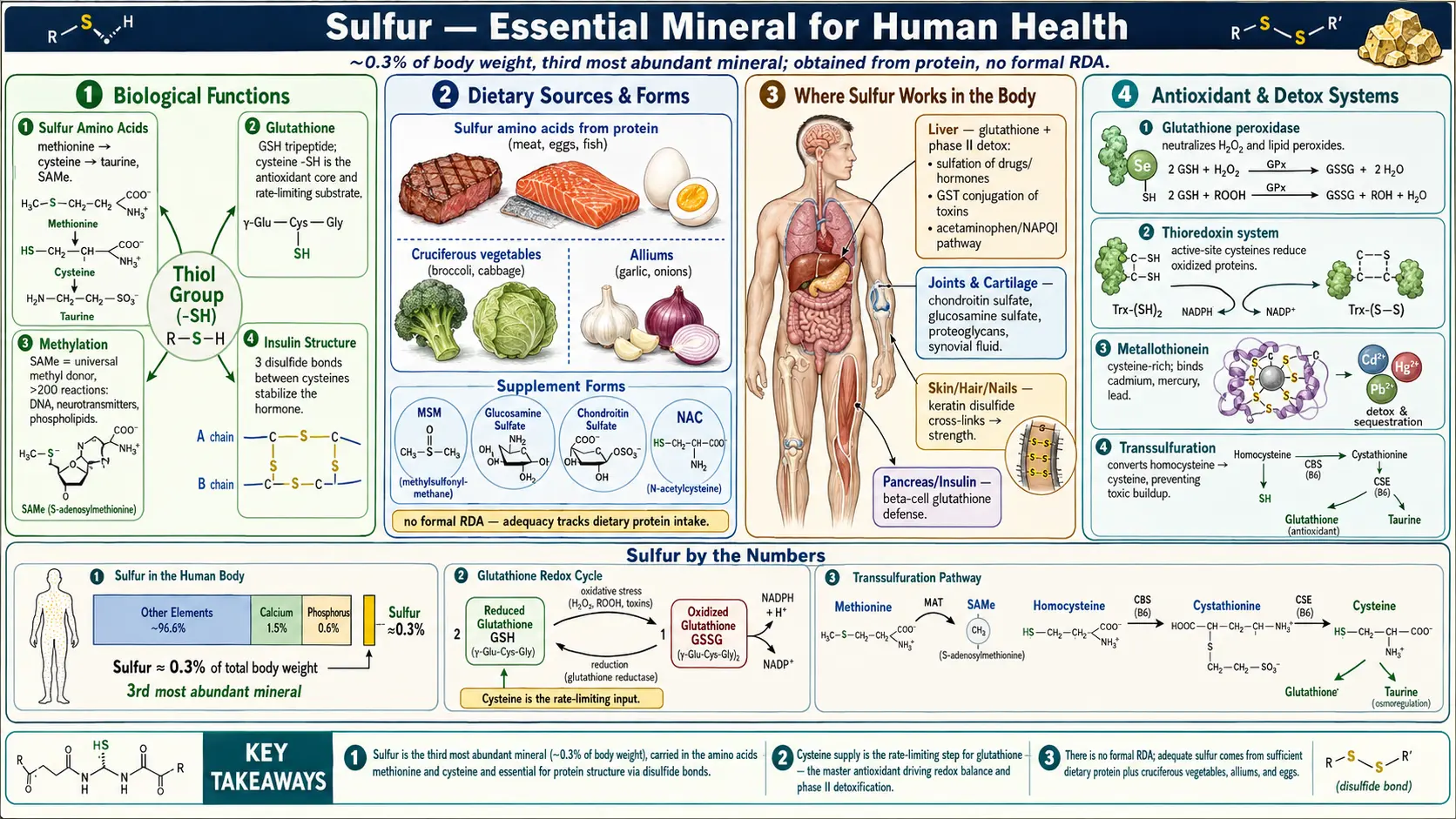
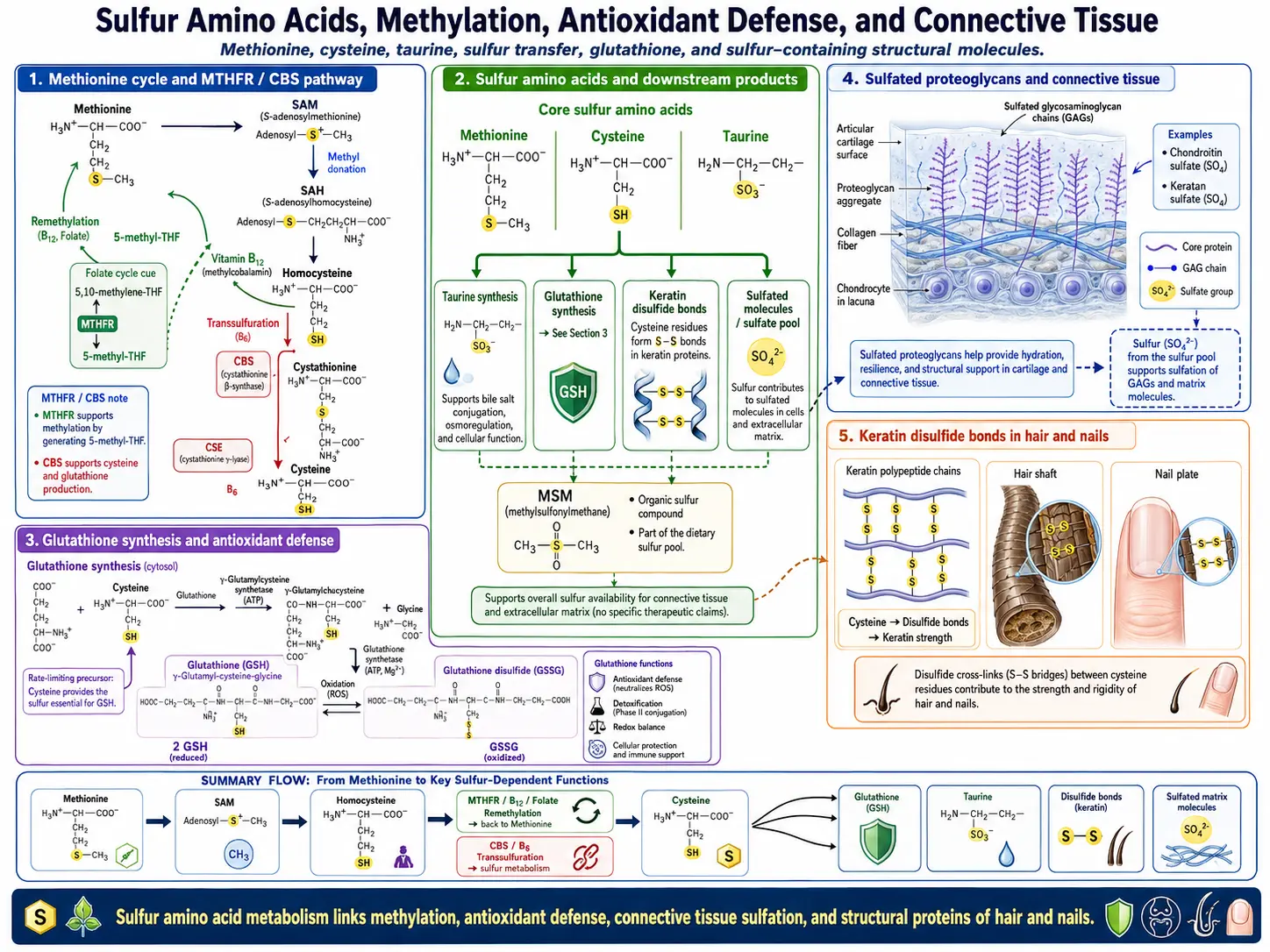
Table of Contents
- Introduction
- Sulfur-Containing Amino Acids
- Glutathione Synthesis
- Detoxification – Phase II Conjugation
- Connective Tissue Structure
- Joint Health
- Methylation Support
- Insulin Function
- Skin, Hair, and Nail Health
- Antioxidant Defense
- Summary
- Connections
- Featured Videos
Introduction
- Sulfur is the third most abundant mineral in the human body by mass, constituting approximately 0.3% of total body weight.
- It is a structural and functional component of amino acids, enzymes, coenzymes, vitamins, and connective tissue molecules.
- Dietary sulfur is obtained primarily through protein-rich foods containing the sulfur amino acids methionine and cysteine, as well as from cruciferous vegetables, alliums (garlic, onions), and eggs.
- Unlike most minerals, sulfur does not have a formal RDA, but adequate intake is maintained through sufficient dietary protein consumption.
Sulfur-Containing Amino Acids
- Methionine – An essential amino acid that serves as the initiator of protein translation and the primary dietary source of sulfur; it is the precursor for cysteine, taurine, and S-adenosylmethionine (SAMe).
- Cysteine – A conditionally essential amino acid whose thiol (-SH) group enables disulfide bond formation, which is critical for the three-dimensional folding and structural stability of proteins.
- Taurine – A sulfur-containing beta-amino acid derived from cysteine that functions in bile acid conjugation, cell membrane stabilization, calcium signaling, and osmoregulation.
- Homocysteine metabolism – Sulfur amino acid metabolism intersects with homocysteine pathways; adequate sulfur nutrition supports the transsulfuration pathway that converts homocysteine to cysteine, preventing toxic homocysteine accumulation.
Glutathione Synthesis
- Master antioxidant – Glutathione (GSH) is a tripeptide composed of glutamate, cysteine, and glycine; the cysteine residue provides the sulfhydryl group that is the functional core of glutathione's antioxidant activity.
- Cysteine as rate-limiting substrate – The availability of cysteine (and therefore dietary sulfur) is the primary rate-limiting factor in glutathione biosynthesis.
- Redox cycling – Glutathione cycles between its reduced (GSH) and oxidized (GSSG) forms, neutralizing reactive oxygen species, regenerating vitamins C and E, and maintaining cellular redox homeostasis.
- Hepatoprotection – Hepatic glutathione reserves are essential for protecting liver cells from oxidative damage and supporting the conjugation reactions of phase II detoxification.
Detoxification – Phase II Conjugation
- Sulfation reactions – Phase II sulfotransferase enzymes conjugate sulfate groups to drugs, hormones, neurotransmitters, and xenobiotics, increasing their water solubility for renal excretion.
- Glutathione conjugation – Glutathione S-transferase (GST) enzymes catalyze the conjugation of glutathione to electrophilic toxins and carcinogens, rendering them non-reactive and excretable.
- Acetaminophen metabolism – Sulfation is a primary pathway for acetaminophen detoxification; sulfur depletion can shift metabolism toward the toxic NAPQI pathway, increasing the risk of hepatotoxicity.
- Estrogen detoxification – Sulfation is a key pathway for estrogen metabolism and clearance; adequate sulfur status supports healthy estrogen balance and reduces the risk of estrogen-dominant conditions.
Connective Tissue Structure
- Keratin – The structural protein of skin, hair, and nails is heavily cross-linked by disulfide bonds formed between cysteine residues; sulfur availability directly determines keratin strength and integrity.
- Collagen stability – While collagen itself is not sulfur-rich, the post-translational modifications and cross-linking processes that stabilize collagen fibrils depend on sulfur-containing enzymes and cofactors.
- Proteoglycans – Sulfated glycosaminoglycans (chondroitin sulfate, heparan sulfate, keratan sulfate) are major components of the extracellular matrix, providing hydration, compression resistance, and structural organization to cartilage, skin, and vascular walls.
- Elastin – Sulfur-containing amino acid residues contribute to the cross-linking and resilience of elastin fibers in blood vessels, lungs, and skin.
Joint Health
- Chondroitin sulfate – A sulfated glycosaminoglycan that is a major structural component of articular cartilage, providing resistance to compressive forces and maintaining cartilage hydration through its polyanionic charge.
- Glucosamine sulfate – A sulfated amino sugar that serves as a precursor for glycosaminoglycan and proteoglycan synthesis in cartilage; the sulfate moiety itself contributes to cartilage matrix integrity.
- MSM (methylsulfonylmethane) – An organic sulfur compound found in foods and used as a supplement that provides bioavailable sulfur for connective tissue repair and demonstrates anti-inflammatory properties.
- Synovial fluid maintenance – Sulfated proteoglycans contribute to the viscosity and lubricating properties of synovial fluid, essential for frictionless joint movement.
Methylation Support
- S-adenosylmethionine (SAMe) – Synthesized from methionine and ATP, SAMe is the universal methyl donor in the body, participating in over 200 methylation reactions including DNA methylation, neurotransmitter synthesis, phospholipid production, and creatine formation.
- Epigenetic regulation – SAMe-dependent DNA and histone methylation regulates gene expression patterns critical for cellular differentiation, tumor suppression, and developmental programming.
- Neurotransmitter synthesis – SAMe is required for the methylation steps in the synthesis of serotonin, dopamine, norepinephrine, and melatonin, linking sulfur metabolism to mood regulation and sleep.
- Phospholipid metabolism – SAMe methylates phosphatidylethanolamine to phosphatidylcholine, a reaction essential for cell membrane fluidity, hepatic lipid export (VLDL assembly), and bile production.
Insulin Function
- Insulin structure – The insulin molecule contains three disulfide bonds formed between cysteine residues that are essential for its proper folding, receptor binding, and biological activity; sulfur is therefore structurally indispensable for insulin function.
- Insulin receptor signaling – Sulfur-containing thiol groups on the insulin receptor participate in the conformational changes required for signal transduction upon insulin binding.
- Beta-cell protection – Glutathione-mediated antioxidant defense protects pancreatic beta-cells from oxidative stress, which is a major driver of beta-cell dysfunction in type 2 diabetes.
- Glucose metabolism – Adequate sulfur nutrition supports the thiamine (vitamin B1)-dependent enzymes of glucose metabolism, including pyruvate dehydrogenase and alpha-ketoglutarate dehydrogenase.
Skin, Hair, and Nail Health
- Disulfide bond density – The mechanical strength of hair and nails is directly proportional to their disulfide bond content; sulfur deficiency results in brittle, weak keratinized structures.
- Skin barrier function – Sulfur supports the synthesis of ceramides and other lipid barrier components in the stratum corneum, maintaining skin hydration and protecting against pathogen entry.
- Wound healing – Sulfur-containing amino acids are essential for collagen synthesis, fibroblast proliferation, and the antioxidant protection of regenerating tissue during wound repair.
- Dermatological applications – Topical sulfur has been used therapeutically for centuries to treat acne, rosacea, seborrheic dermatitis, and scabies due to its keratolytic and antimicrobial properties.
Antioxidant Defense
- Glutathione peroxidase system – Sulfur-dependent glutathione provides the reducing equivalents for the glutathione peroxidase family of enzymes that neutralize hydrogen peroxide and lipid hydroperoxides.
- Thioredoxin system – The thioredoxin and thioredoxin reductase system relies on sulfur-containing active-site cysteines to reduce oxidized proteins, regulate transcription factors, and support DNA synthesis.
- Metallothionein – These cysteine-rich proteins bind and sequester heavy metals (cadmium, mercury, lead) and reactive oxygen species, providing both metal detoxification and antioxidant protection.
- Sulfiredoxin and sestrin pathways – These sulfur-dependent enzyme systems repair over-oxidized peroxiredoxins, restoring their antioxidant capacity under conditions of severe oxidative stress.
Summary
- Sulfur is a foundational element of human biochemistry, essential for protein structure, antioxidant defense, detoxification, connective tissue integrity, and metabolic regulation.
- Its roles span from the molecular level (disulfide bonds, methyl donation) to systemic physiology (joint health, immune function, hormonal balance).
- Adequate dietary sulfur from protein-rich and plant-based sources is critical for maintaining the numerous sulfur-dependent pathways that underpin health and disease resistance.
Deficiency and Excess
Too little or too much sulfur both cause problems. For a full, patient-friendly guide to the symptoms, causes, and treatment, see Sulfur Deficiency: What the Evidence Shows and Sulfur Toxicity: What the Evidence Shows.
Connections
- All Minerals
- Sulfur Deficiency: What the Evidence Shows
- Sulfur Toxicity: What the Evidence Shows
- Sulfur Benefits Deep Dive
- Sulfur for Joint Health
- Sulfur for Glutathione & Methylation
- Sulfur for Skin Health
- Sulfur for Detoxification
- Cysteine
- Glutathione
- Methionine
- Taurine
- Homocysteine
- Collagen
- Detoxification
- Oxidative Stress
- Copper
- Magnesium
- Molybdenum
- Zinc
- Selenium
- Glycine
- Garlic
- Heavy Metals
- NAC