Vitamin B2 (Riboflavin): The Cellular Powerhouse Vitamin
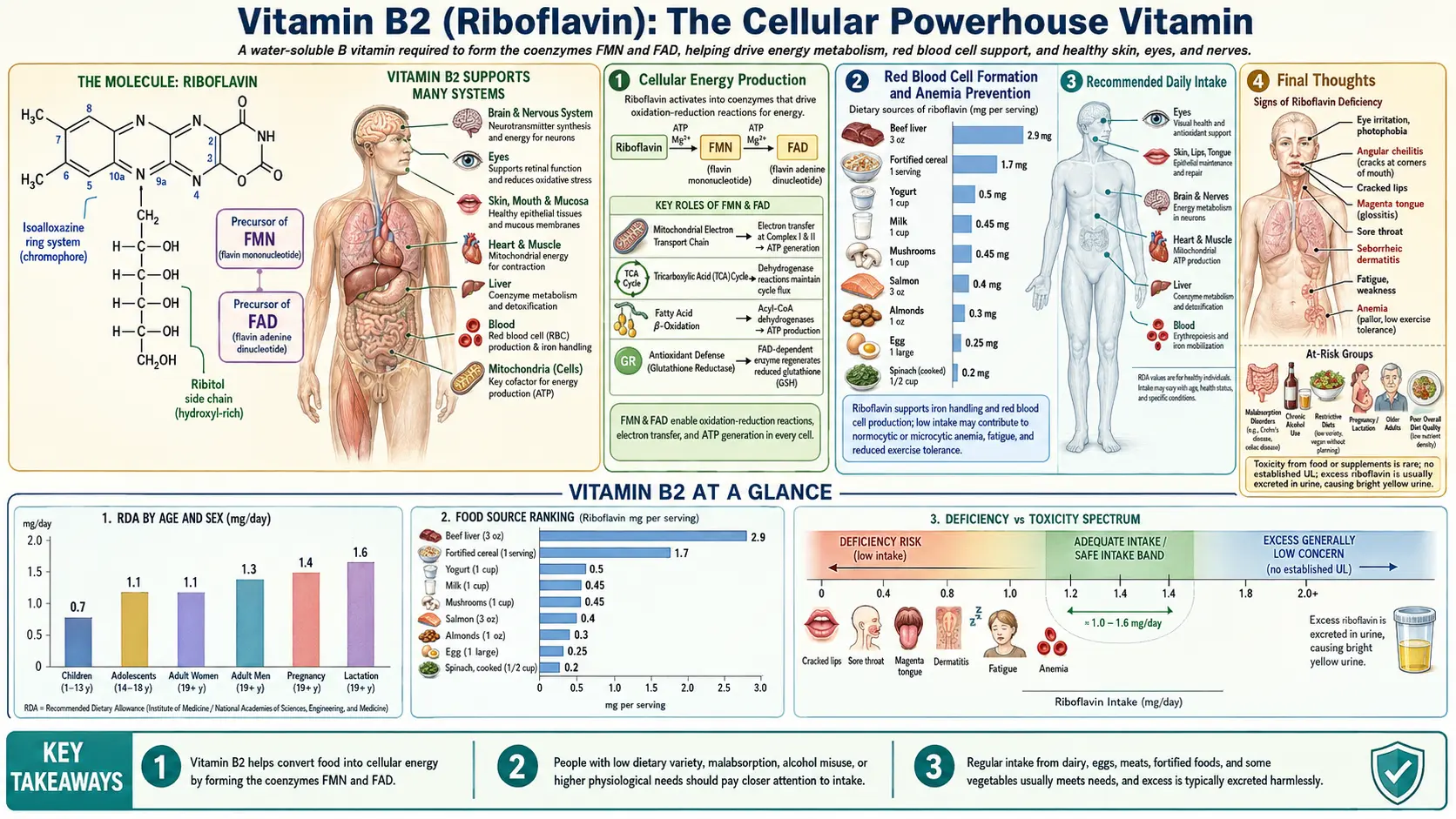
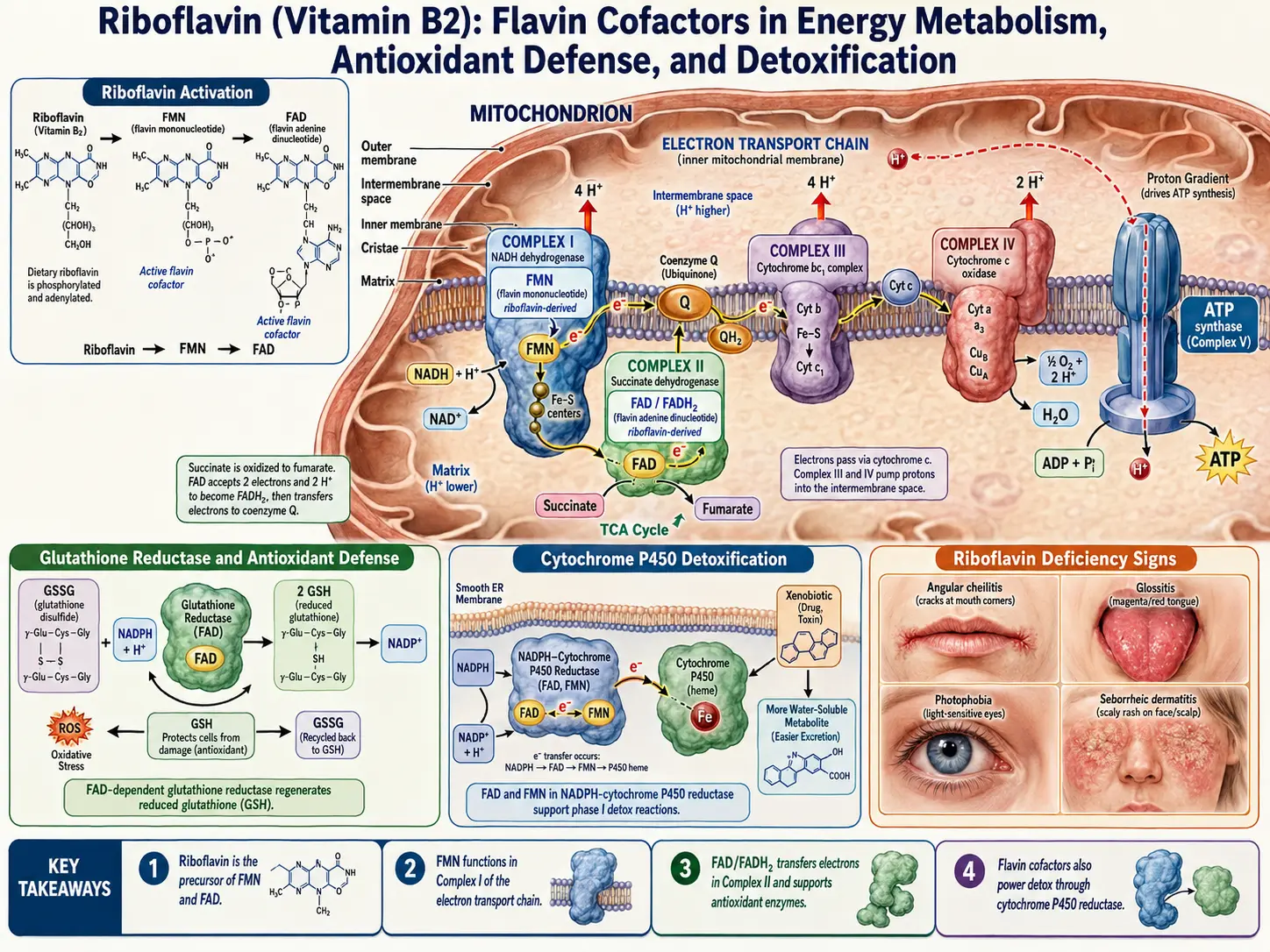
Vitamin B2, known as riboflavin, is a water-soluble vitamin that glows with a distinctive yellow-green fluorescence — in fact, it is riboflavin that gives urine its bright yellow color when B vitamins are supplemented. In natural medicine, riboflavin is celebrated as a "master metabolic catalyst" because of its indispensable role in energy production, antioxidant defense, and cellular repair. It serves as the precursor to two of the most important coenzymes in human biochemistry: flavin adenine dinucleotide (FAD) and flavin mononucleotide (FMN), which participate in over 100 enzymatic reactions throughout the body.
Interactive Visualization Mitochondria & ATP — watch your cells make energy Follow electrons through the transport chain and watch the ATP-synthase motor spin — then block Complex IV and see the chain stall. Launch → Interactive Visualization Glycolysis & the Krebs Cycle — turn sugar into energy carriers Split glucose into pyruvate through ten enzyme steps, feed the Krebs cycle, and load the NADH and FADH₂ carriers the mitochondria turn into ATP — then cut the oxygen and watch it fall to lactate. Launch → Interactive Visualization Enzymes: How They Speed Up Life Drop a substrate into an enzyme's active site and watch induced-fit catalysis fly — then heat it, swing the pH, or add an inhibitor and watch it stall. Many enzymes need a vitamin or mineral cofactor. Launch →Table of Contents
- Cellular Energy Production
- Antioxidant Defense — The Glutathione Connection
- Migraine Prevention and Relief
- Eye Health and Vision
- Skin, Hair, and Mucous Membrane Health
- Red Blood Cell Formation and Anemia Prevention
- Thyroid and Hormonal Health
- Nervous System and Neurotransmitter Support
- Homocysteine Metabolism and Cardiovascular Protection
- Pregnancy and Fetal Development
- Natural Food Sources
- Recommended Daily Intake
- Supplemental Forms
- Synergistic Nutrients
- Populations at Higher Risk of Deficiency
- Signs of Deficiency (Ariboflavinosis)
- Connections
- Featured Videos
1. Cellular Energy Production
Riboflavin sits at the very heart of the body's energy-generating machinery, making it essential for every cell, tissue, and organ.
- Electron Transport Chain: FAD and FMN are critical components of the mitochondrial electron transport chain — the final stage of cellular respiration where the vast majority of ATP (the body's energy currency) is produced. Without riboflavin, energy production at the cellular level grinds to a halt.
- Krebs Cycle Participation: FAD serves as a coenzyme for succinate dehydrogenase, a key enzyme in the citric acid (Krebs) cycle that drives continuous energy generation.
- Fat Metabolism: Riboflavin is required for beta-oxidation — the process by which fatty acids are broken down into acetyl-CoA units and fed into the energy cycle. This is especially important for sustained energy during fasting, exercise, and endurance activities.
- Protein and Amino Acid Metabolism: FAD-dependent enzymes are involved in the metabolism of multiple amino acids, ensuring that dietary protein is efficiently utilized for energy, repair, and growth.
- Combating Chronic Fatigue: Persistent fatigue, sluggishness, and low vitality — even with adequate sleep — can signal subclinical riboflavin deficiency. Restoring B2 levels often brings noticeable improvements in energy and endurance.
2. Antioxidant Defense — The Glutathione Connection
One of riboflavin's most powerful and often overlooked roles is its essential function in the body's master antioxidant system.
- Glutathione Recycling: Riboflavin is required for the enzyme glutathione reductase, which recycles oxidized glutathione (GSSG) back into its active, reduced form (GSH). Glutathione is the body's most abundant and important intracellular antioxidant — and without adequate B2, the entire glutathione defense system becomes compromised.
- Oxidative Stress Protection: By maintaining glutathione levels, riboflavin protects cells from oxidative damage caused by free radicals, environmental toxins, radiation, and metabolic byproducts.
- DNA Protection: FAD-dependent enzymes help protect DNA from oxidative mutations, reducing the risk of cellular dysfunction and malignant transformation.
- Detoxification Support: Glutathione is critical for Phase II liver detoxification. By keeping glutathione in its active form, riboflavin indirectly supports the liver's ability to neutralize and eliminate toxins, drugs, and heavy metals.
- Aging and Longevity: Oxidative stress is a primary driver of aging at the cellular level. Riboflavin's role in sustaining antioxidant defenses makes it a key nutrient in any natural anti-aging protocol.
3. Migraine Prevention and Relief
One of the most well-researched therapeutic applications of riboflavin in natural medicine is its remarkable effectiveness in migraine prevention.
- Clinical Evidence: Multiple clinical studies have demonstrated that high-dose riboflavin (400 mg/day) can reduce the frequency, duration, and intensity of migraine headaches by up to 50% over a period of 2–3 months.
- Mitochondrial Dysfunction Theory: Migraines are increasingly understood to involve impaired mitochondrial energy metabolism in brain cells. Riboflavin directly addresses this by enhancing mitochondrial ATP production.
- Safe and Well-Tolerated: Unlike many pharmaceutical migraine preventatives, riboflavin has virtually no side effects at therapeutic doses, making it a first-line natural recommendation for chronic migraine sufferers.
- Synergy with Magnesium and CoQ10: Natural practitioners often combine riboflavin with magnesium and coenzyme Q10 for a comprehensive mitochondrial support protocol that has shown excellent results in migraine management.
- Tension Headaches: While most research focuses on migraines, clinical experience suggests that riboflavin may also benefit individuals suffering from frequent tension-type headaches.
4. Eye Health and Vision
Riboflavin is one of the most critical nutrients for maintaining healthy eyes and preventing degenerative eye conditions.
- Cataract Prevention: The lens of the eye contains high concentrations of glutathione to protect against oxidative damage. Since riboflavin is essential for glutathione recycling, adequate B2 intake is strongly associated with reduced risk of cataract formation.
- Corneal Health: Riboflavin is used clinically in corneal cross-linking (CXL) procedures to strengthen the cornea in conditions like keratoconus. This directly demonstrates its structural importance to eye tissues.
- Light Sensitivity: Photophobia (excessive sensitivity to light), burning eyes, and eye fatigue are classic early signs of riboflavin deficiency.
- Bloodshot and Watery Eyes: Chronic redness, itching, and excessive tearing of the eyes can indicate insufficient B2 levels.
- Glaucoma and Macular Degeneration: Through its antioxidant support role, riboflavin may contribute to protection against glaucoma and age-related macular degeneration (AMD), though it works best in combination with other eye-supportive nutrients.
5. Skin, Hair, and Mucous Membrane Health
Riboflavin is essential for maintaining the integrity of skin, hair, and the delicate mucous membranes that line the body's internal surfaces.
- Skin Cell Renewal: B2 supports the rapid turnover and regeneration of skin cells, contributing to a healthy, vibrant complexion.
- Dermatitis Prevention: Riboflavin deficiency causes a characteristic seborrheic dermatitis — oily, flaky, scaly skin especially around the nose, ears, and forehead.
- Cracked Lips and Mouth Sores: Angular cheilitis (painful cracks at the corners of the mouth) and glossitis (a swollen, magenta-colored tongue) are hallmark signs of B2 deficiency and among the most recognizable clinical indicators.
- Hair Health: Riboflavin supports healthy hair growth and may help prevent hair loss associated with nutritional deficiency. It contributes to the oxygenation of hair follicles through its role in red blood cell production.
- Wound Healing: By supporting collagen metabolism and cellular energy for tissue repair, riboflavin accelerates the healing of cuts, burns, and skin injuries.
- Mucous Membrane Integrity: The lining of the mouth, throat, digestive tract, and respiratory passages all depend on adequate riboflavin for maintenance and repair.
6. Red Blood Cell Formation and Anemia Prevention
- Erythropoiesis: Riboflavin is involved in the production and maturation of red blood cells in the bone marrow. Deficiency can lead to a specific form of normocytic, normochromic anemia characterized by reduced red blood cell production.
- Iron Metabolism: B2 enhances the body's ability to absorb, mobilize, and utilize iron. Riboflavin deficiency impairs iron absorption from the gut and reduces the mobilization of stored iron from ferritin — a frequently overlooked cause of persistent iron-deficiency anemia that fails to respond to iron supplementation alone.
- Hemoglobin Support: By supporting iron utilization, riboflavin contributes to healthy hemoglobin levels and adequate oxygen delivery to every tissue in the body.
- Synergy with Folate and B12: Riboflavin works alongside folate and Vitamin B12 in red blood cell synthesis. Deficiency in B2 can impair the function of both these critical nutrients.
7. Thyroid and Hormonal Health
The thyroid gland and broader endocrine system depend on riboflavin for proper hormone production and regulation.
- Thyroid Hormone Activation: FAD is a cofactor for the enzyme iodothyronine deiodinase, which converts the inactive thyroid hormone T4 into the active form T3. Without adequate riboflavin, thyroid function can be impaired even when the thyroid gland itself is healthy.
- Adrenal Function: Riboflavin supports adrenal hormone production, including cortisol and aldosterone, which regulate stress response, blood pressure, and electrolyte balance.
- Estrogen Metabolism: FAD-dependent enzymes participate in the metabolism and detoxification of estrogen in the liver, supporting healthy hormonal balance in both women and men.
- Hypothyroid Symptoms: Fatigue, weight gain, cold intolerance, brain fog, and dry skin — common hypothyroid complaints — may in some cases be partially attributable to riboflavin insufficiency rather than thyroid disease alone.
8. Nervous System and Neurotransmitter Support
- B6 Activation: Riboflavin (as FMN) is required by the enzyme pyridoxine 5'-phosphate oxidase to convert Vitamin B6 into its active coenzyme form, pyridoxal 5'-phosphate (PLP). Since PLP is essential for the synthesis of serotonin, dopamine, GABA, and norepinephrine, riboflavin deficiency can indirectly impair the production of virtually all major neurotransmitters.
- Myelin Maintenance: Riboflavin supports the integrity of myelin sheaths that insulate nerve fibers, contributing to rapid and accurate nerve signal transmission.
- Neuroprotection: Through its antioxidant functions (glutathione support), B2 protects nerve cells from oxidative damage implicated in neurodegenerative diseases.
- Mood and Mental Health: By enabling the activation of B6 and supporting neurotransmitter synthesis, riboflavin indirectly influences mood regulation, sleep quality, and emotional stability.
9. Homocysteine Metabolism and Cardiovascular Protection
- MTHFR Enzyme Cofactor: FAD is the essential cofactor for methylenetetrahydrofolate reductase (MTHFR), the enzyme responsible for converting homocysteine into methionine. Elevated homocysteine is a well-established independent risk factor for cardiovascular disease, stroke, and cognitive decline.
- MTHFR Gene Variants: Individuals carrying common MTHFR polymorphisms (C677T and A1298C) produce a less stable MTHFR enzyme that is particularly dependent on adequate riboflavin. Supplementation with B2 has been shown to significantly lower homocysteine levels in these individuals — even more effectively than folate alone.
- Blood Pressure: Research has demonstrated that riboflavin supplementation can meaningfully reduce blood pressure in individuals with the MTHFR 677TT genotype, offering a targeted, genotype-guided natural intervention for hypertension.
- Vascular Protection: By reducing homocysteine and oxidative stress, riboflavin contributes to the protection of blood vessel walls and reduces the risk of atherosclerosis.
10. Pregnancy and Fetal Development
- Neural Tube Development: Riboflavin's role in activating MTHFR and supporting folate metabolism makes it critical for proper neural tube closure in early pregnancy, helping prevent conditions like spina bifida.
- Preeclampsia Risk Reduction: Adequate riboflavin status, particularly in women with MTHFR variants, may reduce the risk of preeclampsia through its blood pressure-lowering and homocysteine-reducing effects.
- Fetal Growth: B2 supports the rapid cellular division, energy production, and tissue formation required for healthy fetal development throughout pregnancy.
- Breast Milk Quality: Riboflavin is secreted in breast milk, and maternal B2 status directly influences the amount available to the nursing infant. Adequate intake during lactation is essential.
- Morning Sickness: Some natural practitioners report that B2 supplementation, particularly in combination with B6, may help alleviate nausea and vomiting during early pregnancy.
11. Natural Food Sources
Riboflavin is found in a wide variety of whole foods. Unlike thiamine, it is relatively stable to heat but is highly sensitive to light — exposure to sunlight or fluorescent light rapidly destroys B2 in foods and supplements.
Richest Whole Food Sources
- Beef Liver and Organ Meats: The single most concentrated natural source of riboflavin, providing many times the daily requirement in a single serving
- Nutritional Yeast: An outstanding plant-based source, highly valued in natural medicine for its complete B-vitamin profile
- Almonds: Among the richest nut sources of riboflavin, excellent raw or soaked
- Eggs (pasture-raised): A versatile, bioavailable source of B2, particularly concentrated in the egg white
- Wild-Caught Salmon and Trout: Provide riboflavin alongside omega-3 fatty acids and other B vitamins
- Mushrooms (especially shiitake, portobello, and cremini): One of the few plant foods with significant riboflavin content; sun-dried mushrooms are especially potent
- Spinach and Dark Leafy Greens: Kale, collards, beet greens, and Swiss chard provide B2 along with iron and folate
- Grass-Fed Dairy (yogurt, raw milk, cheese): Traditional dairy products are naturally rich in riboflavin
- Tempeh and Fermented Soy: Fermentation increases the bioavailability of riboflavin in soy products
- Quinoa: A pseudograin that provides riboflavin along with complete plant protein
Important Note on Light Sensitivity
- Milk in Clear Containers: Riboflavin in milk is destroyed rapidly by sunlight and fluorescent light. Milk stored in clear glass or plastic bottles can lose up to 85% of its B2 within hours. Always store milk in opaque containers or dark environments.
- Supplement Storage: B-complex and riboflavin supplements should be stored in dark, amber-colored bottles away from direct light to preserve potency.
- Food Preparation: Unlike B1, riboflavin is relatively heat-stable, so normal cooking does not significantly destroy it. However, boiling foods in water and discarding the water will leach B2 away — use cooking liquids in soups and sauces whenever possible.
12. Recommended Daily Intake
The following are general guidelines measured in milligrams (mg):
- Adult Men: 1.3 mg per day
- Adult Women: 1.1 mg per day
- Pregnant Women: 1.4 mg per day
- Breastfeeding Women: 1.6 mg per day
- Children (4–8 years): 0.6 mg per day
- Children (9–13 years): 0.9 mg per day
Therapeutic Doses: For migraine prevention, the clinically studied dose is 400 mg per day. For MTHFR support and homocysteine reduction, doses of 10–50 mg are commonly used. Riboflavin is water-soluble with no established upper toxicity limit — excess is harmlessly excreted, producing the characteristic bright yellow urine that is a normal and harmless sign of adequate B2 intake.
13. Supplemental Forms
- Riboflavin (free form): The standard and most widely available supplement form. Effective and affordable, though absorption is limited to approximately 27 mg per single dose — higher amounts are best divided throughout the day.
- Riboflavin-5'-Phosphate (R5P): The active, coenzymated form (FMN) that does not require hepatic conversion. Preferred for individuals with liver dysfunction, genetic polymorphisms, or poor conversion capacity.
- Whole Food B-Complex: As always, natural practitioners recommend taking B2 as part of a balanced B-complex to maintain harmony among all B vitamins and prevent relative imbalances.
14. Synergistic Nutrients
Riboflavin functions as a metabolic hub, activating and supporting numerous other nutrients:
- Vitamin B6: Riboflavin is required to convert B6 into its active form (PLP). B2 deficiency functionally creates B6 deficiency, even when dietary B6 intake is adequate.
- Folate (B9): Through the MTHFR enzyme, riboflavin is essential for proper folate metabolism. B2 deficiency impairs folate cycling and elevates homocysteine.
- Vitamin B3 (Niacin): Riboflavin (as FAD) is required by the enzyme kynurenine hydroxylase, which converts the amino acid tryptophan into niacin. B2 deficiency can therefore contribute to B3 deficiency as well.
- Iron: Riboflavin enhances iron absorption, mobilization from storage, and incorporation into hemoglobin. Correcting B2 deficiency often resolves stubborn iron-deficiency anemia.
- Glutathione: B2 is essential for the recycling of oxidized glutathione, making it the linchpin of the body's master antioxidant system.
- Coenzyme Q10 (CoQ10): Both riboflavin and CoQ10 are integral to the mitochondrial electron transport chain. Supplementing them together provides comprehensive mitochondrial energy support.
- Magnesium: Supports enzymatic processes where riboflavin serves as a cofactor, and both are recommended together in migraine prevention protocols.
15. Populations at Higher Risk of Deficiency
- Vegans and Vegetarians: While plant sources of B2 exist, the richest sources are animal-derived. Individuals following strict plant-based diets should pay careful attention to riboflavin intake or consider supplementation.
- Elderly Individuals: Reduced dietary intake, impaired absorption, and increased medication use place older adults at elevated risk.
- Athletes and Physically Active Individuals: Increased metabolic demands and higher energy turnover raise riboflavin requirements. Studies have shown that exercise increases the need for B2 beyond standard recommendations.
- Individuals with MTHFR Polymorphisms: Those carrying C677T or A1298C variants have a heightened dependence on riboflavin for proper MTHFR function and homocysteine metabolism.
- Pregnant and Breastfeeding Women: Increased demands for fetal development and milk production elevate B2 requirements.
- Individuals on Certain Medications: Tricyclic antidepressants, antimalarial drugs, phenothiazines, and oral contraceptives can interfere with riboflavin metabolism or increase excretion.
- People with Thyroid Disorders: Both hypothyroidism and hyperthyroidism can alter riboflavin metabolism and increase requirements.
- Individuals with Chronic Alcohol Use: Alcohol impairs riboflavin absorption and increases urinary losses.
16. Signs of Deficiency (Ariboflavinosis)
Riboflavin deficiency, known as ariboflavinosis, develops gradually and usually shows up first in the mouth, skin, and eyes — angular cheilitis (cracked mouth corners), a swollen magenta tongue, seborrheic dermatitis, light sensitivity, fatigue, and iron-resistant anemia. Because B2 is water-soluble, excess intake carries very low risk and surplus is simply excreted (the familiar bright-yellow urine).
For a full, patient-friendly guide to the symptoms, causes, who is at risk, and how to recover, see Riboflavin Deficiency and Riboflavin Toxicity.
Final Thoughts
Vitamin B2 is a quietly indispensable nutrient — a metabolic linchpin that powers your mitochondria, shields your cells from oxidative destruction, activates sister B vitamins, and supports everything from your eyesight to your thyroid to your cardiovascular system. It is the nutrient that keeps your body's antioxidant defenses running, your energy factories firing, and your nervous system in balance. In natural medicine, riboflavin deserves far more attention than it typically receives, particularly for migraine sufferers, individuals with MTHFR variants, those with stubborn anemia, and anyone seeking to optimize their cellular energy and longevity.
Feed the flame within your cells — and riboflavin will illuminate your path to vibrant health.
Connections
- All Vitamins
- Enzymes: How They Speed Up Life — interactive animation
- From Sugar to Energy: Glycolysis & the Krebs Cycle — interactive animation
- Mitochondria & ATP — interactive animation
- Riboflavin Deficiency
- Riboflavin Toxicity
- Riboflavin and Energy Production
- Riboflavin and Migraine Prevention
- Migraine
- Migraine (Pain & Allergy)
- Anemia
- Homocysteine
- Iron
- Magnesium
- Glutathione
- Oxidative Stress
- Vitamin B6
- Vitamin B3
- Vitamin B12
- Fatigue
- Milk
- Beef
- Magnesium Riboflavin and Supplements
- Migraine in Pregnancy and Breastfeeding