Cataracts
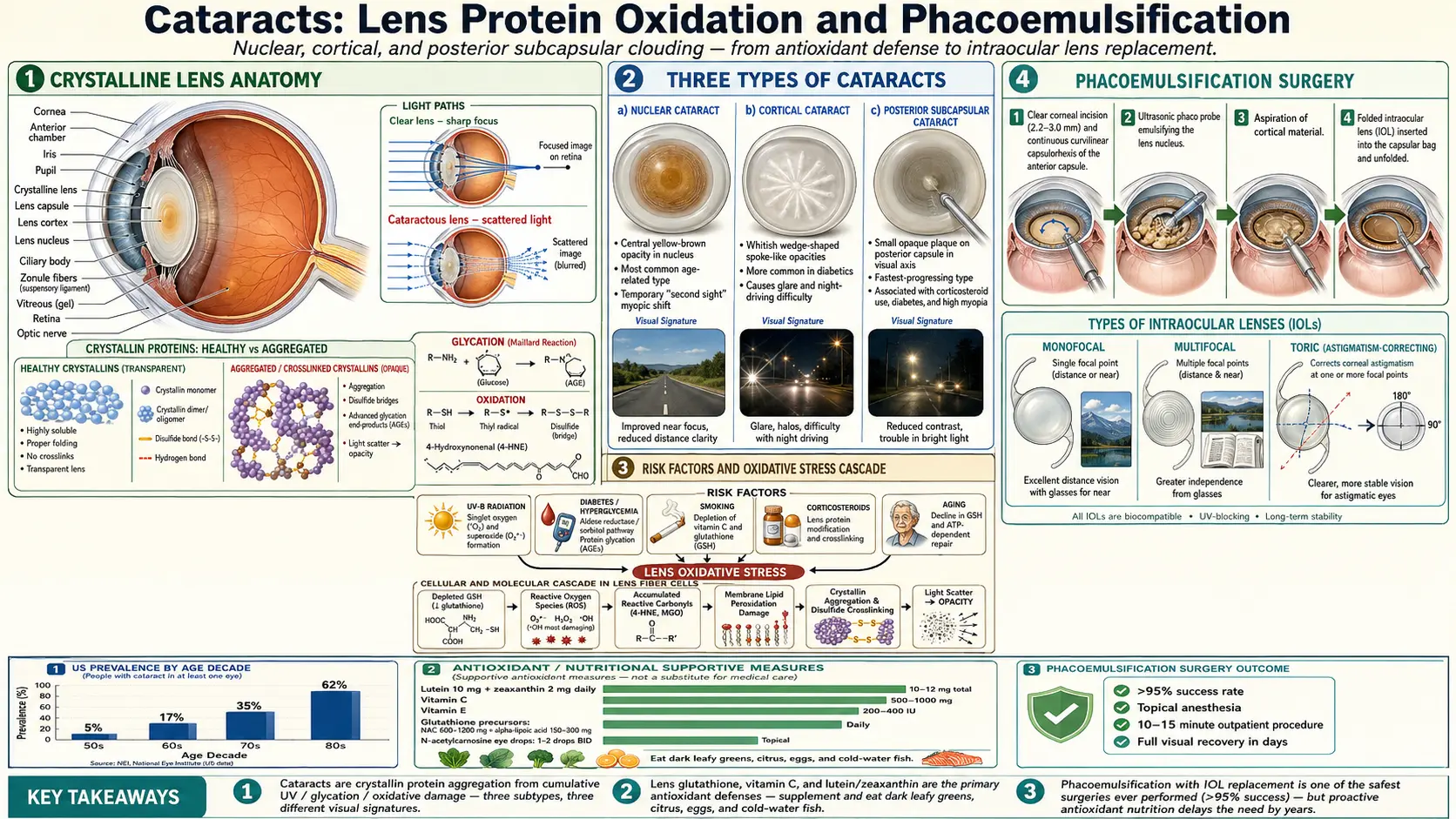
Table of Contents
- What are Cataracts?
- Types of Cataracts
- Risk Factors
- Symptoms and Progression
- Conventional Treatment
- Natural Prevention and Support
- Foods for Eye Health
- Lifestyle Protection
- The Role of Antioxidants
- Cautions and Considerations
- References & Research
- Featured Videos
1. What are Cataracts?
A cataract is a clouding of the eye's natural crystalline lens, which sits behind the iris and pupil. The lens, normally clear, focuses light onto the retina to produce sharp images. When proteins in the lens break down and clump together, they create opaque areas that scatter light and progressively blur vision.
Cataracts are the leading cause of blindness worldwide and affect more than half of all Americans by age 80. From a naturopathic perspective, cataract formation is closely linked to cumulative oxidative stress, nutrient depletion, and chronic exposure to environmental toxins. While surgery remains the definitive treatment for advanced cataracts, a proactive approach focused on antioxidant nutrition and lifestyle protection may significantly delay their onset and slow progression.
2. Types of Cataracts
Nuclear Cataracts
- Form in the center (nucleus) of the lens.
- The most common age-related type.
- Initially may cause a temporary improvement in near vision ("second sight") before worsening.
- The lens gradually yellows and hardens, eventually turning brown in advanced stages.
Cortical Cataracts
- Begin as whitish, wedge-shaped opacities on the outer edge (cortex) of the lens.
- Slowly extend inward in a spoke-like pattern toward the center.
- Often cause problems with glare and light scatter, particularly while driving at night.
- More common in individuals with diabetes.
Posterior Subcapsular Cataracts
- Form as a small, opaque area on the back surface of the lens, directly in the path of light.
- Tend to progress more rapidly than other types.
- Cause significant difficulty with reading and bright light.
- Strongly associated with corticosteroid use, diabetes, and high myopia.
3. Risk Factors
- Age: The single greatest risk factor; lens proteins degrade over decades of oxidative exposure.
- Ultraviolet (UV) radiation: Chronic sun exposure accelerates oxidative damage to lens proteins.
- Diabetes: Elevated blood sugar promotes glycation of lens proteins (sorbitol accumulation).
- Smoking: Generates massive free radical load and depletes protective antioxidants (especially vitamin C).
- Corticosteroid medications: Both systemic and inhaled steroids increase cataract risk with prolonged use.
- Eye trauma or surgery: Physical damage to the lens capsule can initiate cataract formation.
- Alcohol consumption: Heavy drinking is associated with increased cataract risk.
- Obesity: Linked to increased oxidative stress and systemic inflammation.
- Family history: Genetic factors influence lens protein composition and antioxidant capacity.
- Nutritional deficiencies: Low intake of antioxidant vitamins and carotenoids.
4. Symptoms and Progression
Cataracts develop gradually, and early stages may produce no noticeable symptoms. As the cataract progresses, common signs include:
- Blurred or cloudy vision: As if looking through a foggy or dusty window.
- Increased sensitivity to glare: Headlights and sunlight become uncomfortably bright.
- Halos around lights: Especially noticeable at night.
- Fading or yellowing of colors: Colors appear less vivid or take on a brownish tint.
- Frequent prescription changes: Glasses or contacts need updating more often.
- Difficulty with night vision: Reduced contrast sensitivity in low-light conditions.
- Double vision in one eye: The cataract may split light entering the lens.
Progression varies widely. Some cataracts remain stable for years, while others advance rapidly. Regular eye examinations allow your doctor to monitor changes and determine the optimal timing for intervention.
5. Conventional Treatment
The only definitive treatment for cataracts is surgical removal of the clouded lens and replacement with an artificial intraocular lens (IOL).
- Phacoemulsification: The most common technique; uses ultrasound energy to break up the lens, which is then aspirated through a small incision.
- Extracapsular extraction: Used for very advanced cataracts; involves a larger incision to remove the lens in one piece.
- Intraocular lens options: Monofocal, multifocal, and toric (astigmatism-correcting) lenses are available.
- Surgery timing: Recommended when cataracts interfere significantly with daily activities, driving, or quality of life.
Cataract surgery is one of the most commonly performed and safest surgeries, with a success rate exceeding 95%. However, from a naturopathic standpoint, delaying the need for surgery through prevention is always preferable when possible.
6. Natural Prevention and Support
The following nutrients and natural compounds have demonstrated potential for protecting the lens from oxidative damage and slowing cataract progression.
Lutein and Zeaxanthin
- Carotenoid pigments that concentrate in the lens and retina, acting as natural blue-light filters.
- Neutralize free radicals generated by light exposure.
- Higher dietary intake is consistently associated with reduced cataract risk in large population studies.
- Typical dose: 10 mg lutein and 2 mg zeaxanthin daily.
Vitamin C
- The lens contains one of the highest concentrations of vitamin C in the body.
- Acts as a primary water-soluble antioxidant, protecting lens proteins from oxidative damage.
- Long-term supplementation has been associated with reduced cataract incidence in multiple studies.
- Typical dose: 500-1,000 mg daily.
Vitamin E
- A fat-soluble antioxidant that protects cell membranes in the lens from lipid peroxidation.
- Works synergistically with vitamin C to recycle antioxidant defenses.
- Typical dose: 200-400 IU natural mixed tocopherols daily.
N-Acetylcarnosine (NAC) Eye Drops
- A prodrug form of L-carnosine that penetrates the aqueous humor.
- Acts as an anti-glycation agent, helping to prevent cross-linking of lens proteins.
- Some clinical studies have shown improvement in lens transparency and visual acuity with regular use.
- Typical use: 1-2 drops per eye, twice daily.
Bilberry (Vaccinium myrtillus)
- Rich in anthocyanins that strengthen capillary walls and improve microcirculation in the eye.
- Provides broad-spectrum antioxidant protection for ocular tissues.
- Typical dose: 160-320 mg standardized extract daily.
Glutathione
- The lens depends heavily on glutathione as its primary endogenous antioxidant.
- Glutathione levels in the lens decline significantly with age and cataract formation.
- Support glutathione production with precursors: N-acetyl cysteine (NAC) 600-1,200 mg daily, alpha-lipoic acid 150-300 mg daily, and selenium 100-200 mcg daily.
- Liposomal glutathione (250-500 mg daily) may provide direct supplementation.
7. Foods for Eye Health
- Dark leafy greens (kale, spinach, collard greens): Top sources of lutein and zeaxanthin.
- Citrus fruits (oranges, grapefruits, kiwi): Excellent vitamin C sources.
- Bell peppers: Among the highest vitamin C content of any vegetable.
- Berries (blueberries, blackberries, bilberries): Rich in anthocyanins and vitamin C.
- Eggs: Highly bioavailable source of lutein and zeaxanthin (in the yolk).
- Nuts and seeds (almonds, sunflower seeds, hazelnuts): Provide vitamin E and selenium.
- Cold-water fatty fish (salmon, sardines): Supply omega-3 fatty acids and astaxanthin.
- Cruciferous vegetables (broccoli, Brussels sprouts): Support glutathione production.
- Orange and yellow vegetables (carrots, sweet potatoes, squash): Rich in beta-carotene and other carotenoids.
- Green tea: Contains catechins with potent antioxidant activity.
8. Lifestyle Protection
UV Protection
- Wear UV-blocking sunglasses (labeled UV400 or 100% UV protection) whenever outdoors.
- Choose wraparound styles that block peripheral light.
- Wear a wide-brimmed hat for additional protection.
- UV exposure is cumulative; protection matters at every age.
Blue Light Management
- Prolonged exposure to high-energy visible (blue) light from screens may contribute to oxidative stress in the lens.
- Use blue-light filtering glasses or screen settings (night mode) during extended screen time.
- Follow the 20-20-20 rule: Every 20 minutes, look at something 20 feet away for 20 seconds.
Smoking Cessation
- Smoking is one of the most modifiable risk factors for cataracts.
- Quitting at any age reduces the rate of further lens damage.
- Even secondhand smoke exposure contributes to oxidative stress in the eye.
Blood Sugar Management
- Maintain stable blood glucose through a whole-foods diet low in refined carbohydrates.
- Uncontrolled diabetes accelerates lens glycation and osmotic stress.
9. The Role of Antioxidants
Oxidative stress is the central mechanism driving cataract formation. The lens is uniquely vulnerable because it is continuously exposed to light and oxygen yet has no blood supply of its own, relying entirely on the aqueous humor for nutrients and antioxidant delivery.
Key antioxidant defense systems in the lens include:
- Glutathione: The most critical lens antioxidant, maintaining protein transparency by preventing disulfide bond cross-linking.
- Superoxide dismutase (SOD): Enzymatic defense against superoxide radicals; supported by zinc, copper, and manganese.
- Catalase: Breaks down hydrogen peroxide; dependent on iron.
- Vitamin C: Present at concentrations 20-70 times higher in the aqueous humor than in blood plasma.
- Carotenoids: Lutein and zeaxanthin filter damaging wavelengths and quench singlet oxygen.
A naturopathic approach to cataract prevention focuses on maintaining and replenishing these defense systems through optimal nutrition, targeted supplementation, and minimizing pro-oxidant exposures (UV radiation, smoking, processed food, and environmental toxins).
10. Cautions and Considerations
- No supplement can reverse an established cataract. Natural approaches are most effective for prevention and slowing early-stage progression.
- Do not delay surgery when cataracts significantly impair vision, driving safety, or quality of life. Hypermature cataracts can cause complications.
- N-Acetylcarnosine eye drops are not FDA-approved for cataract treatment. Evidence is promising but limited; use under professional guidance.
- High-dose vitamin E supplementation (above 400 IU daily) has been associated with increased bleeding risk. Use caution with blood-thinning medications.
- Vitamin A supplementation should be avoided in smokers at high doses due to increased lung cancer risk; obtain carotenoids from food sources instead.
- NAC (N-acetyl cysteine) may interact with nitroglycerin and certain blood pressure medications.
- Always inform your ophthalmologist about supplements and natural therapies you are using, especially before surgery.
- Individual responses vary; work with a qualified naturopathic doctor or integrative practitioner to develop a personalized prevention plan.
11. References & Research
Historical Background
Cataracts have been recognized since antiquity. The Indian physician Sushruta described cataract surgery (couching) around 600 BCE, making it one of the earliest recorded surgical procedures. Jacques Daviel performed the first modern extracapsular cataract extraction in Paris in 1747, and Sir Harold Ridley implanted the first intraocular lens in 1949 after observing that WWII pilots tolerated acrylic fragments in their eyes.
Key Research Papers
- Brian G, Taylor H. Cataract blindness: challenges for the 21st century. Bulletin of the World Health Organization. 2001;79(3):249-256.
- Age-Related Eye Disease Study Research Group. A randomized, placebo-controlled, clinical trial of high-dose supplementation with vitamins C and E and beta carotene for age-related cataract. Ophthalmology. 2001;108(11):1992-2001.
- Jacques PF, Chylack LT. Epidemiologic evidence of a role for the antioxidant vitamins and carotenoids in cataract prevention. American Journal of Clinical Nutrition. 1991;53(1):352S-355S.
- Chylack LT Jr, et al. The Roche European American Cataract Trial (REACT): a randomized clinical trial to investigate the efficacy of an oral antioxidant micronutrient mixture to slow progression of age-related cataract. Ophthalmic Epidemiology. 2002;9(1):49-80.
- Christen WG, et al. Age-related cataract in a randomized trial of vitamins E and C in men. Archives of Ophthalmology. 2010;128(11):1397-1405.
- Michael R, Bron AJ. The ageing lens and cataract: a model of normal and pathological ageing. Philosophical Transactions of the Royal Society B. 2011;366(1568):1278-1292.
- Age-Related Eye Disease Study 2 (AREDS2) Research Group. Lutein + zeaxanthin and omega-3 fatty acids for age-related macular degeneration. JAMA. 2013;309(19):2005-2015.
- Liu YC, Wilkins M, Kim T, Malyugin B, Mehta JS. Cataracts. The Lancet. 2017;390(10094):600-612.
- Abraham AG, Condon NG, West Gower E. The new epidemiology of cataract. Ophthalmology Clinics of North America. 2006;19(4):415-425.
- Babizhayev MA, et al. Efficacy of N-acetylcarnosine in the treatment of cataracts. Drugs in R&D. 2002;3(2):87-103.
- Truscott RJW. Age-related nuclear cataract: oxidation is the key. Experimental Eye Research. 2005;80(5):709-725.
- Weikel KA, et al. Nutritional modulation of cataract. Nutrition Reviews. 2014;72(1):30-47.
Research Papers
Explore current literature on cataracts via PubMed topic searches. These links open live PubMed searches for the listed keywords — results update as new studies are indexed.
- Clinical trials on cataract — PubMed search
- Clinical trials on cataract surgery phacoemulsification — PubMed search
- Clinical trials on intraocular lens IOL — PubMed search
- Clinical trials on age-related cataract risk factors — PubMed search
- Clinical trials on diabetic cataract — PubMed search
- Clinical trials on posterior capsule opacification — PubMed search
- Clinical trials on femtosecond laser cataract surgery — PubMed search
Connections
- Ophthalmology
- Vision & the Retina — interactive animation
- Macular Degeneration
- Glaucoma
- Vitamin C
- Vitamin E
- Diabetes
- Zinc
- Vitamin A
- NAC and Glutathione
- Oxidative Stress
- Omega-3 Fatty Acids
- Selenium
- NAC
- Cysteine
- Kale
- Spinach
- Blueberries
- Hydroxychloroquine and Antimalarials
- Fracture Prevention and Fall Risk
- Diabetic Retinopathy
- Dry Eye Disease