Glaucoma
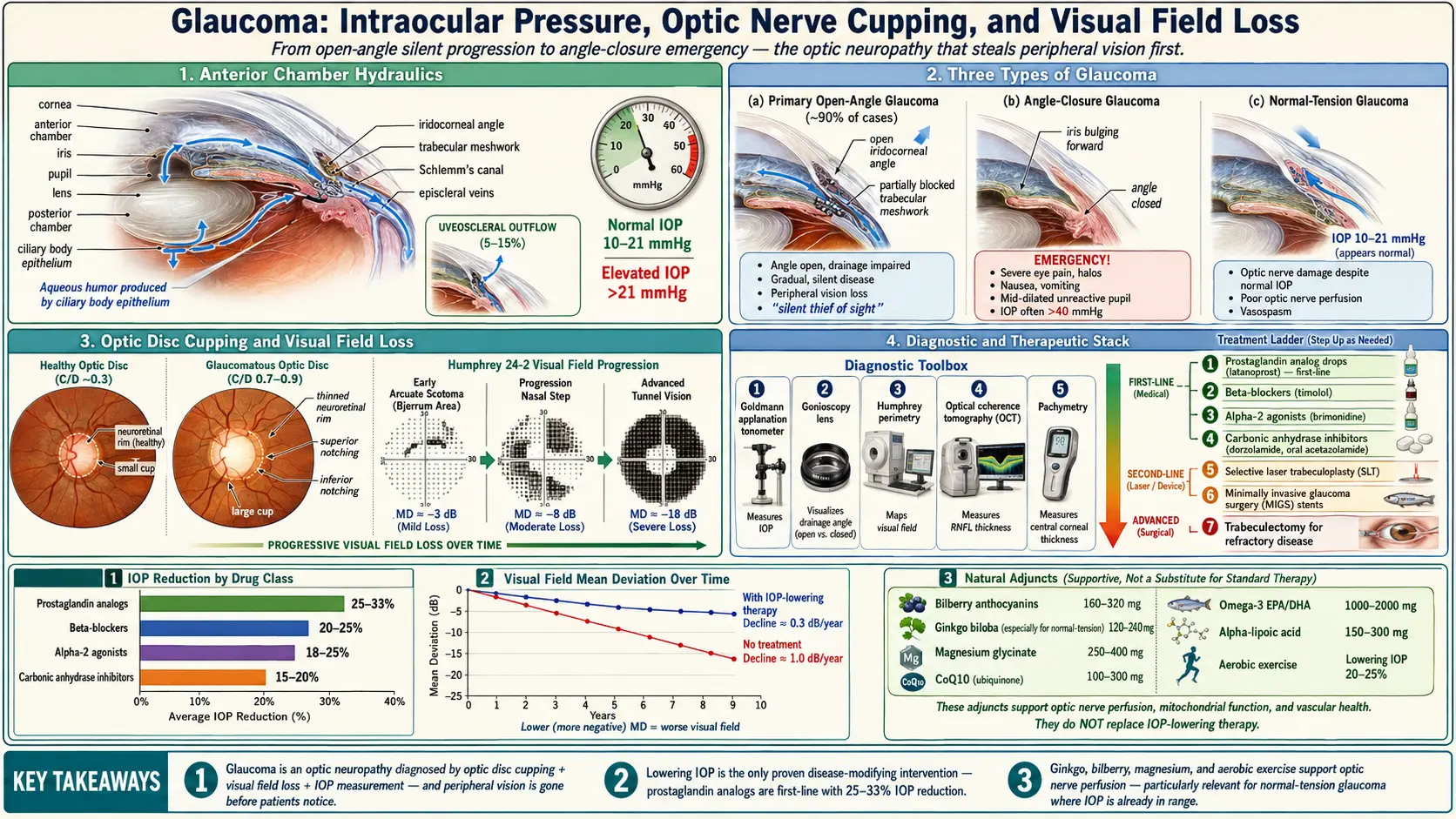
Table of Contents
- What is Glaucoma?
- Types of Glaucoma
- Risk Factors
- Symptoms and Early Detection
- Conventional Treatments
- Natural Approaches
- Lifestyle Modifications
- Foods to Eat
- Foods to Avoid
- Eye Pressure Monitoring
- Cautions and Considerations
- References & Research
- Featured Videos
1. What is Glaucoma?
Glaucoma is a group of eye conditions that damage the optic nerve, which is essential for transmitting visual information from the eye to the brain. The damage is most often caused by abnormally high intraocular pressure (IOP), though glaucoma can also occur at normal pressure levels. Left untreated, glaucoma leads to progressive, irreversible vision loss and is one of the leading causes of blindness worldwide.
From a naturopathic perspective, glaucoma is understood not simply as an isolated eye condition but as a reflection of broader systemic imbalances, including poor circulation, oxidative stress, and nutrient deficiencies. A whole-body approach that supports vascular health, reduces inflammation, and nourishes the optic nerve can complement conventional treatment strategies.
2. Types of Glaucoma
Open-Angle Glaucoma
- Most common form, accounting for approximately 90% of cases.
- The drainage angle between the iris and cornea remains open, but the trabecular meshwork becomes partially blocked over time.
- Develops gradually with no early warning signs; peripheral vision is lost slowly.
- Often called the "silent thief of sight" because damage occurs before symptoms are noticed.
Angle-Closure Glaucoma
- Less common but more acute; can be a medical emergency.
- The iris bulges forward, physically blocking the drainage angle and causing a sudden spike in intraocular pressure.
- Symptoms include severe eye pain, headache, nausea, halos around lights, and sudden blurred vision.
- Requires immediate medical attention to prevent rapid vision loss.
Normal-Tension Glaucoma
- Optic nerve damage occurs despite intraocular pressure being within the normal range.
- May be related to poor blood flow to the optic nerve or heightened nerve sensitivity.
- Naturopathic approaches focusing on circulation are particularly relevant for this type.
3. Risk Factors
- Age: Risk increases significantly after age 60.
- Family history: Having a first-degree relative with glaucoma greatly increases risk.
- Ethnicity: Higher prevalence in African American, Hispanic, and Asian populations.
- Elevated intraocular pressure: The most significant modifiable risk factor.
- Myopia (nearsightedness): Associated with open-angle glaucoma.
- Diabetes: Impaired microvascular health may contribute to optic nerve damage.
- Corticosteroid use: Prolonged use of steroid eye drops or systemic steroids can raise IOP.
- Eye injuries or surgeries: Prior trauma can compromise drainage structures.
- Low blood pressure: May reduce perfusion to the optic nerve, especially during sleep.
4. Symptoms and Early Detection
Open-angle glaucoma typically produces no noticeable symptoms in its early stages. Vision loss begins with peripheral (side) vision and progresses inward. Many people do not realize they have the condition until significant damage has occurred.
Warning signs of acute angle-closure glaucoma:
- Severe eye pain and headache
- Nausea and vomiting
- Blurred vision or halos around lights
- Redness of the eye
- Sudden visual disturbance, especially in low light
Early detection methods:
- Tonometry: Measures intraocular pressure.
- Ophthalmoscopy: Examines the optic nerve for signs of damage.
- Perimetry (visual field testing): Maps peripheral vision loss.
- Optical Coherence Tomography (OCT): Provides detailed images of the optic nerve fiber layer.
- Gonioscopy: Evaluates the drainage angle of the eye.
Regular comprehensive eye exams are essential, especially after age 40. Early detection is the most effective way to preserve vision.
5. Conventional Treatments
- Prescription eye drops: Prostaglandin analogs (latanoprost), beta-blockers (timolol), alpha agonists, and carbonic anhydrase inhibitors reduce IOP by increasing fluid outflow or decreasing fluid production.
- Oral medications: Carbonic anhydrase inhibitors (acetazolamide) may be used when drops are insufficient.
- Laser therapy: Trabeculoplasty for open-angle glaucoma; iridotomy for angle-closure glaucoma.
- Minimally invasive glaucoma surgery (MIGS): Newer procedures that improve fluid drainage with fewer complications.
- Traditional surgery: Trabeculectomy creates a new drainage pathway for aqueous humor.
Conventional treatments are effective at lowering IOP but do not reverse existing optic nerve damage. Natural approaches may support the overall health of the optic nerve and complement conventional care.
6. Natural Approaches
The following supplements and botanicals have been studied for their potential to support eye health in individuals with or at risk for glaucoma. These should be used alongside, not as replacements for, conventional treatment.
Bilberry (Vaccinium myrtillus)
- Rich in anthocyanins that support microvascular integrity in the retina.
- May improve blood flow to the optic nerve and protect retinal ganglion cells.
- Typical dose: 160-320 mg standardized extract daily.
Ginkgo Biloba
- Enhances cerebral and ocular blood flow, particularly beneficial for normal-tension glaucoma.
- Contains flavonoids and terpenoids with antioxidant and neuroprotective properties.
- Research suggests it may improve visual field outcomes in some glaucoma patients.
- Typical dose: 120-240 mg standardized extract daily.
Magnesium
- Promotes vasodilation and improves blood flow to the optic nerve.
- May help reduce vasospasm, which is implicated in normal-tension glaucoma.
- Typical dose: 250-400 mg daily (magnesium glycinate or citrate preferred).
Coenzyme Q10 (CoQ10)
- A potent mitochondrial antioxidant that supports energy production in retinal ganglion cells.
- Studies suggest it may slow the progression of glaucomatous damage.
- Typical dose: 100-300 mg daily.
Omega-3 Fatty Acids
- EPA and DHA from fish oil support anti-inflammatory pathways and healthy intraocular pressure regulation.
- May improve aqueous humor outflow.
- Typical dose: 1,000-2,000 mg combined EPA/DHA daily.
Vitamin C
- High concentrations of vitamin C are found naturally in the aqueous humor of the eye.
- Has been shown in some studies to temporarily reduce intraocular pressure at high doses.
- Supports collagen integrity in the trabecular meshwork.
- Typical dose: 1,000-2,000 mg daily in divided doses.
Alpha-Lipoic Acid
- A versatile antioxidant that regenerates other antioxidants (vitamins C and E, glutathione).
- Crosses the blood-brain barrier, providing neuroprotection to the optic nerve.
- Typical dose: 150-300 mg daily.
7. Lifestyle Modifications
Exercise
- Regular aerobic exercise (walking, cycling, swimming) has been shown to lower intraocular pressure by 20-25%.
- Exercise improves overall blood flow, including perfusion to the optic nerve.
- Aim for at least 30 minutes of moderate activity, 5 days per week.
- Avoid heavy weightlifting, inverted yoga positions, and high-intensity straining, which can spike IOP.
Stress Reduction
- Chronic stress increases cortisol, which may elevate intraocular pressure.
- Meditation, deep breathing, and progressive relaxation can help regulate the autonomic nervous system.
- Adequate sleep (7-8 hours) is important; sleeping with the head slightly elevated may reduce nocturnal IOP spikes.
Hydration
- Drink water consistently throughout the day rather than consuming large amounts at once, which can temporarily raise IOP.
- Limit caffeine intake, as excessive caffeine may cause small, transient IOP increases.
8. Foods to Eat
- Dark leafy greens (kale, spinach, collards): Rich in nitrates that improve blood flow and in lutein/zeaxanthin for retinal protection.
- Cold-water fatty fish (salmon, sardines, mackerel): Provide omega-3 fatty acids for anti-inflammatory support.
- Berries (blueberries, bilberries, blackberries): High in anthocyanins that support vascular health in the eye.
- Citrus fruits (oranges, grapefruits, lemons): Excellent sources of vitamin C.
- Nuts and seeds (almonds, walnuts, flaxseeds): Provide vitamin E, magnesium, and healthy fats.
- Colorful vegetables (bell peppers, carrots, sweet potatoes): Rich in carotenoids and antioxidants.
- Green tea: Contains catechins that may protect retinal cells from oxidative damage.
- Eggs: A bioavailable source of lutein and zeaxanthin.
9. Foods to Avoid
- Excessive caffeine: May cause transient IOP elevations in some individuals.
- High-sodium foods: Can affect fluid balance and blood pressure regulation.
- Trans fats and highly processed foods: Promote systemic inflammation and oxidative stress.
- Excessive alcohol: Chronic heavy drinking is associated with increased glaucoma risk.
- Refined sugars: Contribute to insulin resistance and inflammation, which may impair ocular blood flow.
- Large fluid boluses: Drinking a large volume of any liquid in a short time can temporarily raise IOP.
10. Eye Pressure Monitoring
Consistent monitoring of intraocular pressure is a cornerstone of glaucoma management. Key considerations include:
- Regular eye exams: At minimum annually for those at risk; more frequently if diagnosed.
- Diurnal variation: IOP fluctuates throughout the day, often peaking in the early morning. Multiple readings at different times provide a more complete picture.
- Home tonometry: Devices such as the iCare HOME allow patients to track their own IOP trends between clinic visits.
- Target pressure: Work with your ophthalmologist to establish a target IOP that accounts for your specific risk profile and baseline nerve damage.
- Track lifestyle factors: Keep a log of supplements, exercise, diet changes, and stress levels alongside IOP readings to identify what influences your pressure.
11. Cautions and Considerations
- Never discontinue prescribed glaucoma medications without consulting your ophthalmologist. Uncontrolled IOP can cause rapid, irreversible vision loss.
- Ginkgo biloba may interact with blood-thinning medications (warfarin, aspirin). Consult your healthcare provider before use.
- High-dose vitamin C can cause gastrointestinal upset and may interfere with certain lab tests. Use under professional guidance.
- Magnesium supplementation should be used cautiously in individuals with kidney disease.
- Cannabis, though sometimes promoted for glaucoma, provides only short-lived IOP reduction and carries significant side effects. It is not recommended as a treatment.
- Inform all healthcare providers about any supplements you are taking to avoid interactions and ensure coordinated care.
- Acute angle-closure glaucoma is a medical emergency. If you experience sudden severe eye pain with vision changes, seek immediate emergency care.
12. References & Research
Historical Background
The term "glaucoma" derives from the ancient Greek word "glaukos," meaning blue-green, describing the appearance of the affected pupil. Richard Banister first linked elevated intraocular pressure to the disease in 1622. Albrecht von Graefe introduced iridectomy as a surgical treatment in 1856, and the modern era of glaucoma pharmacotherapy began with the introduction of timolol eye drops in 1978.
Key Research Papers
- Kass MA, et al. The Ocular Hypertension Treatment Study: a randomized trial determines that topical ocular hypotensive medication delays or prevents the onset of primary open-angle glaucoma. Archives of Ophthalmology. 2002;120(6):701-713.
- The AGIS Investigators. The Advanced Glaucoma Intervention Study (AGIS): 7. The relationship between control of intraocular pressure and visual field deterioration. American Journal of Ophthalmology. 2000;130(4):429-440.
- Heijl A, et al. Reduction of intraocular pressure and glaucoma progression: results from the Early Manifest Glaucoma Trial. Archives of Ophthalmology. 2002;120(10):1268-1279.
- Leske MC, et al. Predictors of long-term progression in the Early Manifest Glaucoma Trial. Ophthalmology. 2007;114(11):1965-1972.
- Quigley HA, Broman AT. The number of people with glaucoma worldwide in 2010 and 2020. British Journal of Ophthalmology. 2006;90(3):262-267.
- Weinreb RN, Khaw PT. Primary open-angle glaucoma. The Lancet. 2004;363(9422):1711-1720.
- Quaranta L, et al. Effect of Ginkgo biloba extract on preexisting visual field damage in normal tension glaucoma. Ophthalmology. 2003;110(2):359-362.
- Mozaffarieh M, Grieshaber MC, Flammer J. Oxygen and blood flow: players in the pathogenesis of glaucoma. Molecular Vision. 2008;14:224-233.
- Collaborative Normal-Tension Glaucoma Study Group. The effectiveness of intraocular pressure reduction in the treatment of normal-tension glaucoma. American Journal of Ophthalmology. 1998;126(4):498-505.
- Nucci C, et al. Neuroprotective agents in the management of glaucoma. Eye. 2018;32(5):938-945.
- Tham YC, et al. Global prevalence of glaucoma and projections of glaucoma burden through 2040. Ophthalmology. 2014;121(11):2081-2090.
- Prum BE, et al. Primary open-angle glaucoma preferred practice pattern guidelines. Ophthalmology. 2016;123(1):P41-P111.
Research Papers
- Clinical trials on glaucoma — PubMed search
- Systematic reviews of glaucoma — PubMed search
- Meta-analyses on glaucoma — PubMed search
- Treatment research on glaucoma — PubMed search
- Mechanism studies of glaucoma — PubMed search
- Epidemiology of glaucoma — PubMed search
Connections
- Ophthalmology
- Vision & the Retina — interactive animation
- Ginkgo Biloba
- Omega-3 Fatty Acids
- Macular Degeneration
- Cataracts
- Zinc
- Vitamin A
- Anti-Inflammatory Diet
- Vitamin C
- Vitamin E
- Magnesium
- Diabetes
- Oxidative Stress
- Hypertension
- Insulin Resistance
- Kale
- Blueberries
- Breathwork
- Uveitis and Eye Involvement
- Diabetic Retinopathy
- Dry Eye Disease