Natto: The Sticky, Ancient Japanese Superfood of Vitamin K2, Nattokinase, and Gut-Friendly Bacillus subtilis
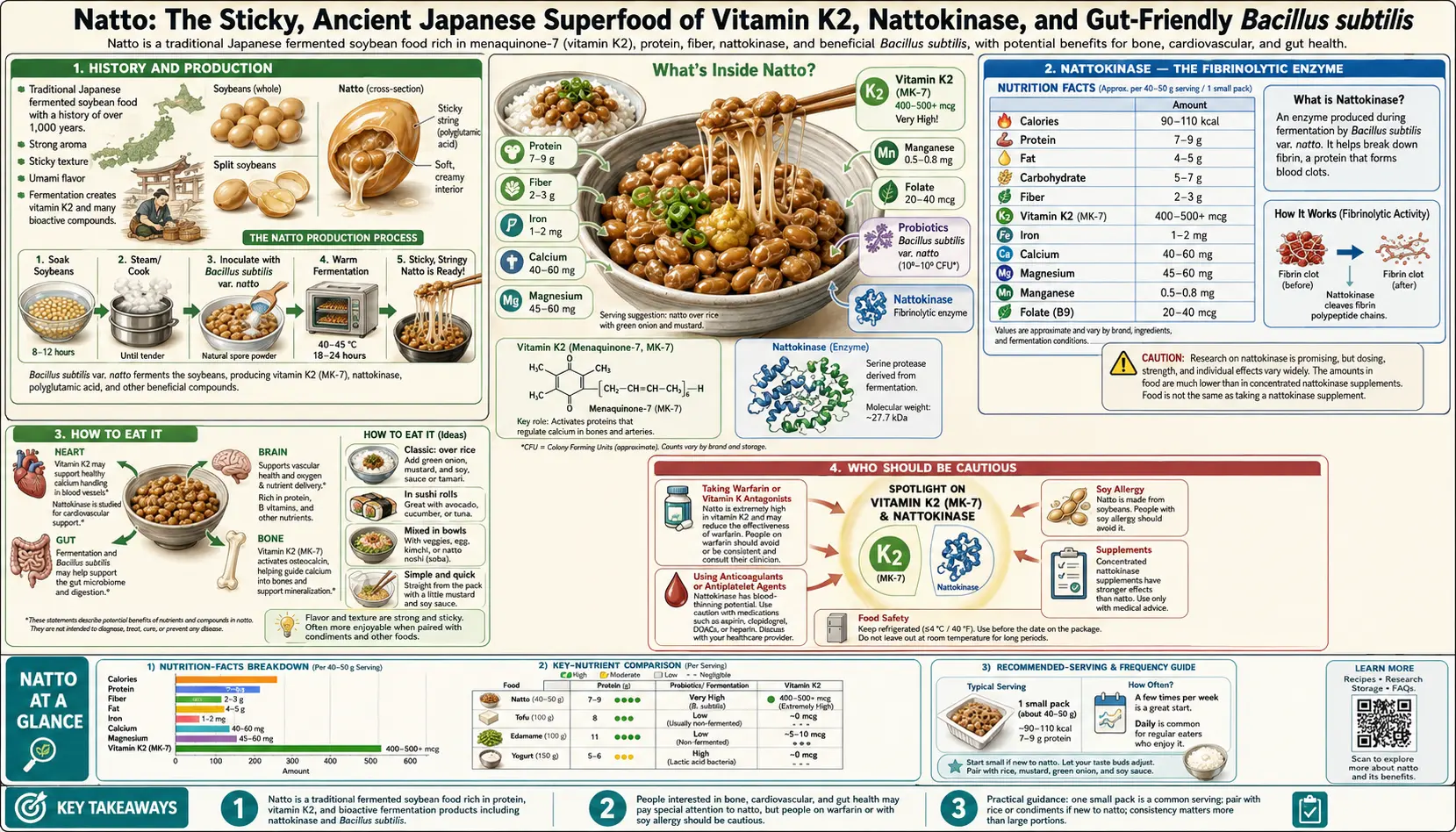
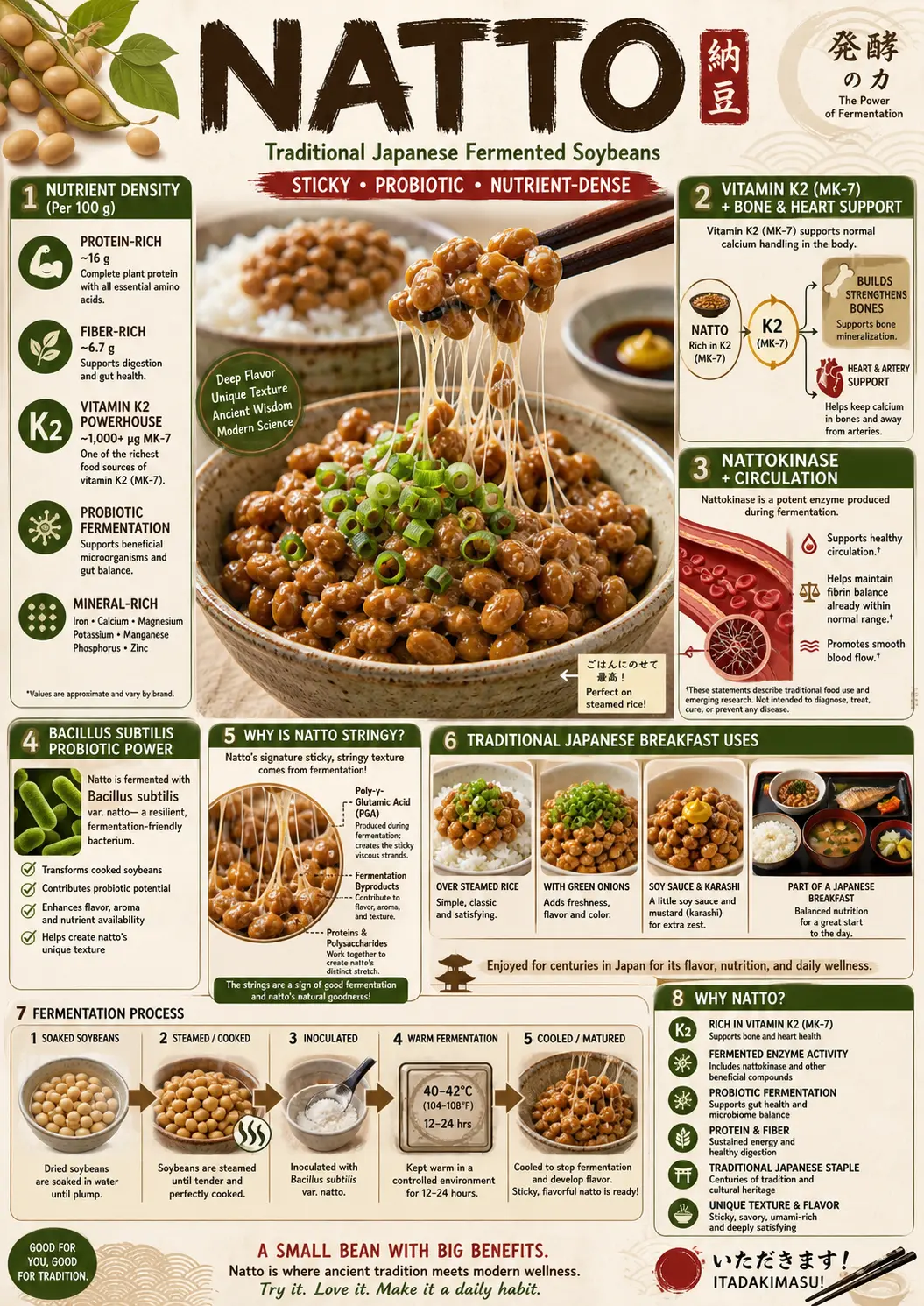
Natto is a traditional Japanese breakfast food made by fermenting whole soybeans with Bacillus subtilis var. natto for roughly 24 hours. The result is a sticky, pungent, strongly flavored dish that divides Western palates almost as sharply as it delivers nutritional value. Natto is arguably the single richest dietary source of vitamin K2 (menaquinone-7) in the human food supply, contains the fibrinolytic enzyme nattokinase, and provides a uniquely resilient probiotic organism — Bacillus subtilis — that survives stomach acid intact to colonize the gut.
This article covers the nutritional profile, evidence on cardiovascular and bone health, how to eat it, where to buy or make it, and the few people who should approach it cautiously.
Table of Contents
- History and Production
- Vitamin K2 — The Cardiovascular and Bone Connection
- Nattokinase — The Fibrinolytic Enzyme
- Bacillus subtilis — A Different Kind of Probiotic
- Broader Nutritional Profile
- How to Eat It
- Where to Buy or How to Make It
- Who Should Be Cautious
- Connections
- Research Papers
- Featured Videos
History and Production
Natto has been consumed in Japan for at least a thousand years, traditionally made by wrapping boiled soybeans in rice straw containing naturally occurring Bacillus subtilis and allowing them to ferment in a warm environment. Modern industrial production uses pure cultures in controlled temperature and humidity, producing a more consistent end-product. The signature sticky threads (ito-hiki) that stretch between the beans are polymers of poly-gamma-glutamic acid and fructans produced by the bacterium.
Vitamin K2 — The Cardiovascular and Bone Connection
Vitamin K comes in two major forms: K1 (phylloquinone) from leafy greens and K2 (menaquinone) primarily from fermented foods and animal products. Among the K2 menaquinones, the MK-7 subtype in natto has the longest half-life and most effectively activates vitamin-K-dependent proteins outside the liver — particularly osteocalcin (which directs calcium into bone) and matrix Gla protein (which keeps calcium out of arterial walls). The Rotterdam Study found that higher dietary K2 intake was associated with a 57% reduction in coronary heart disease mortality over 10 years. Observational epidemiology consistently correlates K2 intake with reduced arterial calcification and fewer hip fractures. Natto provides roughly 350–1000 µg of MK-7 per 100 g — an order of magnitude more than any other common food.
Nattokinase — The Fibrinolytic Enzyme
Nattokinase is a serine protease produced by Bacillus subtilis var. natto. In blood, it breaks down fibrin — the structural protein of clots — and mimics some effects of pharmaceutical fibrinolytics. Small human trials of nattokinase supplements (100–300 mg/day as FUs) have shown modest reductions in blood pressure, plasma fibrinogen, and platelet aggregation. Whether the amount consumed in a bowl of natto is bioavailable enough to produce these effects systemically is debated, and the nattokinase supplement literature far exceeds the literature on nattokinase from food.
Bacillus subtilis — A Different Kind of Probiotic
Unlike the Lactobacillus and Bifidobacterium species in most probiotic yogurts, Bacillus subtilis forms protective spores that survive stomach acid and emerge in the small intestine. It produces antimicrobial compounds that suppress pathogenic species, supports mucosal immunity, and may improve gut barrier integrity. It is one of the organisms in various commercial spore-based probiotic formulations.
Broader Nutritional Profile
A 100-gram serving (roughly one container) of natto provides approximately:
- Calories: 210
- Protein: 19 g — a complete plant protein
- Fiber: 5 g
- Vitamin K2 (MK-7): 350–1000 µg
- Iron: 48% DV
- Manganese: 70% DV
- Copper, magnesium, phosphorus, zinc: significant amounts
- Isoflavones (genistein, daidzein): richest among common soy foods
How to Eat It
Natto is traditionally served with rice, a small amount of soy sauce, Japanese mustard (karashi), and chopped green onions. Stirring vigorously before serving develops the sticky threads and mellows the flavor. Some Japanese eaters add a raw egg yolk or a beaten egg. For newcomers, mixing natto into fried rice, miso soup, or atop avocado toast can make the first attempts more approachable. The flavor is umami-forward with a hint of ammonia that fades as you acclimate.
Where to Buy or How to Make It
Commercial natto is sold frozen in roughly 50-gram single-serving styrofoam packets at Japanese and Korean grocery stores, and increasingly in well-stocked natural-food stores. It keeps in the freezer for months and thaws in about an hour. Home fermentation is straightforward: cook whole soybeans to a tender texture, add a small amount of commercial natto as a starter, and incubate at 40–42 °C for 24 hours in a covered container.
Who Should Be Cautious
- Warfarin users. The high vitamin K content significantly interferes with warfarin anticoagulation. Maintaining consistent intake (not necessarily zero) is the standard recommendation — discuss with your anticoagulation clinic.
- Soy allergy. Obviously contraindicated.
- Active thyroid medication. Space soy foods several hours from levothyroxine dosing.
- Low-histamine diet patients. Fermented foods including natto can be high in histamine.
Connections
- All Food
- Bacillus Subtilis
- Nattokinase
- Vitamin K
- Vitamin K2 (Menaquinone)
- Vitamin K2 and Arterial Calcification
- Fermented Foods
- Probiotics
- Kefir
- Kimchi
- Yogurt
- Spermidine
- Calcium
- Osteoporosis
- Cardiovascular Disease
- Gut Healing
- Anti-Inflammatory Diet
- Gut-Brain Axis
- Vitamin K2 and Bone Health
Research Papers
The following curated PubMed topic searches lead to the peer-reviewed primary literature and systematic reviews that underpin the health claims discussed on this page. Each link opens PubMed in a new tab.
- Nattokinase and fibrinolytic activity in humans
- Natto consumption and cardiovascular mortality (Takayama Study)
- Vitamin K2 (MK-7) from natto and bone health
- Vitamin K2 and arterial calcification
- Nattokinase and blood pressure: randomized trial
- Bacillus subtilis natto and gut microbiota
- Fermented soy products and all-cause mortality
- Menaquinone-7 pharmacokinetics in humans
- Natto intake and osteoporotic fracture risk
- Vitamin K and coronary heart disease (Rotterdam Study)
Browse all PubMed citations for “Natto”
This content is provided for informational purposes only and does not constitute medical advice. Consult a qualified healthcare provider for personalized dietary guidance.