Chanca Piedra History, Traditional Use, and Botany
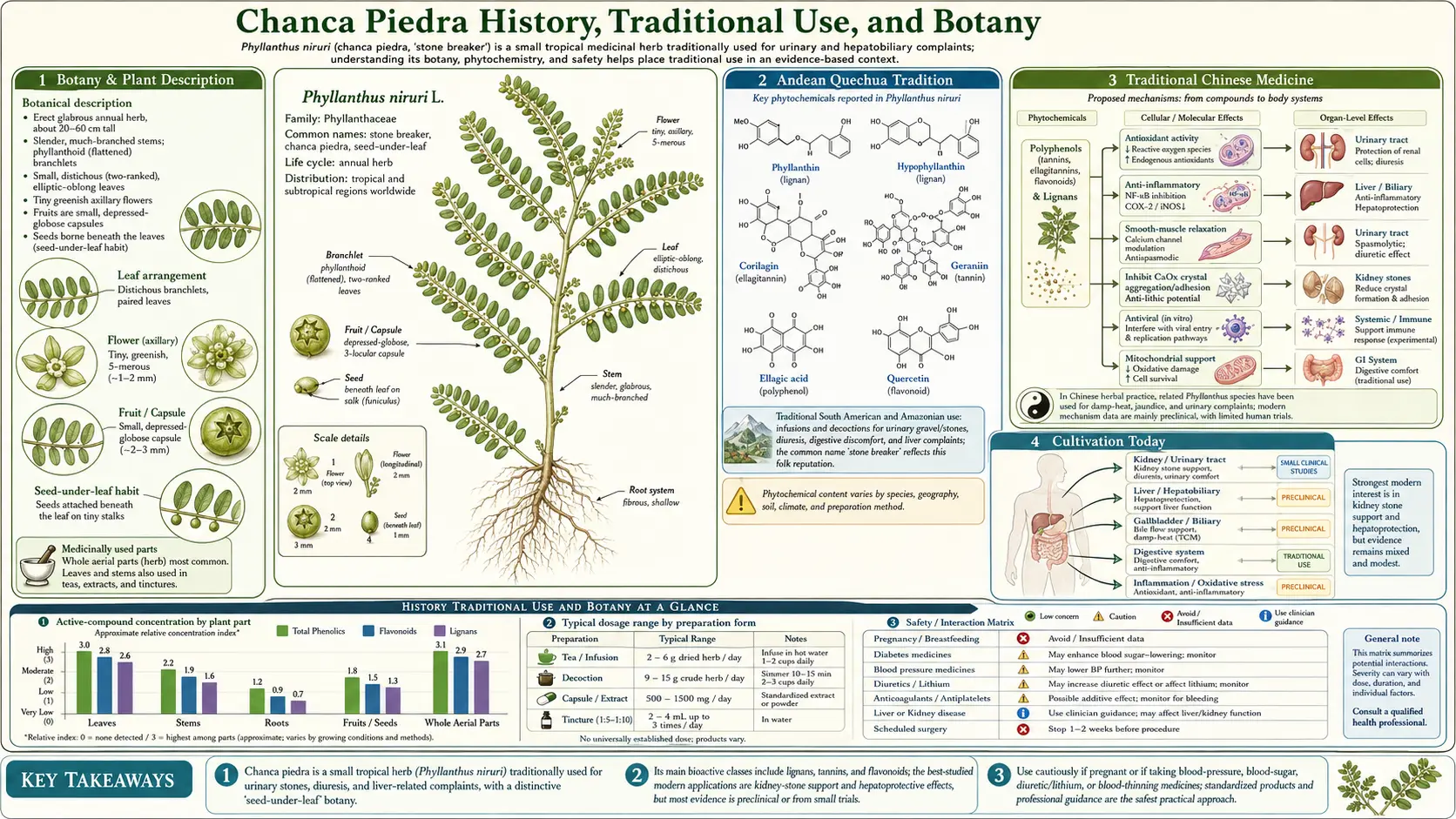
Chanca Piedra is a traditional medicine with documented use across at least four major ethnobotanical traditions: Amazonian indigenous, Andean Quechua, Caribbean African-influenced folk practice, and the Indian Ayurvedic system, where it is known as bhumi amla. The plant is one of the relatively few cases where a centuries-old traditional indication (kidney stones) has been substantially validated by modern pharmacology. This page covers the history, the regional traditions, and the botanical features of this small but consequential herb.
Table of Contents
- Botany & Plant Description
- Geographic Range
- Amazonian Indigenous Use
- Andean Quechua Tradition
- Ayurvedic Use as Bhumi Amla
- Caribbean and West African Folk Use
- Traditional Chinese Medicine
- Modern Scientific Investigation
- "Stone Breaker" Name Origin
- Cultivation Today
- Research Papers and References
- Connections
- Featured Videos
Botany & Plant Description
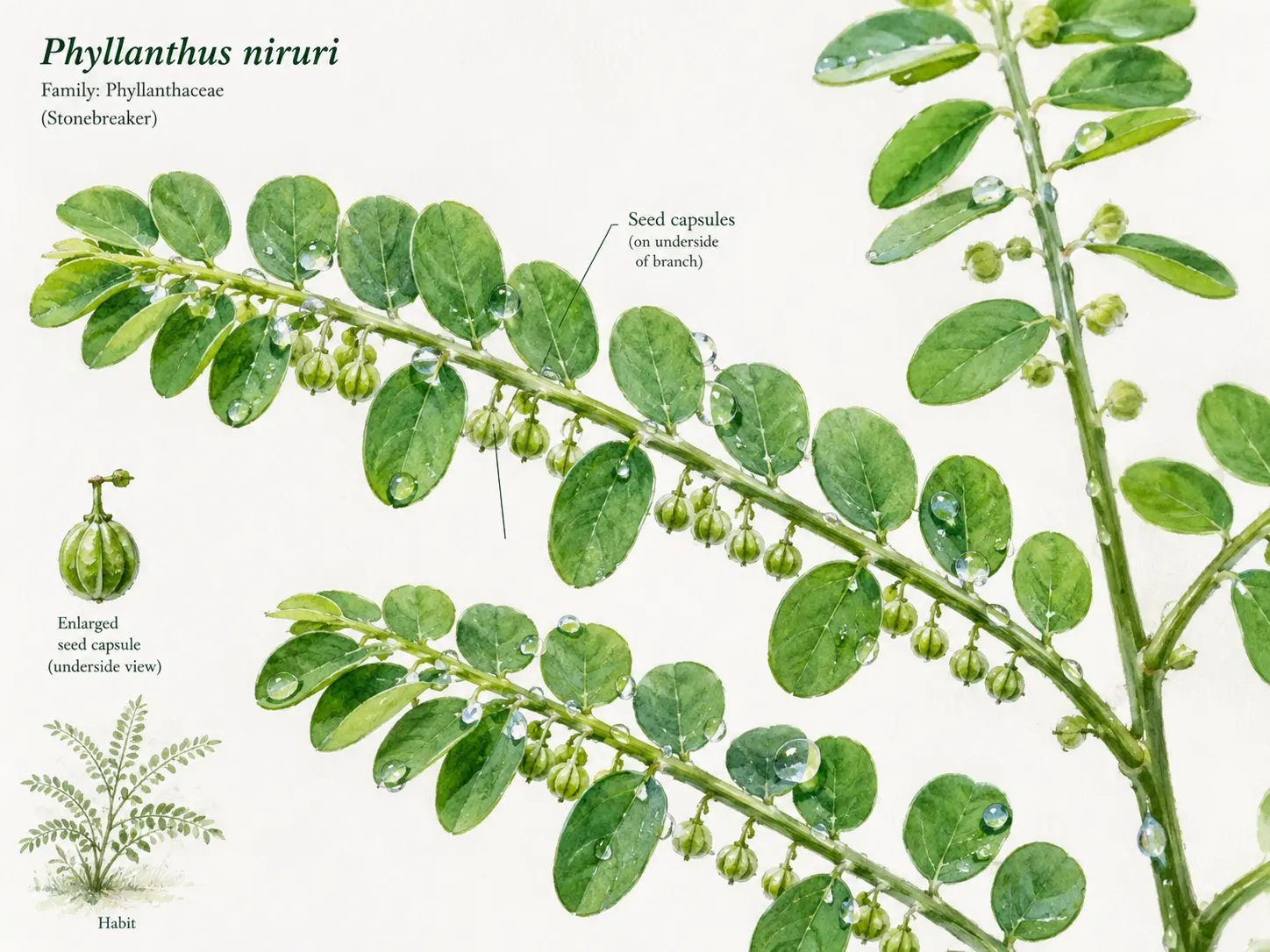
Chanca Piedra (genus Phyllanthus) is a small annual herb in the family Phyllanthaceae. Its distinguishing visual feature: tiny flowers and seed capsules grow on the underside of each thin branching stem, tucked beneath the small oval leaves. The English vernacular name "seed-under-leaf" reflects this. Plants typically reach 20–60 cm in height, with delicate stems that branch repeatedly into a feathery silhouette.
The whole aerial portion of the plant — leaves, stems, flowers, and fruit — is used medicinally. Roots are sometimes included in traditional preparations but are mostly considered secondary in potency. The plant is harvested either fresh during the rainy season or dried for tincture, capsule, or tea preparation.
Family taxonomy: until recent reclassifications, Phyllanthus was placed in the larger Euphorbiaceae family (the same family as poinsettias and rubber trees). Current taxonomy places it in the smaller Phyllanthaceae, separated based on molecular phylogenetics.
Geographic Range
The plants grow as common — sometimes invasive — weeds across tropical and subtropical regions on every inhabited continent. Most common ranges:
- Tropical Americas: Amazon basin (the Chanca Piedra heartland), Caribbean islands, Central America, southeastern United States (rare)
- South Asia: India, Sri Lanka, Bangladesh, Nepal — the homeland of Ayurvedic bhumi amla
- East and Southeast Asia: southern China, Taiwan, Vietnam, Thailand, Indonesia, the Philippines
- Tropical Africa: West, Central, and East Africa, often as a naturalized species
- Pacific Islands: Hawaii (introduced), other tropical Pacific
The plant tolerates a wide range of soils, prefers full sun or partial shade, and grows readily as a "weed" in cultivated fields, urban margins, and disturbed land. It is essentially impossible to eradicate from any tropical region where it has established.
Amazonian Indigenous Use
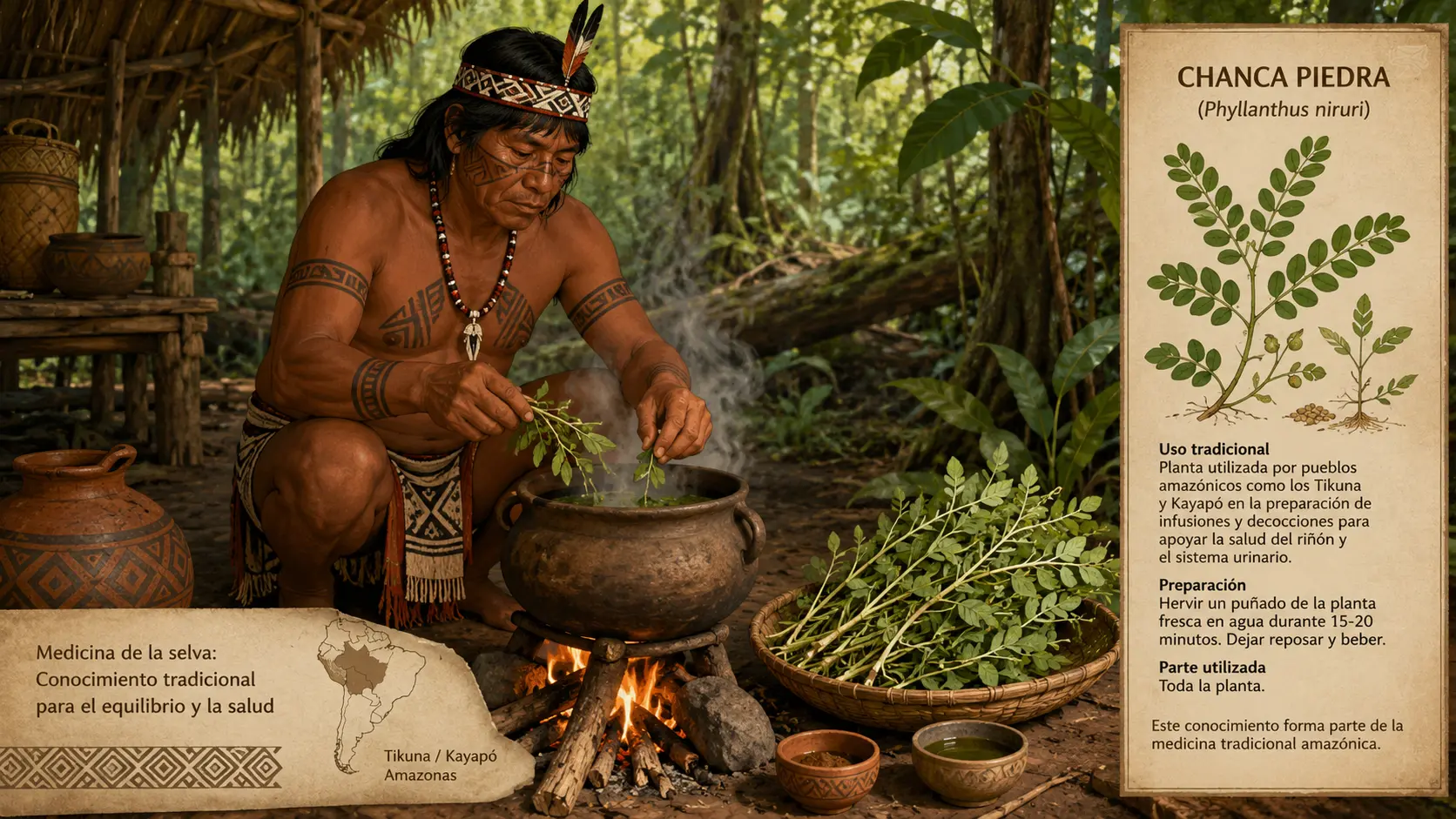
The Brazilian Amazon basin is the historical center of Chanca Piedra use in the Americas. Indigenous Amazonian groups (including the Tikuna, Kayapó, Yanomami, and Quechua-influenced communities of the western Amazon) have used the plant for centuries primarily as a "stone breaker" (quebra pedra in Portuguese) for urinary calculi. Traditional preparation: fresh whole-plant decoction, simmered for 15–30 minutes, sipped through the day for 1–3 weeks during stone passage.
Secondary Amazonian indications: liver problems (jaundice, hepatitis-like illness), digestive disorders, fevers, and as a "blood cleanser." Some communities used it for diabetes-like presentations (excessive thirst and urination), an indication that aligns with the modest blood-sugar effects documented in modern studies.
Andean Quechua Tradition
The Spanish name chanca piedra ("stone breaker") originates in the Andean Quechua tradition where the plant was used in similar fashion for "kidney pain" and stone passage. The Andean tradition also developed a urinary-tract-infection use (the plant has mild antibacterial activity) and a "cooling" use for inflammatory conditions.
The convergence of Brazilian quebra pedra and Andean chanca piedra on the same indication (urinary stones), with the same name in two different languages, suggests independent discovery or extensive cultural diffusion of the use. Either way, the indication is strongly anchored in pre-Columbian American medicine.
Ayurvedic Use as Bhumi Amla
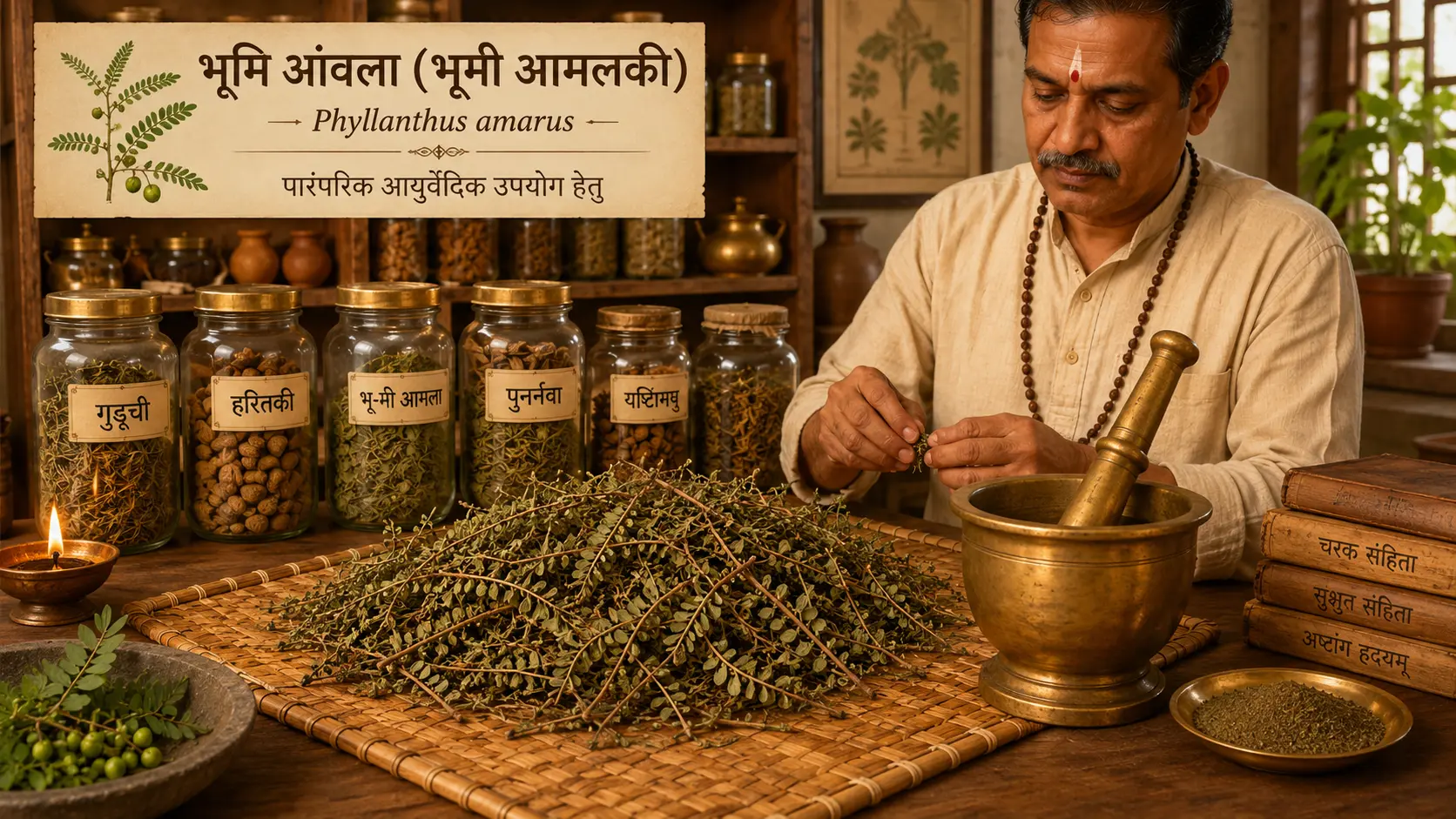
In the Ayurvedic tradition of South Asia, P. amarus (sometimes called P. niruri in older texts) is known as bhumi amla — literally "earth gooseberry" or "ground gooseberry," a reference to its small fruit. Bhumi amla appears in classical Ayurvedic texts (the Charaka Samhita and Sushruta Samhita) as a:
- Liver tonic (the dominant indication; the Sanskrit yakrut literally means "liver")
- Digestive aid for sluggish digestion or jaundice
- Diuretic for urinary disorders and swelling
- Anti-fever herb (cooling)
- Restorative tonic for chronic illness
The Ayurvedic tradition's emphasis on liver disease (which we would now recognize as including viral hepatitis) anticipated the modern hepatitis-B research by centuries. Thyagarajan's 1988 Lancet paper drew directly on Ayurvedic indications for the choice of plant and condition.
Caribbean and West African Folk Use
Caribbean folk medicine, with its blended African, indigenous, and European influences, uses Chanca Piedra similarly: kidney pain and stones, jaundice, "weak liver," "weak blood," and digestive complaints. The Trinidadian and Jamaican traditions have particularly extensive folk use. African slaves brought ethnobotanical knowledge to the Caribbean, where it merged with indigenous Carib and Taino plant use.
West African folk medicine (in countries where the plant grows, including Nigeria, Ghana, and Senegal) uses related Phyllanthus species for malaria, jaundice, and snakebite (the snakebite use lacks modern evidence). The genus is part of the broader West African materia medica.
Traditional Chinese Medicine
Traditional Chinese Medicine uses P. urinaria (called ye xia zhu — "pearl beneath the leaf") for:
- Damp-heat syndromes (which include certain liver and urinary conditions in TCM diagnosis)
- Jaundice and hepatitis-like illnesses
- Painful urination and urinary tract complaints
- Eye disorders (the plant is sometimes called zhen zhu cao, "pearl grass," for both its tiny pearl-like fruit and its eye-clearing reputation)
The TCM tradition has the strongest indigenous research base for P. urinaria specifically, including the in-vitro hepatitis B antiviral studies that informed later trials.
Modern Scientific Investigation
A rough timeline of modern Chanca Piedra research:
- Pre-1980: sporadic ethnobotanical reports; some isolated phytochemistry papers
- 1987 (Venkateswaran): in-vitro demonstration of HBV polymerase inhibition by Phyllanthus extract
- 1988 (Thyagarajan): the famous Lancet paper on HBV carriers; ignites global research interest
- 1990s: wave of HBV replication trials, mostly in India, China, and Brazil
- 2003 (Barros): mechanism of anti-crystallization for kidney stones established at UNIFESP
- 2004 (Nishiura): human trial of urinary chemistry effects in calcium oxalate stone formers
- 2006 (Micali): post-SWL adjuvant trial showing improved fragment passage
- 2011: Cochrane review of Phyllanthus for HBV; tempers expectations while confirming a real effect
- 2010s–2020s: active research on active compounds, urolithin metabolism, CYP450 effects, antiviral mechanisms in HCV and other viruses, anti-cancer cell-line work, blood-pressure trials, and standardization improvements
"Stone Breaker" Name Origin
The "stone breaker" common name originates in Spanish and Portuguese folk usage in the Americas. The Spanish chanca piedra and Portuguese quebra pedra both literally translate as "stone breaker," and both arose in regions (Andean and Amazonian respectively) where the plant was used to treat urinary calculi. The English name is a direct translation.
The name oversells the mechanism — modern pharmacology shows the plant prevents stone formation and assists fragment passage rather than dissolving existing stones. But "anti-crystallization tea" wouldn't have been as memorable a product name in the 1990s herbal-supplement boom.
Cultivation Today
Most commercial Chanca Piedra is wild-harvested from natural stands in tropical countries. Sustainable harvesting is generally not a concern because the plant is abundant, fast-growing, and reproduces prolifically from seed. Cultivated production exists in India, Brazil, China, and parts of Southeast Asia for the export market.
Quality concerns — species ID, heavy metals, pesticide residues — are less about the plant itself and more about harvesting and processing standards. See the Forms & Dosing page for quality criteria.
Research Papers and References
- Phyllanthus ethnobotany — PubMed
- Ayurvedic bhumi amla — PubMed
- Quebra pedra ethnobotany — PubMed
- P. urinaria in TCM — PubMed
- Amazonian indigenous uses — PubMed
Connections
- All Herbs
- Chanca Piedra Overview
- Phyllanthus Species Comparison
- Forms, Dosing and Standardization
- Active Compounds
- Kidney Stone Protocol
- Liver Protection and Hepatitis B
- Ashwagandha
- Holy Basil
- Astragalus
- Kidney Stones
- Jaundice
- Hepatitis
- Hepatitis B
- Liver Disease
- Safety Drug Interactions and Cautions