Chanca Piedra (Phyllanthus niruri)
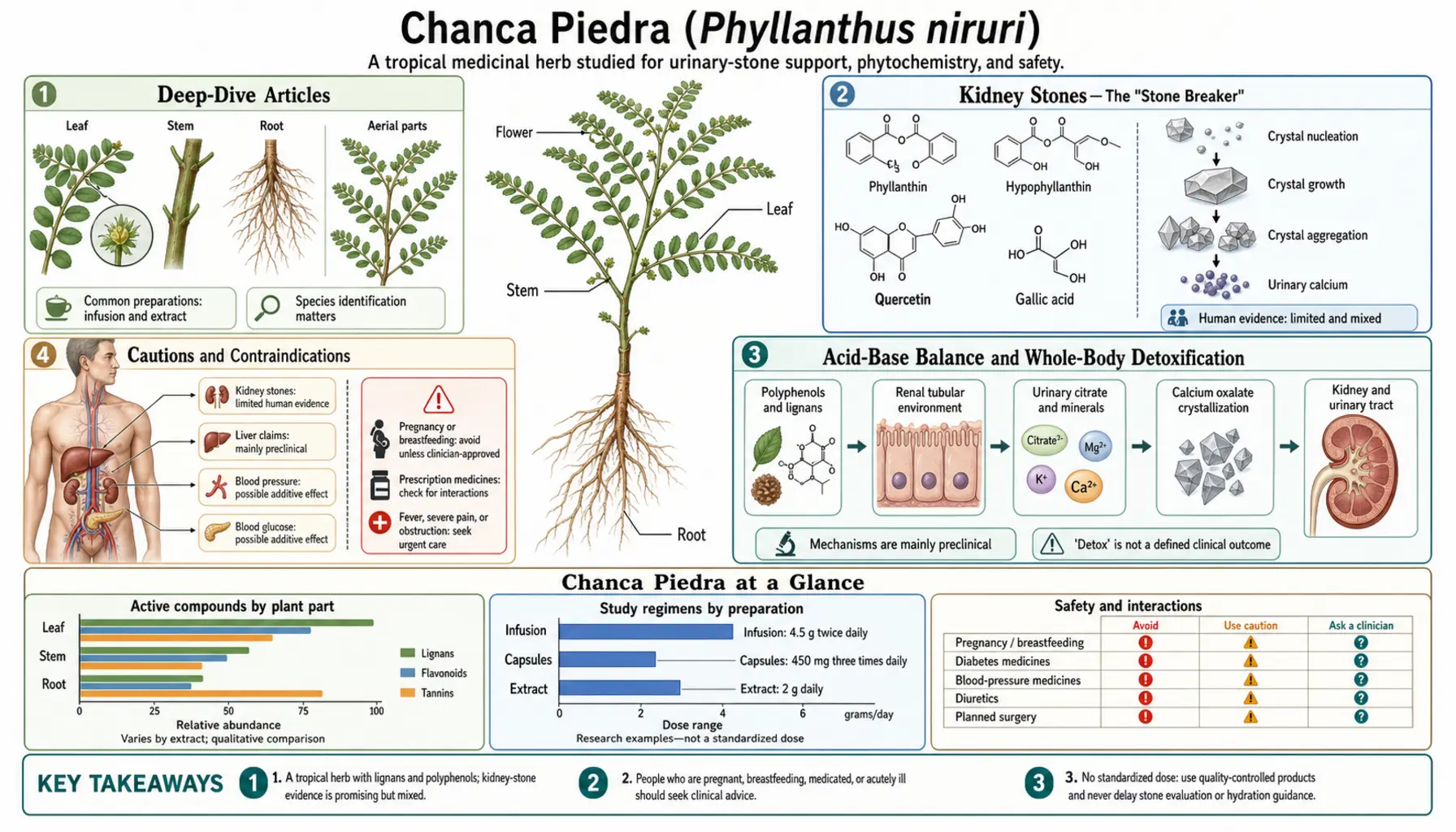
Deep-Dive Articles
Chanca Piedra is one of those plants where the folk reputation (a stone-dissolving herb) sits next to a substantial pharmacological literature (kidney stone anti-crystallization, hepatitis B antiviral activity, mild xanthine oxidase inhibition, alpha-glucosidase inhibition, ACE-like activity). The nine articles below break the evidence apart by application so you can find the protocol you actually need — the kidney-stone protocol with the trial doses, the hepatitis-B story (and why the Cochrane review tempered the original Lancet excitement), the honest blood-sugar assessment, the safety profile and drug interactions, and the species confusion that makes supplement selection harder than it should be.
Kidney Stones (Anti-Crystallization & Post-Lithotripsy)
The headline use. Anti-crystallization mechanism (not literal stone dissolution), the Nishiura 2004 trial in calcium oxalate stone formers, the Micali 2006 post-SWL trial showing 24-percentage-point fragment-clearance improvement, dosing protocols, and where it fits relative to potassium citrate and thiazides.
Liver Protection & Hepatitis B
The Thyagarajan 1988 Lancet paper on HBV carriers, the follow-up trials that didn't quite reproduce its 59% HBsAg loss, the 2011 Cochrane review's careful conclusions, mechanism (HBV polymerase / reverse-transcriptase inhibition), and what the herb does for non-viral liver disease (NAFLD, anti-TB drug hepatotoxicity).
Blood Sugar & Metabolic Effects
An honest assessment. Mechanisms (alpha-glucosidase inhibition, AMPK activation), the rodent data, the small human studies, and how Chanca Piedra ranks against berberine, gymnema, and fenugreek for glycemic control. Most online claims overpromise.
Uric Acid, Gout & Hypertension
Xanthine oxidase inhibition (mild, ~10× weaker than allopurinol), uricosuric effect, mild diuresis, ACE-like activity from geraniin and corilagin, and the small Indonesian RCT showing ~7–10 mmHg systolic reduction in mild hypertension. A reasonable adjunct, not a replacement.
Active Compounds: Lignans & Ellagitannins
Phyllanthin, hypophyllanthin, niranthin, geraniin, corilagin — which compound drives which effect. Why isolated phyllanthin isn't the same as whole-herb activity (the geraniin → gut microbiota → urolithin pathway). CYP3A4 mechanism-based inhibition and P-glycoprotein effects.
Forms, Dosing & Standardization
Whole-herb capsule vs standardized extract vs tincture vs tea. What "5% phyllanthin" actually means. Indication-specific dosing (kidney stones vs liver vs blood sugar vs prevention). Cycling rationale, duration limits, and quality certifications to look for.
Safety, Drug Interactions & Cautions
The CYP3A4 inhibition and P-gp effects matter clinically. Drug interaction list: warfarin, statins, antidiabetics, antihypertensives, lithium, antiretrovirals, immunosuppressants. Pregnancy, breastfeeding, and pre-surgical contraindications. Self-monitoring during use.
Phyllanthus Species: niruri vs amarus vs urinaria
Three closely-related species, each with a slightly different active-compound profile and a different research focus. P. amarus dominates the hepatitis-B trial base; P. urinaria has the highest geraniin content (best for stones/antioxidant); P. niruri is what's most often labeled as Chanca Piedra. Why supplement labeling is a mess.
History, Traditional Use & Botany
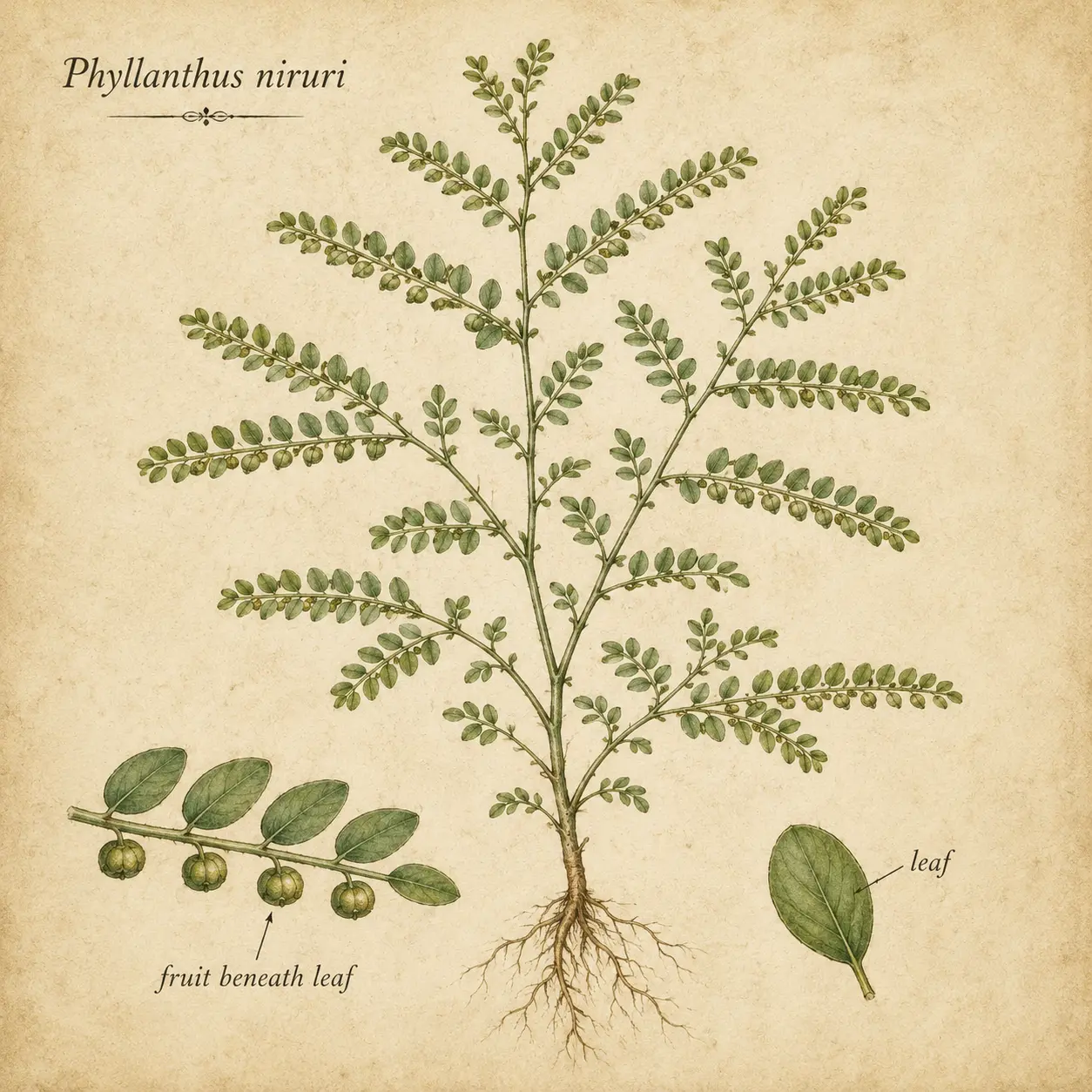
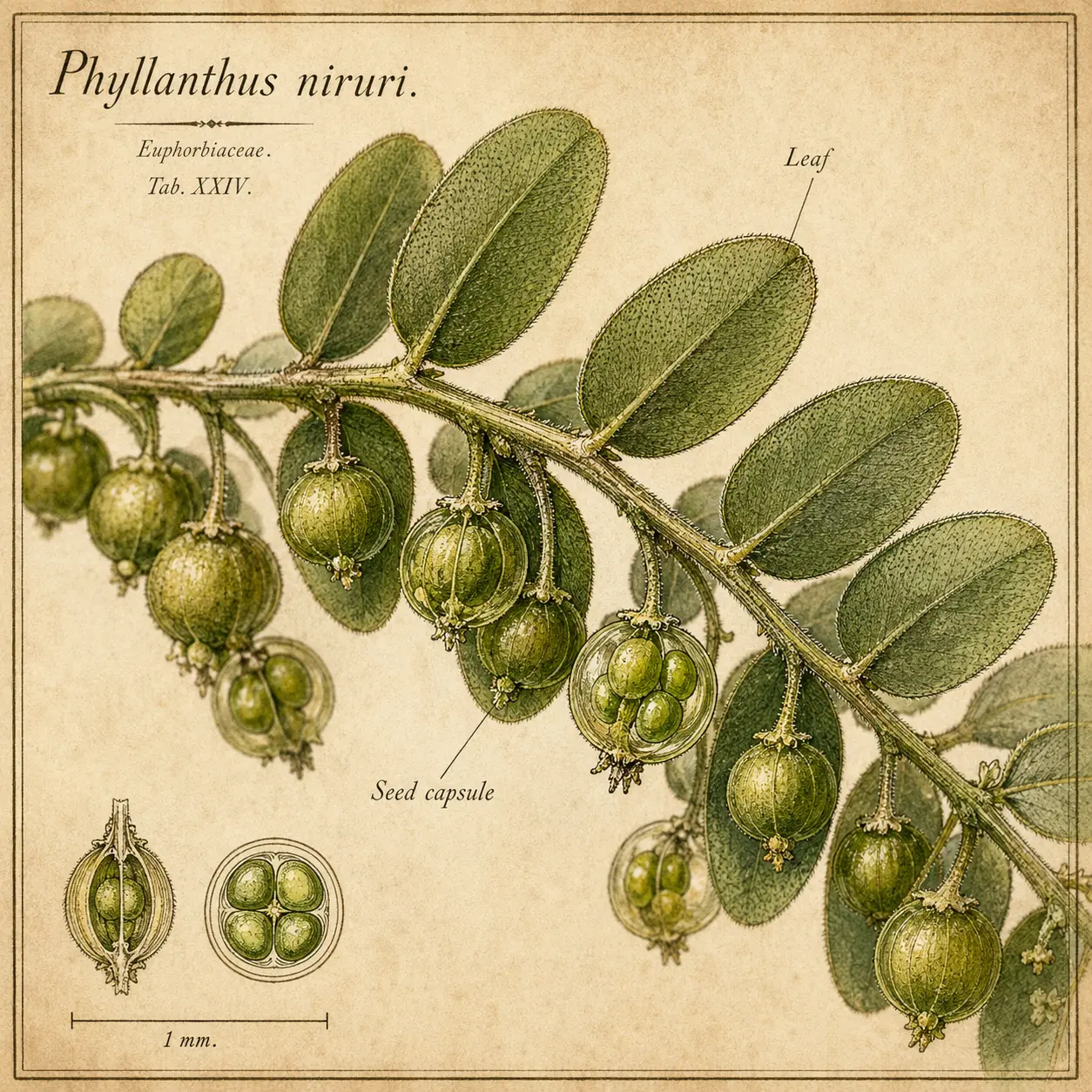
Centuries of Amazonian and Andean folk use, the Ayurvedic bhumi amla tradition, the Caribbean and West African ethnobotany, and how these traditional indications anticipated the modern pharmacology. The plant itself: a small annual herb of the Phyllanthaceae family with seed capsules tucked under each leaf.
Table of Contents
- Deep-Dive Articles
- Overview & Botanical Profile
- Traditional Use in Amazonian and Ayurvedic Medicine
- Active Compounds
- Kidney Stones — The "Stone Breaker"
- Gallstones and Biliary Support
- Liver Protection and Hepatitis B
- Urinary Tract Infections
- Blood Sugar and Metabolic Effects
- Acid-Base Balance and Whole-Body Detoxification
- Antioxidant and Anti-Inflammatory Activity
- Forms and Preparations
- Recommended Dosage
- Cautions and Contraindications
- Research Papers and References
- Conditions It Is Used For
- Connections
- Featured Videos
Overview & Botanical Profile
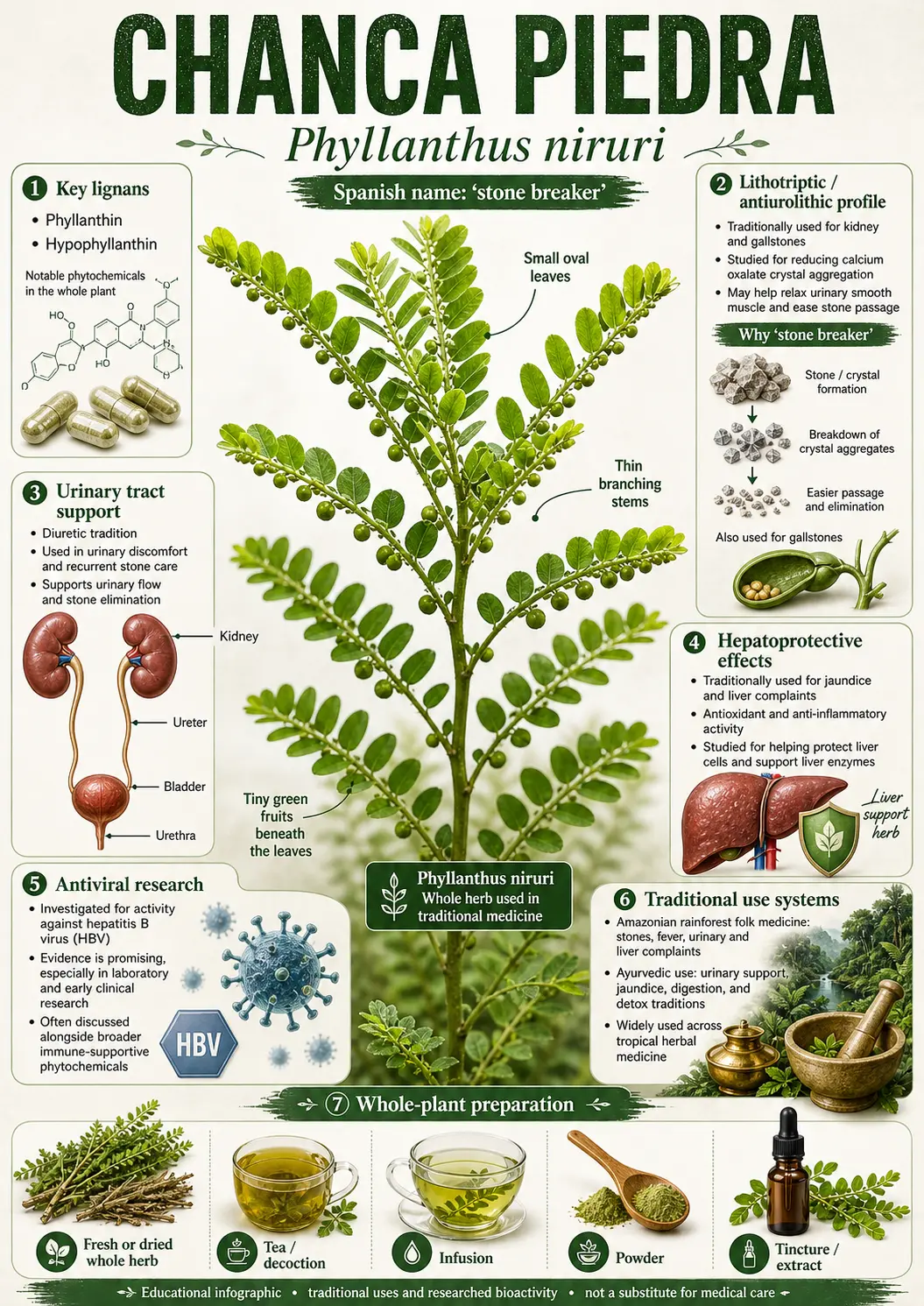
Chanca piedra (Phyllanthus niruri) is a small, branching annual herb of the Phyllanthaceae family that grows abundantly in tropical and subtropical regions of the Americas, Asia, and Africa. The Spanish common name translates literally as "stone breaker" -- a reflection of its centuries-old reputation for dissolving and expelling kidney stones and gallstones. In English-language commerce it is sometimes sold as "stonebreaker," "seed-under-leaf" (a nod to the tiny fruit capsules that line the underside of each stem), or under its Hindi name bhumi amla.
The whole aerial portion of the plant -- leaves, stems, flowers, and fruit -- is used medicinally. It is traditionally harvested fresh during the rainy season and either consumed as a decoction or dried for tincture and capsule preparations.
Modern phytochemical research has confirmed that chanca piedra contains a remarkable spectrum of bioactive compounds, including lignans, flavonoids, tannins, alkaloids, and triterpenes. The herb has become one of the most extensively studied medicinal plants in the global ethnobotanical literature, with documented activity in the kidney, liver, biliary tract, and metabolic systems.
Traditional Use in Amazonian and Ayurvedic Medicine
Chanca piedra carries parallel folk traditions in two of the world's great healing systems. In the Amazon and across South America, healers have long brewed the whole plant for kidney and bladder stones, painful urination, jaundice, and the liver — the use that earned its "stone breaker" name — while in Ayurveda the same species, bhumyamalaki, is a classic cooling liver herb for jaundice and urinary complaints. That two cultures with no contact converged on the same little leaf-flower weed is one of the more striking stories in ethnobotany — the fuller story is told in the dedicated History & Traditional Use article.
Active Compounds
Chanca piedra owes its broad therapeutic profile to a complex mixture of secondary metabolites. The most pharmacologically significant include:
- Lignans -- including phyllanthin, hypophyllanthin, niranthin, and nirtetralin; principal hepatoprotective and antiviral constituents
- Flavonoids -- quercetin, rutin, kaempferol, and astragalin; contribute antioxidant, anti-inflammatory, and mild diuretic effects
- Alkaloids -- securinine-type alkaloids with documented activity on smooth muscle (relevant to ureteral relaxation)
- Tannins -- gallotannins and ellagitannins with astringent and antiviral activity
- Triterpenes -- lupeol, lupeol acetate, and beta-sitosterol with anti-inflammatory effects
- Geraniin -- an ellagitannin under active investigation for antiviral, antihypertensive, and crystallization-inhibiting activity
The lignan fraction (phyllanthin and hypophyllanthin in particular) is often used as the chemical marker for standardized extracts. Ureteral-relaxing activity is increasingly attributed to the alkaloid fraction, while crystallization inhibition appears to be a multi-compound effect.
Kidney Stones — The "Stone Breaker"
The most famous application of chanca piedra is the prevention, dissolution, and expulsion of urinary tract stones. Multiple controlled clinical trials and a growing mechanistic literature now support the traditional reputation that gave the herb its name.
Documented anti-lithic mechanisms include:
- Inhibition of calcium oxalate crystal nucleation and aggregation -- the herb interferes with the molecular self-assembly of the most common kidney-stone crystal form
- Increased urinary magnesium and citrate -- both endogenous inhibitors of stone formation
- Reduced urinary calcium excretion in hypercalciuric patients
- Smooth-muscle relaxation of the ureter -- alkaloid-mediated antispasmodic activity helps the patient pass existing stones with less pain
- Mild diuretic action -- increases urine volume and flushes microcrystals
- Modification of stone surface morphology -- in vitro studies show that crystals formed in the presence of chanca piedra are smaller, less crystalline, and more easily expelled
Clinical trials in patients with established kidney stones have shown reduced stone size, increased spontaneous passage rates, and lower rates of recurrence in those who took chanca piedra alongside increased fluid intake. Patients undergoing extracorporeal shock wave lithotripsy (ESWL) have reported improved fragment clearance when chanca piedra was used adjunctively.
The herb is most commonly recommended for calcium oxalate and uric acid stones; evidence for struvite (infection) stones is weaker, since the underlying problem is bacterial rather than crystallization.
Gallstones and Biliary Support
The same crystallization-inhibiting and smooth-muscle-relaxing properties that make chanca piedra useful in renal stones also extend to the biliary tree. Traditional South American and Ayurvedic practice has long included the herb in protocols for cholelithiasis (gallstones), biliary sludge, and post-cholecystectomy syndrome (the persistent right-upper-quadrant discomfort that can follow gallbladder removal).
Mechanisms relevant to biliary disease:
- Choleretic activity -- increased bile flow from the liver
- Reduction of cholesterol saturation in bile, the biochemical driver of cholesterol-stone formation
- Antispasmodic effect on the sphincter of Oddi, easing the passage of small stones and biliary sludge
- Hepatocellular protection that maintains normal bile composition
Patients with documented gallstones should always coordinate herbal use with a physician, since a stone large enough to obstruct the cystic or common bile duct represents a surgical emergency rather than an indication for botanical therapy.
Liver Protection and Hepatitis B
Independently of its stone-breaking reputation, chanca piedra is one of the most extensively studied hepatoprotective herbs in modern phytotherapy. The lignan fraction -- particularly phyllanthin and hypophyllanthin -- is concentrated in the leaves and protects hepatocytes against a wide range of toxic insults in animal models, including carbon tetrachloride, paracetamol (acetaminophen), and alcohol-induced injury.
The most distinctive antiviral application is against hepatitis B virus (HBV). In vitro studies and several controlled clinical trials have demonstrated that Phyllanthus species (niruri and the closely related amarus) can suppress hepatitis B surface antigen (HBsAg), e antigen (HBeAg), and viral polymerase activity. The effect is most consistent in chronic HBV carriers with mild-to-moderate disease activity, and it is generally complementary to -- not a replacement for -- standard antiviral nucleos(t)ide analogues.
A 2011 Cochrane review concluded that the available evidence was promising but heterogeneous, and that larger, longer trials were needed before formal guideline-level recommendations could be made. In integrative hepatology, the herb is most often used as part of a multi-herb hepatoprotective protocol alongside milk thistle and licorice.
Documented hepatic effects:
- Reduction of elevated ALT and AST in patients with chronic viral hepatitis
- Improved bilirubin handling in jaundiced patients
- Antifibrotic activity in animal models of progressive liver injury
- Restoration of glutathione and other intracellular antioxidant pools
- Reduction of hepatic oxidative stress markers
Urinary Tract Infections
Chanca piedra has documented antibacterial and anti-adhesion activity that complements its diuretic and antispasmodic effects in lower urinary tract infections. In vitro studies show inhibition of Escherichia coli, Staphylococcus aureus, and Klebsiella pneumoniae, including some clinical isolates with resistance to first-line antibiotics. Tannins in the herb appear to interfere with bacterial fimbrial adhesion to the urothelium, similar to the cranberry mechanism.
Traditional use combines the antibacterial action with the herb's mild diuretic and antispasmodic effects to relieve the frequency, urgency, and dysuria of acute cystitis. As with any urinary infection, complicated cases (fever, flank pain, pregnancy, immunosuppression) should be evaluated by a clinician for possible upper-tract involvement.
Blood Sugar and Metabolic Effects
Animal and small human studies suggest a modest hypoglycemic effect for chanca piedra. Proposed mechanisms include enhanced insulin sensitivity, inhibition of intestinal alpha-glucosidase activity (slowing carbohydrate absorption), and antioxidant protection of pancreatic beta cells. Effects are gentle and best regarded as adjunctive in the broader management of insulin resistance and prediabetes rather than as primary therapy.
Mild reductions in blood pressure and improvements in lipid profile have also been reported, consistent with the herb's general antioxidant and endothelial-protective profile.
Acid-Base Balance and Whole-Body Detoxification
In Amazonian and Ayurvedic tradition, chanca piedra is classed not only as a stone-breaking herb but as a broader cleansing plant for the liver, kidneys, and intestinal tract. Indigenous Peruvian healers describe it as one of the strongest "deep-cleansing" plants of the rainforest pharmacopoeia, and Ayurvedic practitioners use bhumi amla in seasonal detoxification protocols to support the body's natural elimination pathways.
Physiologically, several converging mechanisms support this traditional reputation:
- Mild diuresis -- increases urine volume and accelerates the renal clearance of metabolic waste, dietary acids, and microcrystals
- Choleretic activity -- promotes bile flow, the body's principal route for excreting fat-soluble toxins, oxidized cholesterol, and conjugated hormones
- Hepatic phase I and phase II support -- the lignan and flavonoid fractions help maintain glutathione, glucuronidation, and sulfation pathways that biotransform xenobiotics
- Reduction of acidic uric and oxalic load -- by both increasing excretion and modulating reabsorption
- Gentle on the digestive tract -- the herb is bitter without being harshly cathartic, making it suitable for multi-week tonic regimens
This is the rationale behind the traditional Peruvian "long-cure tea" preparation -- a single tablespoon of the dried herb simmered in a liter of water and sipped throughout the day for several weeks at a time -- a slow, sustained pattern of intake that supports the kidneys, liver, and biliary tree without the abrupt swings of high-dose extracts.
Antioxidant and Anti-Inflammatory Activity
Across the lignan, flavonoid, and tannin fractions, chanca piedra exhibits robust antioxidant activity in standard assays (DPPH, ABTS, FRAP) and in cellular models. The herb increases endogenous antioxidant enzyme activity (superoxide dismutase, catalase, glutathione peroxidase) in target tissues such as the liver and kidney, and it suppresses pro-inflammatory cytokine signaling at NF-kappaB-mediated checkpoints.
This anti-inflammatory layer underlies many of its specific therapeutic effects -- liver protection, vascular endothelial support, and the dampening of crystal-induced inflammation in the renal parenchyma during stone passage.
Forms and Preparations
- Whole herb tea -- the traditional preparation; 1-2 teaspoons of dried aerial parts simmered gently in water for 10-15 minutes; bitter, slightly grassy flavor; up to three cups daily during an acute stone episode
- Peruvian long-cure tea (one-liter daily preparation) -- the classical Amazonian "kur" style: simmer one tablespoon (approximately 2 g) of dried Phyllanthus niruri herb in one liter of water for ten minutes, allow it to steep as it cools, and sip the resulting infusion throughout the course of a single day; repeated for two to four weeks during a seasonal liver-and-kidney cleanse. This sustained, low-concentration pattern is what most South American traditional healers prescribe in preference to short-burst high-dose extracts
- Standardized capsules -- typically 400-500 mg per capsule, often standardized to phyllanthin and hypophyllanthin content
- Liquid tincture -- 1:5 alcohol-water extract of the whole plant for fast absorption
- Glycerite -- alcohol-free option for patients who cannot tolerate alcohol-based tinctures
- Combination formulas -- frequently paired with hydrangea root, gravel root, or marshmallow root for kidney-stone protocols, or with milk thistle and dandelion for liver-support protocols
Recommended Dosage
- Dried herb tea -- 1-2 teaspoons (2-4 g) of dried aerial parts per cup, two to three cups daily
- Capsule extract -- 400-500 mg, two to three times daily; many kidney-stone protocols use the higher end during an acute episode and step down for prevention
- Tincture (1:5) -- 2-4 mL three times daily
- Acute stone passage -- short-term higher dosing (up to 2 g of dried herb three times daily) is documented in the ethnobotanical literature; consult a clinician familiar with herbal medicine before exceeding routine doses
- Maintenance / prevention -- once-daily dosing for one to three months, often cycled (three weeks on, one week off) to maintain responsiveness
- Hydration -- adequate water intake (at least two liters per day for adults) is essential during chanca piedra use for stone-related indications
Cautions and Contraindications
Chanca piedra has a strong traditional safety record and is generally well tolerated when used at recommended doses. Important considerations:
- Pregnancy and breastfeeding -- avoid; the herb has documented uterine activity in animal models and limited human safety data during pregnancy
- Diabetes medications -- the mild hypoglycemic effect can add to the action of insulin, sulfonylureas, and metformin; monitor blood glucose
- Antihypertensives -- mild blood-pressure-lowering activity may potentiate prescription antihypertensive therapy
- Anticoagulants -- limited evidence of mild antiplatelet activity; caution with warfarin, clopidogrel, and direct oral anticoagulants
- Lithium -- the herb's diuretic activity could affect lithium clearance
- Large or obstructing stones -- a stone large enough to obstruct a ureter or the common bile duct is a surgical emergency; chanca piedra is not a substitute for urgent imaging and intervention
- Children -- limited dosing data; use only under qualified guidance
- Quality and identity -- multiple Phyllanthus species are sold under the chanca piedra name; P. niruri and P. amarus are the best-studied; species adulteration is common in the global supplement market and reputable suppliers provide species-specific HPLC verification
Research Papers and References
Key Named Studies
The following peer-reviewed papers are frequently cited as foundational entry points into the modern pharmacology of Phyllanthus niruri and its closely related sister species P. amarus (the two are often used interchangeably in the published literature, since they share most of the principal lignan and flavonoid constituents).
- Patel, J.R., et al. "Phyllanthus amarus: ethnomedicinal uses, phytochemistry and pharmacology: a review." Journal of Ethnopharmacology 138.2 (2011): 286-313. A comprehensive review of the genus's ethnomedicinal uses, isolated phytochemicals, and documented pharmacological activity. — PubMed
- Bhattacharjee, R., et al. "Anti-inflammatory effects of Phyllanthus amarus Schum. & Thonn. through alterations in plasma protein expressions, NF-κB and some metabolic and signal transduction pathways." Journal of Ethnopharmacology 165 (2015): 58-67. Mechanistic evidence that flavonoid-rich extracts dampen NF-κB-mediated inflammatory cascades. — PubMed
- Bagalkotkar, G., et al. "Phytochemicals from Phyllanthus niruri Linn. and their pharmacological properties: a review." Journal of Pharmacy and Pharmacology 58.12 (2006): 1559-1570. Catalogues the alkaloid, flavonoid, lignan, tannin, and triterpene constituents of P. niruri with their corresponding documented activities. — PubMed
PubMed Topic Searches
The following PubMed search links provide curated entry points into the published clinical and mechanistic literature on chanca piedra (Phyllanthus niruri). Each link opens directly in PubMed at the National Library of Medicine.
- Phyllanthus niruri and kidney stones — PubMed: phyllanthus niruri kidney stones
- Chanca piedra and calcium oxalate crystallization — PubMed: phyllanthus calcium oxalate
- Phyllanthus and hepatitis B virus — PubMed: phyllanthus hepatitis B
- Phyllanthus and hepatoprotection — PubMed: phyllanthus niruri hepatoprotective
- Phyllanthus and gallstones — PubMed: phyllanthus gallstones
- Chanca piedra clinical trials — PubMed: chanca piedra clinical trial
- Phyllanthus and diabetes / blood sugar — PubMed: phyllanthus niruri diabetes
- Phyllanthus antibacterial activity — PubMed: phyllanthus niruri antibacterial
- Phyllanthus safety and toxicology — PubMed: phyllanthus niruri safety
External Authoritative Resources
- NCCIH — Herbs at a Glance
- MedlinePlus — Herbs and Supplements
- PubMed — All research on Phyllanthus niruri
Conditions Chanca Piedra Is Used For
Each condition below links to its page. The coloured half of every capsule shows how much human evidence supports this herb for that specific use — traditional use is history, not proof, and is marked as such.
Connections
- All Herbs
- Chanca Piedra Benefits Deep Dive
- Kidney Stones
- Liver Protection
- Liver Protection & Hepatitis B — HBV antiviral mechanism, clinical trial evidence on HBsAg/HBV-DNA, and adjunctive use alongside entecavir/tenofovir.
- Uric Acid and Gout
- Blood Sugar
- Phyllanthus Species Comparison
- Active Compounds
- Safety and Drug Interactions
- Forms, Dosing and Standardization
- History and Traditional Use
- Milk Thistle
- Dandelion
- Berberine
- Hawthorn
- Turmeric
- Kidney Stones
- Hepatitis B
- Urinalysis
- Diabetes
- Nhan Tran (Adenosma caeruleum) — Vietnam's everyday liver tea, and the species confusion surrounding it