Interstitial Cystitis / Bladder Pain Syndrome
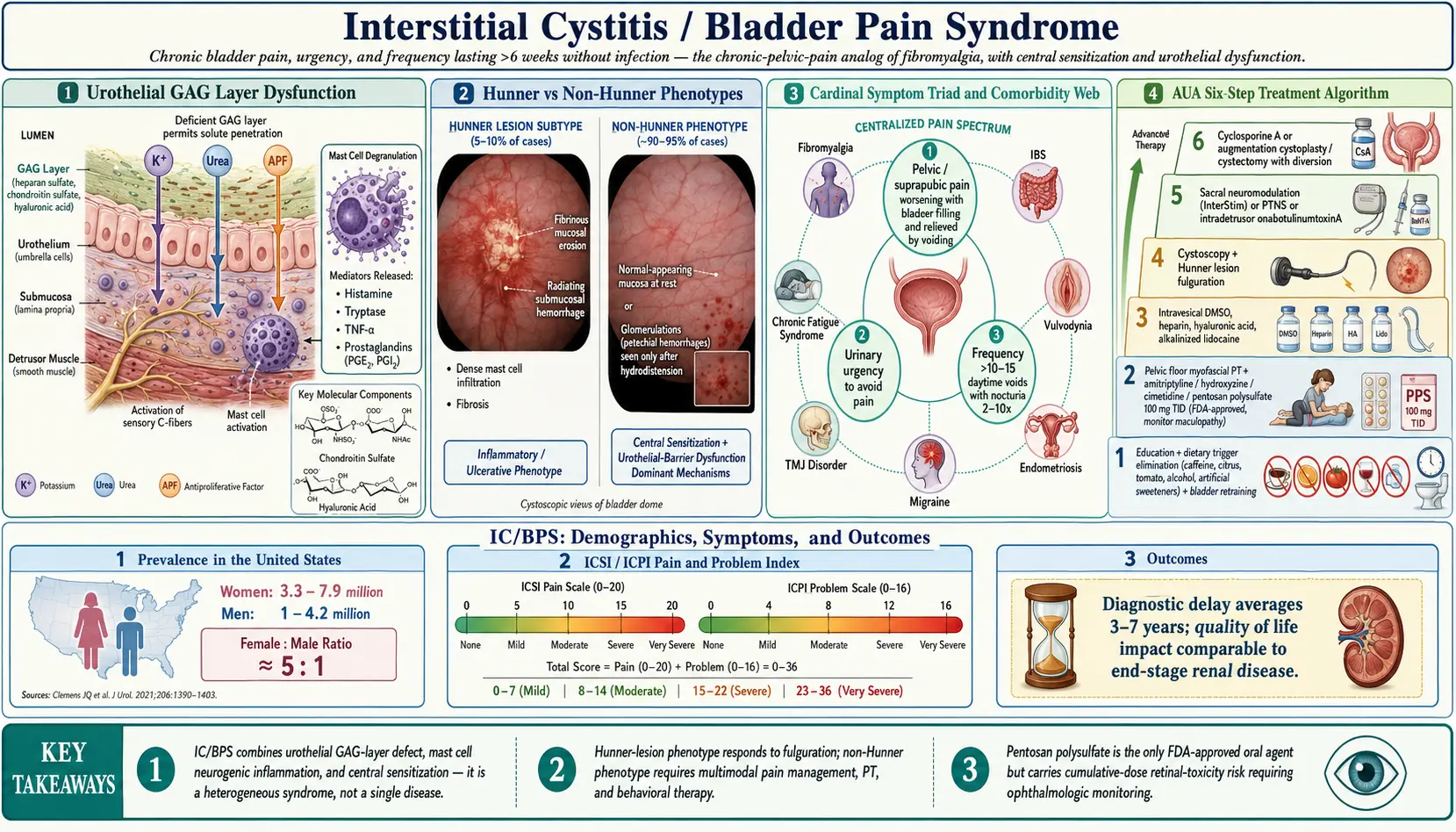
Table of Contents
- Overview
- Epidemiology
- Pathophysiology
- Etiology and Risk Factors
- Clinical Presentation
- Diagnosis
- Treatment
- Complications
- Prognosis
- Prevention
- Recent Research
- References
- Connections
- Featured Videos
1. Overview
Interstitial Cystitis / Bladder Pain Syndrome (IC/BPS) is a chronic, debilitating condition of the urinary bladder characterized by persistent pelvic pain or pressure, along with urinary urgency and frequency, in the absence of any identifiable infection or other demonstrable pathology. The American Urological Association (AUA) defines IC/BPS as an unpleasant sensation perceived to be related to the urinary bladder, associated with lower urinary tract symptoms of more than six weeks' duration, in the absence of infection or other identifiable causes.
IC/BPS is predominantly a disease of women, with approximately 90% of cases occurring in females. Unlike overactive bladder (OAB), which centers on urgency and involuntary detrusor contractions, IC/BPS is defined by pain as its cardinal feature — pelvic, perineal, or suprapubic discomfort that worsens as the bladder fills and partially or completely resolves with voiding. Patients may urinate 40 to 60 times per day in severe cases, and the condition significantly disrupts sleep, work, sexual function, and overall quality of life. The condition is recognized as a form of chronic pelvic pain syndrome and shares neurobiological features with fibromyalgia, irritable bowel syndrome, and other central sensitization disorders.
Two major subtypes are recognized: Hunner lesion IC (classic IC or type 3C under ESSIC classification), characterized by specific inflammatory mucosal lesions visible at cystoscopy and representing transmural bladder wall inflammation; and non-Hunner IC, which accounts for 85–95% of cases, in which cystoscopy may be normal or show only glomerulations (petechial hemorrhages) after hydrodistension. These subtypes differ in pathophysiology, demographics, and treatment response.
2. Epidemiology
Estimates of IC/BPS prevalence have varied widely depending on diagnostic criteria applied. The landmark RAND Interstitial Cystitis Epidemiology (RICE) study, one of the largest population-based investigations, found that 2.7–6.5% of adult women in the United States have symptoms consistent with IC/BPS — representing 3.3 to 7.9 million affected women nationally. The same study estimated that fewer than 10% of those meeting symptom criteria had ever received a formal IC/BPS diagnosis, highlighting the profound underdiagnosis of this condition.
Prevalence in men is estimated at approximately 1.3–4.2 million, though male IC/BPS is frequently misdiagnosed as chronic prostatitis or chronic pelvic pain syndrome (CPPS), the male pelvic pain equivalent. The mean age at diagnosis is the fourth to fifth decade of life, but IC/BPS can affect individuals of any age, including adolescents.
The economic burden is substantial. The RAND study estimated annual direct medical costs attributable to IC/BPS at over $750 million in the United States, with indirect costs (lost productivity, disability) adding further burden. Patients with IC/BPS utilize healthcare resources at approximately three times the rate of age-matched controls without lower urinary tract symptoms. Average time from symptom onset to diagnosis historically has exceeded four years, reflecting the diagnostic complexity and low clinical awareness of the condition.
IC/BPS frequently coexists with other chronic pain or functional syndromes: irritable bowel syndrome (IBS) is present in 30–50% of IC/BPS patients, fibromyalgia in 10–30%, vulvodynia in 10–20%, and chronic fatigue syndrome in 10–15%. These overlapping conditions suggest shared central sensitization mechanisms rather than purely local bladder pathology.
3. Pathophysiology
The pathophysiology of IC/BPS is multifactorial and incompletely understood. Several interacting mechanisms have been identified.
Urothelial Glycosaminoglycan (GAG) Defect Theory
The most influential mechanistic hypothesis posits that IC/BPS arises from a defect in the glycosaminoglycan (GAG) layer — the protective mucosal lining of the bladder urothelium. The GAG layer normally acts as a critical permeability barrier, preventing toxic urinary solutes (potassium ions, urea, and other constituents) from penetrating the urothelium and reaching the subepithelial sensory nerves and smooth muscle. When the GAG layer is disrupted — whether through infection, autoimmune attack, or other injury — urinary constituents breach the urothelium, depolarize subepithelial afferent C-fibers and A-delta fibers, and trigger mast cell degranulation with release of histamine, prostaglandins, substance P, and other inflammatory mediators. This cascade produces neurogenic inflammation, sensitization of sensory fibers, and progressive tissue injury in a self-perpetuating cycle. The GAG defect theory is supported by the symptomatic improvement many patients experience after intravesical GAG-replacement therapy (heparin, hyaluronic acid) and by the mode of action of oral pentosan polysulfate sodium (PPS), which structurally resembles heparan sulfate and is thought to replenish deficient urothelial GAG.
Mast Cell Activation and Neurogenic Inflammation
Increased mast cell density in the bladder detrusor and suburothelium is one of the most consistent histological findings in IC/BPS, particularly in the Hunner lesion subtype. Mast cell degranulation releases tryptase, histamine, and cytokines that activate sensory nerve terminals and further amplify local inflammation. Substance P, released by sensitized afferent fibers, acts in a positive-feedback loop to recruit additional mast cells and sustain neurogenic inflammation. This neuroimmune interaction explains why antihistamines (hydroxyzine) and tricyclic antidepressants that modulate central and peripheral pain sensitization have therapeutic efficacy in IC/BPS.
Hunner Lesion Subtype: Transmural Inflammation
Hunner lesions (originally described as "elusive ulcers" by Guy Hunner in 1915) are discrete, inflamed, stellate mucosal disruptions with peripheral vessels radiating toward a central scar, visible at cystoscopy. Histologically, Hunner lesion IC is characterized by dense submucosal mononuclear cell infiltrates (predominantly T lymphocytes and plasma cells), activated mast cells throughout the detrusor, neural proliferation, and transmural fibrosis. Gene expression profiling of Hunner lesion tissue reveals a B-cell-dominant adaptive immune response with overexpression of immunoglobulin-related genes and complement pathways, consistent with a localized autoimmune or chronic inflammatory process. This is mechanistically distinct from non-Hunner IC, in which mucosal pathology is minimal and central sensitization plays a proportionally larger role.
Autoimmune Component
Antinuclear antibodies (ANA) and anti-bladder antibodies are detectable in a subset of IC/BPS patients, and the condition is more prevalent in women with confirmed autoimmune diseases (systemic lupus erythematosus, Sjogren's syndrome, rheumatoid arthritis). The B-cell infiltration in Hunner lesion histology and the response to cyclosporine A (a T-cell inhibitor) in refractory cases further support an autoimmune contribution, at least in the classic Hunner subtype.
4. Etiology and Risk Factors
- Female sex: Women are affected at 5–10 times the rate of men, likely reflecting differences in urothelial biology, hormonal influences on mast cell activation, and differences in pelvic anatomy. Estrogen may modulate urothelial barrier function, contributing to symptom fluctuation across the menstrual cycle in many women with IC/BPS.
- Prior urinary tract infections (UTIs): A history of recurrent UTIs is among the strongest risk factors for IC/BPS development. Bacterial pathogens or their toxins may initiate urothelial injury and trigger the chronic neuroinflammatory cascade even after microbiological cure.
- Pelvic surgeries and trauma: Hysterectomy, pelvic floor repair, and other pelvic surgeries precede IC/BPS onset in a proportion of patients, possibly through direct urothelial or pelvic nerve injury.
- Comorbid functional pain syndromes: IBS, fibromyalgia, chronic fatigue syndrome, temporomandibular joint disorder, and vulvodynia are overrepresented in IC/BPS patients, suggesting shared central sensitization mechanisms. These comorbidities predict a more severe IC/BPS phenotype and poorer treatment response to bladder-directed therapies alone.
- Autoimmune diseases: Systemic lupus erythematosus, Sjogren's syndrome, and inflammatory bowel disease are associated with significantly elevated IC/BPS risk, consistent with a shared autoimmune diathesis.
- Genetic predisposition: First-degree female relatives of IC/BPS patients have an approximately 17-fold elevated risk compared to the general population, indicating a strong hereditary component.
- Psychological factors: Anxiety disorders and depression are both more prevalent in IC/BPS patients and may precede IC/BPS onset, suggesting bidirectional neurobiological links between central pain sensitization and mood regulation rather than purely reactive depression.
5. Clinical Presentation
IC/BPS presents with a constellation of symptoms that fluctuate over time, often exacerbated by dietary triggers, hormonal changes, stress, and intercurrent infections.
Cardinal Symptoms
- Pelvic pain: The defining feature of IC/BPS, typically described as pressure, burning, or aching localized to the suprapubic region, perineum, vagina, or urethra. Pain characteristically worsens as the bladder fills and is relieved — at least partially — by voiding, a pattern that distinguishes IC/BPS from other pelvic pain conditions. Severity ranges from mild discomfort to completely disabling pain.
- Urinary urgency and frequency: Patients void frequently to relieve pain and pressure rather than because of true urgency incontinence. Voiding frequency of 15–60 times per 24 hours is not uncommon in severe disease. Functional bladder capacity (the volume at which pain becomes intolerable) may be severely reduced, sometimes below 100 mL.
- Nocturia: Awakening multiple times per night to void is nearly universal. Two or more nocturia episodes are present in over 80% of IC/BPS patients and are a major driver of sleep disruption, fatigue, and depression.
- Dyspareunia: Pain during or after sexual intercourse is reported by 50–70% of women with IC/BPS, often leading to avoidance of sexual activity and significant relationship strain.
Hunner Lesion vs. Non-Hunner IC
Hunner lesion IC (classic IC) accounts for 5–10% of diagnosed cases. It predominantly affects older women (mean age at diagnosis approximately 60–65 years), is associated with lower functional bladder capacity, more severe and constant pain, and frequently responds dramatically to fulguration or triamcinolone injection of the lesions. Non-Hunner IC affects a younger population, tends to have a more episodic pain pattern with flares and remissions, normal or near-normal cystoscopic appearance at baseline, and responds less predictably to individual treatments.
Validated Assessment Tools
- O'Leary-Sant Symptom and Problem Index (ICSI/ICPI): The most widely used validated questionnaire for IC/BPS, consisting of a 4-item symptom index (urgency, frequency, nocturia, pain) and a 4-item problem index quantifying bother. Total scores above 12 are strongly associated with IC/BPS diagnosis.
- Pelvic Pain and Urgency/Frequency (PUF) Questionnaire: A 10-item self-report tool covering pain, urgency, frequency, and their impact on daily activities. PUF scores above 12 have 74–94% sensitivity for IC/BPS.
- ESSIC Classification: The European Society for the Study of Interstitial Cystitis system categorizes IC/BPS by cystoscopic findings (1 = no glomerulations, 2 = glomerulations only, 3 = Hunner lesions) and histological findings (A = not done, B = inconclusive, C = positive), enabling standardized international comparison of patient cohorts.
6. Diagnosis
IC/BPS is a diagnosis of exclusion. The AUA guideline recommends ruling out all confusable conditions before establishing the diagnosis.
Urinalysis and Urine Culture
Urinalysis with microscopy and urine culture are essential first-line tests to exclude UTI and hematuria. Recurrent culture-negative cystitis with persistent symptoms should raise strong suspicion for IC/BPS. Hematuria mandates cystoscopic evaluation to exclude urothelial carcinoma before attributing symptoms to IC/BPS.
Cystoscopy with Hydrodistension
Cystoscopy under anesthesia with hydrodistension of the bladder to 80 cmH2O for 1–2 minutes is the primary diagnostic procedure. Key findings include: (1) glomerulations — petechial hemorrhages that develop after release of distension pressure, present in 80–90% of IC/BPS patients but also in asymptomatic individuals and therefore non-specific in isolation; (2) Hunner lesions — pathognomonic stellate mucosal ruptures with central fibrin deposits and peripheral vessel radiation, diagnostic of classic IC when present; and (3) reduced bladder capacity under anesthesia (less than 350 mL), which correlates with disease severity. Hydrodistension itself provides temporary symptomatic relief in 30–60% of patients and is considered both diagnostic and therapeutic.
Biopsy for Hunner Lesions
Biopsy is recommended when Hunner lesions are visible and when malignancy must be excluded. Histological findings supporting IC/BPS include suburothelial edema, vascular congestion, mononuclear cell infiltration, and increased mast cell density (greater than 28 mast cells per mm2 in the detrusor layer is the most widely cited threshold). Biopsy is not required to establish a non-Hunner IC/BPS diagnosis when clinical criteria are met and confusable conditions are excluded.
Potassium Sensitivity Test (PST)
The PST involves intravesical instillation of a dilute potassium chloride solution; pain or urgency replicating the patient's usual symptoms is considered a positive result, interpreted as evidence of urothelial permeability defect. Sensitivity is approximately 70–80% but specificity is limited, and the test is uncomfortable. Current AUA guidance notes that the PST is not required for diagnosis and is now less commonly used in clinical practice, having been largely supplanted by improved symptom-based diagnostic criteria.
Urodynamic Studies
Multichannel urodynamics are not required for routine IC/BPS diagnosis but are useful when OAB, neurogenic bladder, or bladder outlet obstruction must be differentiated. Urodynamic findings in IC/BPS typically show reduced bladder capacity with early first sensation, markedly reduced strong desire to void volumes, and pain provoked at low fill volumes — without the phasic involuntary detrusor contractions characteristic of OAB.
7. Treatment
The AUA 2022 IC/BPS guideline recommends a stepwise, multimodal treatment approach, escalating from least-invasive to most-invasive therapies based on response and patient preference. No single treatment is universally effective, and combination approaches targeting multiple pathophysiological mechanisms generally yield better outcomes than monotherapy.
First-Line: Education and Self-Management
All patients should receive education about the chronic nature of IC/BPS, realistic treatment expectations, and the role of self-management. Dietary modification is central: the IC diet eliminates common bladder irritants including caffeine, alcohol, citrus fruits and juices, tomatoes, artificial sweeteners (especially aspartame and saccharin), carbonated beverages, spicy foods, and vitamin C supplements. Dietary restrictions may reduce symptom severity in 50–80% of patients. Pelvic floor physical therapy (addressing pelvic floor hypertonia, present in 50–85% of IC/BPS patients) is also a first-line intervention.
Second-Line: Oral Pharmacotherapy
- Pentosan polysulfate sodium (PPS, Elmiron): The only FDA-approved oral medication specifically indicated for IC/BPS, PPS is a heparin-like polysaccharide thought to replenish the deficient urothelial GAG layer and restore urothelial barrier function. Clinical response is slow, typically requiring 3–6 months of treatment before significant benefit is apparent. Approximately 28–32% of patients achieve meaningful symptom improvement. The major safety concern is pigmentary maculopathy — a progressive, irreversible retinal toxicity associated with long-term, cumulative PPS exposure. Patients on PPS for more than two years should undergo annual ophthalmological evaluation with macular OCT imaging.
- Amitriptyline: A tricyclic antidepressant that reduces central pain sensitization, blocks mast cell degranulation, and reduces bladder afferent excitability. Starting dose 10–25 mg at bedtime, titrated to 50–100 mg. One randomized controlled trial demonstrated significant pain and symptom score improvement versus placebo at 4 months. Anticholinergic side effects limit tolerability at higher doses.
- Hydroxyzine: A first-generation H1 antihistamine that stabilizes mast cells and reduces histamine-driven neurogenic inflammation. Particularly useful in IC/BPS patients with concurrent allergic conditions. Dose 25–75 mg at bedtime. Evidence from the Sant et al. (2003) clinical trial suggests modest but additive benefit when combined with PPS.
Third-Line: Intravesical Therapy
- DMSO (dimethyl sulfoxide, Rimso-50): The only FDA-approved intravesical agent for IC/BPS. A 50% DMSO solution is instilled into the bladder for 15–20 minutes every 1–2 weeks for 6 weeks. DMSO has anti-inflammatory, analgesic, muscle-relaxant, and mast cell-inhibiting properties. Approximately 50–70% of patients achieve at least 50% symptom improvement.
- Intravesical cocktail (heparin + lidocaine + sodium bicarbonate): A widely used off-label intravesical formulation combining GAG-layer reconstitution (heparin), immediate local anesthesia (lidocaine), and alkalinization (sodium bicarbonate enhances lidocaine mucosal penetration). Short-term symptom relief rates of 75–90% have been reported; long-term benefit requires regular maintenance instillations.
Fourth-Line: Procedures and Refractory Options
- Fulguration or resection of Hunner lesions: In Hunner lesion IC, electrocoagulation or transurethral resection of the lesions produces dramatic symptomatic improvement — complete or near-complete pain relief — in 70–90% of patients. Duration of remission averages 1–3 years before lesion recurrence, but the procedure can be repeated. This is considered the most effective treatment available for confirmed Hunner lesion IC and should be offered promptly upon lesion identification.
- Cyclosporine A: Oral cyclosporine A (1.5–3 mg/kg/day) — a calcineurin inhibitor suppressing T-cell-mediated immune activity — is reserved for refractory IC/BPS, particularly in the Hunner lesion subtype. Long-term studies (Sairanen et al., PMID 26324361) demonstrate approximately 75% of refractory patients achieve significant symptom reduction maintained for years. Nephrotoxicity, hypertension, and immunosuppression risks require ongoing monitoring.
- Urinary diversion: Reserved for the most refractory, disabling cases unresponsive to all other treatments. Cystectomy with urinary diversion (ileal conduit or orthotopic neobladder) can be curative in carefully selected patients with severe Hunner lesion IC.
8. Complications
- Severe quality-of-life impairment: IC/BPS consistently ranks among the conditions with the greatest impact on health-related quality of life. Studies using the SF-36 health survey demonstrate that IC/BPS patients score lower than patients with end-stage renal disease, rheumatoid arthritis, and type 2 diabetes on physical and mental health composite scales during disease flares.
- Depression and anxiety: Anxiety disorders are present in 45–55% and major depression in 30–40% of IC/BPS patients. Temporal ordering studies (Clemens et al., 2013) confirm that anxiety frequently precedes IC/BPS onset, while depression more commonly develops after IC/BPS diagnosis, consistent with mood disorders as both risk factor and consequence.
- Sexual dysfunction: Dyspareunia, vaginismus, decreased libido, and avoidance of sexual intimacy affect 50–70% of women with IC/BPS, disrupting relationships and further impairing quality of life.
- Work disability: Approximately 25% of IC/BPS patients reduce work hours or leave the workforce entirely due to symptom burden.
- PPS-associated pigmentary maculopathy: Long-term pentosan polysulfate use can produce a distinctive, irreversible retinal toxicity characterized by macular pigmentary changes, scotomas, and progressive visual impairment. Risk increases substantially with cumulative dose exceeding 500 grams (approximately 3–7 years at standard dosing).
- Bladder fibrosis and contracted bladder: Severe long-standing IC/BPS, particularly Hunner lesion IC, can result in progressive transmural fibrosis, bladder wall thickening, and severely reduced bladder capacity (functional volume below 100 mL under anesthesia). This end-stage complication may ultimately require urinary diversion.
9. Prognosis
IC/BPS follows a chronic relapsing course in most patients, with alternating flares and periods of relative remission. Spontaneous resolution is uncommon but documented: approximately 10–20% of patients experience long-term symptom improvement without ongoing treatment, particularly those with shorter symptom duration at diagnosis and non-Hunner phenotype.
With multimodal treatment, approximately 50–60% of patients achieve clinically meaningful symptom improvement, though complete pain resolution is the exception. Hunner lesion IC generally responds more predictably to targeted treatments (fulguration, cyclosporine A) than non-Hunner IC, though disease severity is typically higher in Hunner patients. Patients with comorbid chronic pain syndromes (fibromyalgia, IBS) tend to have more refractory disease and poorer responses to bladder-directed therapies alone, consistent with central sensitization as a dominant driver of symptom burden.
Early diagnosis and initiation of multimodal treatment — before bladder fibrosis, severe functional impairment, and psychological comorbidities develop — are associated with better long-term outcomes. Given the average diagnostic delay of four or more years from symptom onset, improving diagnostic awareness among primary care providers is a critical unmet need.
10. Prevention
There are no established preventive interventions for IC/BPS. However, several strategies may reduce the likelihood of symptom onset or progression in at-risk individuals:
- Prompt treatment of UTIs: Given the strong association between recurrent UTIs and IC/BPS development, thorough evaluation and complete microbiological cure of urinary tract infections may reduce the risk of chronic urothelial sensitization. Women with recurrent UTIs should be evaluated for IC/BPS if symptoms persist after documented microbiological eradication.
- Early recognition and diagnosis: Recognizing IC/BPS in its early, milder stages — before significant bladder fibrosis or central sensitization — is associated with better treatment outcomes. Healthcare providers should consider IC/BPS in women presenting with recurrent culture-negative cystitis, pelvic pain, or urinary frequency without evidence of infection.
- Management of comorbid conditions: Treating coexisting anxiety, depression, and pelvic floor hypertonia may reduce the neurobiological substrate driving central sensitization and symptom amplification in susceptible individuals.
- Dietary awareness: Patients with diagnosed IC/BPS can reduce flare frequency by maintaining the IC elimination diet and systematically identifying personal dietary triggers, since trigger profiles vary substantially between individuals.
11. Recent Research
PPS-associated pigmentary maculopathy (Pearce et al., 2018): A landmark study by Pearce, Chen, and Jain (PMID 30395696) identified a novel, previously unrecognized retinal toxicity associated with long-term pentosan polysulfate sodium (Elmiron) use. The characteristic fundus pattern — multifocal macular pigmentary changes with paracentral scotomas and difficulty reading in dim light — was distinct from other drug-induced retinopathies and correlated with cumulative PPS dose. Risk increases substantially with cumulative exposure above 500 grams, corresponding to approximately 3–7 years of standard 300 mg/day dosing. The FDA added a black-box warning for PPS retinal toxicity in 2020. Patients on PPS for more than two years are now recommended to undergo annual macular OCT and Amsler grid testing.
LiRIS (Lidocaine-Releasing Intravesical System): The LiRIS device is an investigational intravesical implant designed to deliver sustained-release lidocaine (2% solution, 650 mg total) directly to the urothelium over 14 days, eliminating the need for repeated clinic instillations. Phase 2 trials demonstrated significant reductions in IC/BPS symptom scores during the treatment period and, importantly, a prolonged symptomatic benefit extending several weeks after device removal — suggesting that sustained urothelial anesthesia may interrupt the neurogenic inflammatory cycle and produce durable relief beyond the treatment period. Larger pivotal trials are ongoing.
AURORA trial and phenotype-directed treatment: The AURORA (AUA Research Outcomes Registry Assessment) initiative is tracking a large prospective IC/BPS cohort with detailed phenotyping to identify predictors of treatment response. Emerging data support the UPOINT classification system (Urinary, Psychosocial, Organ-specific, Infection, Neurologic/systemic, Tenderness) for IC/BPS phenotyping: patients with high Organ domain scores respond better to bladder-directed therapies, while patients with prominent Systemic (comorbid pain syndromes) and Tenderness (pelvic floor hypertonia) scores derive greater benefit from central neuromodulatory approaches and pelvic floor physical therapy.
Bladder microbiome research: Advances in culture-independent 16S rRNA sequencing have revealed that the bladder is not sterile, as previously assumed. IC/BPS patients demonstrate altered bladder microbiome composition compared to asymptomatic controls, with reduced Lactobacillus dominance and increased diversity of potentially proinflammatory genera. Whether microbiome dysbiosis is a cause or consequence of urothelial inflammation is under active investigation.
12. References
- Search PubMed — Epithelial dysfunction in nonbacterial cystitis (interstitial cystitis); evidence of urothelial glycosaminoglycan defect leading to increased urothelial permeability to urinary constituents.
- Hanno PM, Landis JR, Matthews-Cook Y, et al. — PMID: 11857670 — American Urological Association guideline for diagnosis and treatment of interstitial cystitis/bladder pain syndrome; evidence-based stepwise management framework.
- Berry SH, Elliott MN, Suttorp M, et al., 2011 — PMID: 21195241 — Prevalence of symptoms compatible with interstitial cystitis/bladder pain syndrome in adult women in the United States (RAND Interstitial Cystitis Epidemiology study); 2.7–6.5% of women affected, with profound underdiagnosis.
- Search PubMed — Pilot clinical trial of oral pentosan polysulfate and oral hydroxyzine in patients with interstitial cystitis; randomized controlled evidence for IC/BPS pharmacotherapy.
- Search PubMed — Toward a precise definition of interstitial cystitis: evidence of differences in classic (Hunner lesion) and nonulcer disease phenotypes, including demographics, histology, and treatment response.
- Search PubMed — Interstitial cystitis: early diagnosis, pathology, and treatment; foundational description of early IC diagnosis via cystoscopy with hydrodistension and glomerulations.
- Search PubMed — Long-term outcome of patients with interstitial cystitis treated with low-dose cyclosporine A; approximately 75% of refractory patients achieved significant symptom reduction sustained over years.
- Search PubMed — Clinical phenotyping of women with interstitial cystitis/bladder pain syndrome; UPOINT classification system development for individualized treatment targeting.
- Search PubMed — Pigmentary maculopathy associated with chronic exposure to pentosan polysulfate sodium (Elmiron); identification of a novel, irreversible retinal toxicity in long-term IC/BPS patients.
- Search PubMed — Case-control study on the association of interstitial cystitis with anxiety disorders and depression; significantly elevated anxiety and depression in IC/BPS patients versus matched controls.
- Search PubMed — Temporal ordering of interstitial cystitis/bladder pain syndrome and non-bladder conditions; anxiety precedes IC/BPS onset while depression more commonly follows diagnosis.
- Search PubMed — Interstitial cystitis/bladder pain syndrome pathogenesis: review of urothelial dysfunction, mast cell activation, neurogenic inflammation, and central sensitization mechanisms.
Connections
- Urology
- Overactive Bladder
- Urinary Tract Infections
- Urinary Incontinence
- Bladder Cancer
- Kidney Stones
- Irritable Bowel Syndrome
- Fibromyalgia
- Depression
- Anxiety
- Urinalysis
- Systemic Lupus Erythematosus
- Benign Prostatic Hyperplasia