Artificial Sweeteners: The Sweet Deception
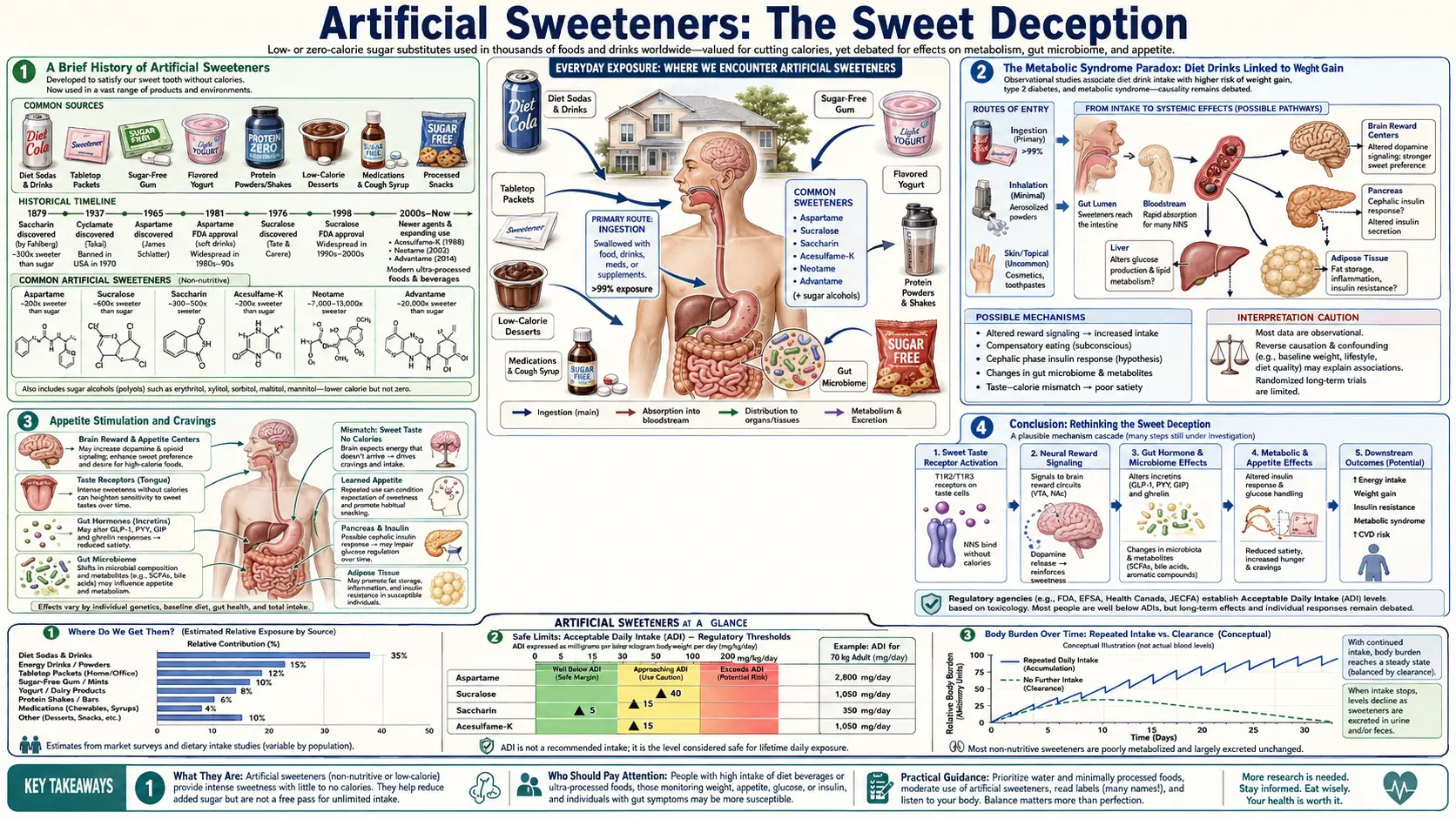
Table of Contents
- A Brief History of Artificial Sweeteners
- The Six Major Artificial Sweeteners
- How Artificial Sweeteners Work: Sweet Taste Receptor Activation Without Calories
- Gut Microbiome Disruption: A Landmark Discovery
- The Metabolic Syndrome Paradox: Diet Drinks Linked to Weight Gain
- Glucose Intolerance and Insulin Response Confusion
- Cancer Concerns
- Neurological Effects
- Cardiovascular Risk
- Appetite Stimulation and Cravings
- Natural Alternatives: Safer Options?
- Why "Zero Calories" Does Not Mean Safe
- The Regulatory Failure
- Conclusion: Rethinking the Sweet Deception
- Connections
- Featured Videos
Artificial sweeteners are synthetic sugar substitutes that provide intense sweetness without the calories of natural sugar. Marketed as a healthier alternative to sugar, these chemical compounds have become ubiquitous in the modern food supply, appearing in everything from diet sodas and sugar-free gum to yogurt, baked goods, and even medications. However, a growing body of scientific evidence suggests that artificial sweeteners may be far from the harmless sugar replacements they are claimed to be. From gut microbiome disruption to metabolic confusion, neurological effects to cancer concerns, these substances carry risks that the food industry has long sought to minimize.
A Brief History of Artificial Sweeteners
The story of artificial sweeteners begins with accidental discoveries. Saccharin, the first artificial sweetener, was discovered in 1879 by Constantin Fahlberg at Johns Hopkins University when he noticed a sweet taste on his hands after working with coal tar derivatives. Cyclamate followed in 1937, discovered by a graduate student who set his cigarette down on a lab bench and noticed the sweet taste. Aspartame was discovered in 1965 by James Schlatter, a chemist working on an anti-ulcer drug, who licked his finger and noticed an intensely sweet taste. Sucralose was discovered in 1976 when a researcher misheard instructions to "test" a chlorinated sugar compound and instead "tasted" it.
This pattern of accidental discovery is notable: none of these substances were designed as food. They are industrial chemicals that happened to activate sweet taste receptors on the human tongue. Their journey from laboratory accidents to ingredients consumed by billions of people worldwide raises fundamental questions about the adequacy of safety testing and regulatory oversight.
The Six Major Artificial Sweeteners
Six artificial sweeteners are currently approved by the U.S. FDA for use in food and beverages. Each has a unique chemical structure, potency, and safety profile:
- Aspartame (NutraSweet, Equal) — Discovered in 1965 and approved by the FDA in 1981, aspartame is approximately 200 times sweeter than sugar. It is composed of two amino acids (phenylalanine and aspartic acid) linked by a methanol molecule. It is found in over 6,000 products worldwide and was classified as "possibly carcinogenic to humans" (Group 2B) by the WHO/IARC in July 2023. It is the most studied and most controversial artificial sweetener.
- Sucralose (Splenda) — Approved by the FDA in 1998, sucralose is approximately 600 times sweeter than sugar. It is a chlorinated sugar molecule, meaning three hydroxyl groups on the sucrose molecule have been replaced with chlorine atoms. Despite marketing claims that it "passes through the body unchanged," research shows it can alter gut bacteria, affect glucose metabolism, and generate toxic compounds when heated.
- Saccharin (Sweet'N Low) — The oldest artificial sweetener, saccharin is 300-400 times sweeter than sugar. It was temporarily banned in Canada and required warning labels in the United States after studies in the 1970s linked it to bladder cancer in laboratory rats. While the warning labels were removed in 2000, questions about its long-term safety persist.
- Acesulfame Potassium (Ace-K, Sunett, Sweet One) — Approved in 1988, acesulfame potassium is approximately 200 times sweeter than sugar. It contains methylene chloride, a known carcinogen. It is frequently combined with other sweeteners to mask its bitter aftertaste and is found in thousands of products, often without prominent labeling. Its original safety testing has been widely criticized as inadequate.
- Neotame (Newtame) — Approved by the FDA in 2002, neotame is a derivative of aspartame that is 7,000 to 13,000 times sweeter than sugar. Because it is used in such small quantities, it has received less scrutiny than other sweeteners. However, it shares structural similarities with aspartame and raises many of the same concerns. Unlike aspartame, it does not carry a PKU warning because it is used in such minute amounts.
- Advantame — The newest FDA-approved artificial sweetener (2014), advantame is an aspartame derivative that is approximately 20,000 times sweeter than sugar, making it the most potent sweetener on the market. Like neotame, it is used in extremely small quantities and has received relatively little independent research. Its long-term effects on human health remain largely unknown.
How Artificial Sweeteners Work: Sweet Taste Receptor Activation Without Calories
Artificial sweeteners exploit the biology of taste perception. When you consume sugar, it binds to the T1R2/T1R3 sweet taste receptor heterodimer on your tongue, triggering a signaling cascade that your brain interprets as "sweet." Artificial sweeteners bind to these same receptors, often with much greater affinity than sugar, which is why they taste hundreds or thousands of times sweeter. However, because they are not metabolized for energy in the same way as sugar, they provide few or no calories.
This dissociation between sweet taste and caloric content is precisely the problem. The human body evolved over millions of years to associate sweet taste with incoming energy (calories). When sweet taste receptors are activated but no calories arrive, the body's metabolic regulatory systems become confused. This "metabolic deception" has far-reaching consequences that scientists are only beginning to fully understand.
Sweet taste receptors are not limited to the tongue. They are also found throughout the gastrointestinal tract, in the pancreas, in the brain, and even in fat tissue. When artificial sweeteners activate these extra-oral sweet taste receptors, they can trigger insulin release, alter gut hormone secretion, change nutrient absorption, and affect appetite regulation — all without providing any actual energy. This mismatch between signaling and substance creates metabolic chaos.
Gut Microbiome Disruption: A Landmark Discovery
One of the most significant findings in artificial sweetener research came from a landmark 2014 study published in the journal Nature by Suez et al. The research team at the Weizmann Institute of Science in Israel demonstrated that artificial sweeteners — saccharin, sucralose, and aspartame — directly alter the composition and function of the gut microbiome, leading to glucose intolerance.
The study showed that mice fed artificial sweeteners developed marked glucose intolerance compared to mice fed sugar or plain water. When the researchers transplanted gut bacteria from sweetener-fed mice into germ-free mice, the recipient mice also developed glucose intolerance, proving that the microbiome changes were causally responsible for the metabolic dysfunction. In human subjects, just one week of saccharin consumption was enough to significantly alter gut bacterial composition and induce glucose intolerance in a subset of participants.
A follow-up study by the same group, published in Cell in 2022, expanded these findings to all four tested sweeteners (saccharin, sucralose, aspartame, and stevia) and confirmed that they each uniquely alter the human gut microbiome. The gut microbiome plays a critical role in immune function, mental health, metabolic regulation, and protection against pathogens. Disrupting this ecosystem with artificial sweeteners may have consequences far beyond glucose metabolism.
The Metabolic Syndrome Paradox: Diet Drinks Linked to Weight Gain
Perhaps the most ironic finding in artificial sweetener research is that the very products marketed for weight loss are consistently associated with weight gain. Multiple large-scale epidemiological studies have found that regular consumption of artificially sweetened beverages is associated with:
- Increased body weight and BMI — The San Antonio Heart Study followed over 3,600 adults for 7-8 years and found that those who consumed artificially sweetened beverages had significantly higher BMIs and were more likely to become overweight or obese than those who did not consume them.
- Greater risk of metabolic syndrome — A 2009 study in Diabetes Care following over 6,800 participants found that daily consumption of diet soda was associated with a 36% greater relative risk of metabolic syndrome and a 67% greater relative risk of type 2 diabetes compared to non-consumption.
- Increased waist circumference — The MESA (Multi-Ethnic Study of Atherosclerosis) study found that daily diet soda drinkers had a 70% greater increase in waist circumference over a decade compared to non-drinkers.
- Higher rates of type 2 diabetes — The Framingham Heart Study Offspring cohort found that consumption of more than one diet soda per day was associated with a significantly increased risk of developing type 2 diabetes.
While industry advocates argue that these associations are due to "reverse causation" (people who are already overweight choose diet products), controlled laboratory studies support a direct causal mechanism: artificial sweeteners disrupt the learned association between sweet taste and caloric content, leading to increased food intake, reduced thermogenesis, and impaired satiety signaling.
Glucose Intolerance and Insulin Response Confusion
The body's insulin response system is finely tuned to respond to incoming nutrients. When you taste something sweet, the cephalic phase insulin response (CPIR) is triggered, preparing the body for incoming glucose. When artificial sweeteners trigger this response but no glucose arrives, the resulting insulin spike can actually lower blood sugar, triggering hunger and cravings for calorie-dense foods.
Research has shown that sucralose can increase insulin levels by up to 20% even when consumed without any actual sugar. Acesulfame potassium has been shown to stimulate insulin secretion from pancreatic beta cells in a dose-dependent manner. Over time, this repeated "false alarm" insulin signaling may contribute to insulin resistance, a precursor to type 2 diabetes and metabolic syndrome.
A 2020 study published in Cell Metabolism found that consuming sucralose in combination with carbohydrates (as commonly occurs in processed foods) impaired insulin sensitivity and disrupted the gut-brain neural response to sugar, effectively "re-wiring" the brain's metabolic response pathways after just two weeks of exposure.
Cancer Concerns
The relationship between artificial sweeteners and cancer has been debated for decades. In July 2023, the World Health Organization's International Agency for Research on Cancer (IARC) classified aspartame as "possibly carcinogenic to humans" (Group 2B), based on limited evidence linking it to hepatocellular carcinoma (liver cancer) in humans and supporting evidence from animal studies.
The Ramazzini Institute in Italy has conducted multiple large-scale, lifetime animal studies on aspartame, consistently finding increased rates of lymphomas, leukemias, and other cancers in rodents exposed to doses within the range of human consumption. Saccharin was linked to bladder cancer in rats in the 1970s, leading to its near-ban in the United States. Sucralose has been shown to be genotoxic (DNA-damaging) at high doses in recent studies.
A large French cohort study (NutriNet-Santé) published in PLOS Medicine in 2022, following over 102,000 adults, found that higher consumption of artificial sweeteners (particularly aspartame and acesulfame potassium) was associated with increased overall cancer risk, with specific elevations in breast cancer and obesity-related cancers.
Neurological Effects
Several artificial sweeteners have been linked to neurological symptoms and neurotoxicity concerns:
- Headaches and migraines — Aspartame is one of the most commonly reported dietary triggers for migraines. A randomized, double-blind, crossover study found that aspartame significantly increased headache frequency in migraine sufferers.
- Seizures — Animal studies have shown that aspartame can lower the seizure threshold. The U.S. Air Force and Navy issued warnings to pilots about consuming aspartame due to concerns about seizure risk during flight.
- Excitotoxicity — Aspartame breaks down into aspartic acid, an excitatory neurotransmitter. At high concentrations, excitatory amino acids can overstimulate and damage neurons, a process known as excitotoxicity.
- Mood disturbances — A study published in Research in Nursing & Health found that individuals consuming high-aspartame diets showed more irritability, depression, and impaired cognitive performance compared to those on low-aspartame diets.
- Methanol toxicity — Aspartame metabolism produces methanol, which is further converted to formaldehyde and formic acid in the body. While industry argues the amounts are too small to be harmful, chronic low-level exposure to formaldehyde is a known health risk.
Cardiovascular Risk
Emerging research has linked artificial sweetener consumption to increased cardiovascular risk. A 2022 study published in the BMJ followed over 103,000 participants from the NutriNet-Santé cohort and found that higher artificial sweetener intake was associated with increased risk of cardiovascular disease, including coronary heart disease and cerebrovascular disease (stroke).
Specifically, aspartame intake was associated with increased cerebrovascular events, while acesulfame potassium and sucralose were associated with increased coronary heart disease risk. These associations remained significant after adjusting for multiple confounding factors including age, sex, BMI, physical activity, smoking status, and overall diet quality.
The Nurses' Health Study and the Health Professionals Follow-Up Study, together encompassing over 120,000 participants followed for decades, have also reported associations between artificially sweetened beverage consumption and increased cardiovascular mortality.
Appetite Stimulation and Cravings
Rather than reducing appetite, artificial sweeteners may paradoxically increase it. Research using functional MRI (fMRI) brain imaging has shown that artificial sweeteners activate reward centers in the brain but fail to provide the satisfaction signal that real sugar delivers. This incomplete reward activation can lead to increased cravings for sweet and calorie-dense foods.
A study published in Cell Metabolism found that fruit flies fed artificial sweeteners consumed 30% more calories from real food when it became available, and the same neurobiological pathway was confirmed in mice. The mechanism involves the mismatch between sweet taste signaling and energy content, which triggers a compensatory increase in appetite through the NPY (neuropeptide Y) pathway.
Animal studies have consistently shown that exposure to artificial sweeteners leads to increased total caloric consumption compared to sugar or water controls. The body, "cheated" by the calorie-free sweetness, compensates by driving greater food intake at subsequent meals.
Natural Alternatives: Safer Options?
For those seeking to reduce sugar intake, several natural sweetener alternatives exist, though even these should be used in moderation:
- Stevia — Derived from the leaves of the Stevia rebaudiana plant, stevia has been used for centuries in South America. While generally considered safer than synthetic sweeteners, the 2022 Weizmann Institute study found that stevia also alters the gut microbiome. Highly processed stevia extracts (Reb A) differ significantly from whole-leaf stevia.
- Monk fruit (Luo Han Guo) — Extracted from the monk fruit (Siraitia grosvenorii), this sweetener contains mogrosides, which provide sweetness without calories. It has been used in traditional Chinese medicine for centuries. Less research exists on its long-term effects, but it does not appear to share the metabolic disruption profile of synthetic sweeteners.
- Erythritol — A sugar alcohol that occurs naturally in some fruits, erythritol provides about 70% of the sweetness of sugar with minimal calories. However, a 2023 study in Nature Medicine linked erythritol to increased risk of heart attack and stroke by promoting platelet clotting. This finding warrants caution, particularly for those with cardiovascular risk factors.
- Allulose — A rare sugar naturally found in small quantities in figs, raisins, and maple syrup. It provides about 70% of the sweetness of sugar with only 10% of the calories. Early research suggests it may have beneficial metabolic effects, but long-term human studies are limited.
Why "Zero Calories" Does Not Mean Safe
The food industry has successfully promoted a simple narrative: sugar has calories, calories cause weight gain, therefore replacing sugar with zero-calorie sweeteners must be beneficial. This logic is dangerously simplistic. The human body is not a calorimeter. Metabolic processes are governed by complex hormonal, neurological, and microbial signaling systems that respond not just to calories but to the chemical nature of what we consume.
Artificial sweeteners interact with sweet taste receptors throughout the body, alter gut bacterial ecosystems, confuse insulin signaling, disrupt learned associations between taste and nutrition, and may directly damage DNA or promote cancer cell growth. The absence of calories does not equate to the absence of biological activity.
In May 2023, the World Health Organization issued a guideline recommending against the use of non-sugar sweeteners for weight control, stating that long-term use may increase the risk of type 2 diabetes, cardiovascular disease, and mortality in adults. This landmark recommendation from the world's leading public health authority reflects the weight of evidence that has accumulated against these substances.
The Regulatory Failure
The approval histories of artificial sweeteners reveal troubling patterns of industry influence over regulatory decisions. Aspartame was approved despite objections from FDA scientists and after political intervention. Acesulfame potassium was approved based on studies widely criticized as inadequate. The "generally recognized as safe" (GRAS) designation process allows companies to self-certify the safety of food additives with minimal FDA oversight.
Most safety studies relied upon for regulatory approval were conducted or funded by the manufacturers themselves, creating an inherent conflict of interest. Independent studies have consistently found more concerning results than industry-funded research, a pattern known as the "funding effect" that has been documented across multiple areas of nutrition science.
Conclusion: Rethinking the Sweet Deception
The promise of artificial sweeteners — all the sweetness with none of the consequences — was always too good to be true. Decades of research have revealed that these synthetic compounds interact with the human body in complex and often harmful ways. From disrupting the gut microbiome to confusing metabolic signaling, from potential carcinogenicity to cardiovascular risk, the evidence demands a fundamental reassessment of their role in our food supply.
Rather than seeking chemical shortcuts to sweetness, a healthier approach involves gradually reducing overall sweet taste preferences, choosing whole foods, and if sweeteners are needed, using small amounts of natural options while remaining aware that even these are not without potential effects. The human body evolved to process real food, not laboratory chemicals designed to trick our taste receptors.
Related Pages
- Aspartame (NutraSweet, Equal): The Most Controversial Sweetener
- Sucralose (Splenda): Not As Safe As Marketed
- Acesulfame Potassium (Ace-K): The Hidden Sweetener
Connections
- All Toxins
- Aspartame
- Sucralose
- Acesulfame Potassium
- Food Additives
- MSG
- Food Dyes
- Banned Additives
- Type 2 Diabetes
- Metabolic Syndrome
- Gut Microbiome
- Gut Brain Axis
- Cancer
- Aspartic Acid
- Phenylalanine
- Cardiovascular Disease
- Stroke
- Bladder Cancer
- Gut Healing