Sucralose (Splenda): Not As Safe As Marketed
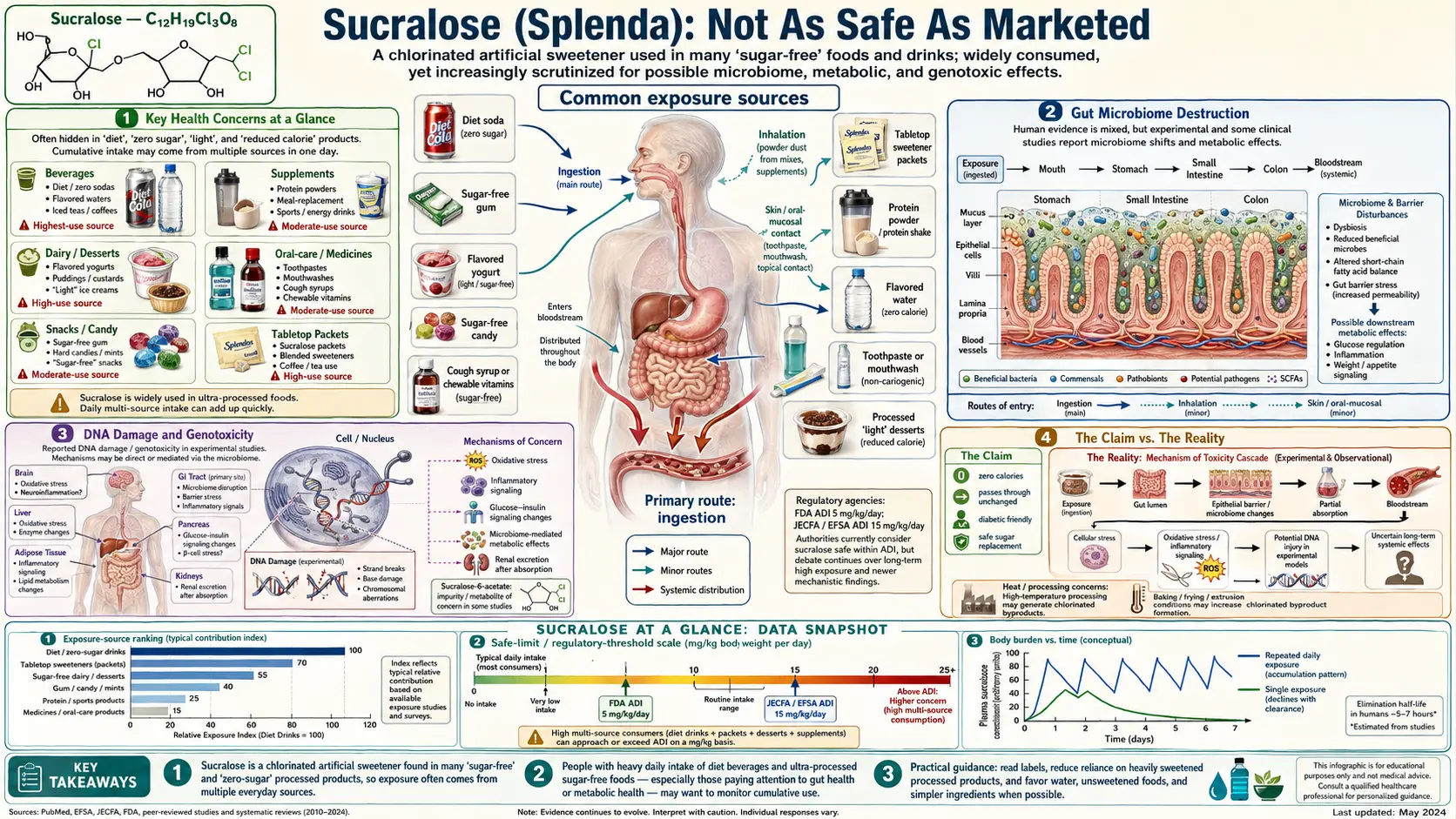
Sucralose, marketed primarily under the brand name Splenda, has become one of the most popular artificial sweeteners in the world since its FDA approval in 1998. Positioned as a "natural" alternative to other artificial sweeteners through the marketing slogan "Made from sugar, so it tastes like sugar," sucralose has achieved an aura of safety that the scientific evidence increasingly does not support. Sucralose is a synthetic organochlorine compound — the same chemical family as DDT and PCBs — and independent research since 2008 has documented effects on the gut microbiome, the intestinal barrier, and DNA, plus the generation of toxic compounds (including chloropropanols) when heated above ~119°C.
Table of Contents
- Key Health Concerns at a Glance
- A Chlorinated Sugar Molecule
- The "Made from Sugar" Deception
- Gut Microbiome Destruction
- Toxic Compounds When Heated
- Thymus Shrinkage in Animal Studies
- Glucose and Insulin Effects
- DNA Damage and Genotoxicity
- Cooking Safety Concerns
- Bioaccumulation and Environmental Persistence
- The Claim vs. The Reality
- Research Papers and References
- Connections
- Featured Videos
Key Health Concerns at a Glance
The following summarizes the primary evidence-based concerns about sucralose consumption. Each is explored in more depth below, with supporting citations in the Research Papers section.
- Synthetic organochlorine compound – Three hydroxyl groups on sucrose are replaced with chlorine atoms, producing a compound chemically related to DDT and PCBs rather than to sugar.
- Gut microbiome disruption – Abou-Donia et al. (2008) documented up to 50% reductions in beneficial anaerobic bacteria, with effects persisting 12+ weeks after cessation.
- Genotoxic thermal breakdown products – Heating above 119°C produces chloropropanols (including genotoxic 1,3-DCP) and, at higher temperatures, dioxins and polychlorinated dibenzofurans.
- Sucralose-6-acetate is genotoxic – A 2023 study in J Toxicol Environ Health B identified this metabolite and impurity as clastogenic, inflammation-promoting, and permeability-increasing in intestinal epithelial cells.
- Glucose intolerance via microbiome – Suez et al. (Nature, 2014) showed artificial sweeteners (including sucralose) induce glucose intolerance in mice and humans through microbiome alterations.
- Insulin response – Sucralose has been shown to raise plasma insulin ~20% in non-habitual users (Pepino et al., 2013) and impair insulin sensitivity when co-ingested with carbohydrates (Dalenberg et al., 2020).
- Thymus involution – Pre-approval rodent studies documented thymus atrophy of up to ~40%, raising long-standing immunotoxicity questions.
- Environmental persistence – Resistant to wastewater treatment; now detected in surface water, groundwater, and drinking water worldwide.
A Chlorinated Sugar Molecule
At its core, sucralose is a synthetic organochlorine compound. It is manufactured by selectively replacing three hydroxyl groups (-OH) on the sucrose (table sugar) molecule with three chlorine atoms. This chlorination fundamentally changes the molecule's properties — it can no longer be recognized or metabolized by the body's normal sugar-processing enzymes, which is why it provides no calories.
The presence of chlorine atoms is significant. Organochlorine compounds are a class of chemicals that includes many notorious environmental toxins, including DDT, PCBs, and dioxins. While the food industry argues that the chlorine in sucralose is "tightly bound" and therefore harmless, this ignores the fact that metabolic processes and cooking can break these bonds, releasing chlorine-containing byproducts. The class of organochlorines is associated with bioaccumulation, endocrine disruption, and carcinogenicity.
The "Made from Sugar" Deception
Splenda's marketing campaign — "Made from sugar, so it tastes like sugar" — is one of the most successful and misleading food marketing slogans in history. While sucralose does begin as a sugar molecule, the final product is as different from sugar as chloroform (CHCl3) is from methane (CH4). The chemical transformation that replaces hydroxyl groups with chlorine atoms creates an entirely new compound with different properties, different metabolic fate, and different biological effects.
In 2007, the Sugar Association successfully sued McNeil Nutritionals (Splenda's manufacturer) over this misleading claim, and Splenda was forced to change its advertising. However, the perception of sucralose as a "natural" product persists in public consciousness, contributing to a false sense of safety.
Gut Microbiome Destruction
One of the most alarming findings about sucralose is its devastating effect on beneficial gut bacteria. A landmark study by Abou-Donia et al. (2008), published in the Journal of Toxicology and Environmental Health, found that sucralose administered to rats at doses approved by the FDA:
- Reduced beneficial gut bacteria by up to 50% — Specifically, the populations of lactobacilli, bifidobacteria, and other beneficial anaerobic bacteria were dramatically reduced. These bacteria play critical roles in immune function, vitamin synthesis, pathogen defense, and metabolic regulation.
- Elevated intestinal pH — The reduction in beneficial bacteria altered the gut environment, making it more hospitable to pathogenic organisms.
- Increased body weight — Despite being a zero-calorie sweetener, rats consuming sucralose gained more weight than controls, consistent with microbiome-mediated metabolic disruption.
- Elevated expression of P-glycoprotein (P-gp) — This efflux transporter can reduce the bioavailability of medications, meaning sucralose consumption could potentially interfere with the effectiveness of pharmaceutical drugs.
- Effects persisted after cessation — The microbiome damage was not fully reversed even 12 weeks after sucralose consumption stopped, suggesting lasting or potentially permanent alterations to the gut ecosystem.
These findings were confirmed and extended by the Suez et al. (2014) Nature study, which showed that sucralose consumption induced glucose intolerance through microbiome alterations, and by a 2022 follow-up in Cell demonstrating unique microbiome changes in human subjects consuming sucralose.
Toxic Compounds When Heated: Cooking with Sucralose
Sucralose was originally marketed as stable at high temperatures and suitable for cooking and baking. However, research has revealed that heating sucralose generates a range of toxic compounds:
- Chloropropanols — When sucralose is heated above 119 degrees Celsius (247 degrees Fahrenheit), it begins to degrade and release chloropropanols, a class of compounds that are known to be toxic and potentially carcinogenic. The compound 1,3-dichloro-2-propanol (1,3-DCP), in particular, is classified as a genotoxic carcinogen.
- Dioxins and related compounds — At higher temperatures, particularly in the presence of other food components, sucralose degradation can generate polychlorinated dibenzo-p-dioxins (PCDDs) and polychlorinated dibenzofurans (PCDFs) — among the most toxic chemicals known to science. Even trace amounts of dioxins are considered hazardous.
- Hydrogen chloride (HCl) gas — Thermal decomposition of sucralose releases hydrochloric acid gas, which can be inhaled during cooking.
- Polycyclic aromatic hydrocarbons (PAHs) — These known carcinogens can form when sucralose degrades in the presence of fats at cooking temperatures.
A 2013 study published in Food Chemistry demonstrated that sucralose undergoes significant thermal degradation at temperatures commonly used in baking and cooking, generating multiple chlorinated organic compounds. A 2023 study in the Journal of Toxicology and Environmental Health found that sucralose-6-acetate, a thermal breakdown product, is genotoxic (damages DNA) and causes "leaky gut" by damaging the intestinal epithelial barrier.
Thymus Shrinkage in Animal Studies
Pre-approval animal studies submitted to the FDA revealed that sucralose caused shrinkage (involution) of the thymus gland in rats at doses within the range of potential human consumption. The thymus is a critical organ of the immune system, responsible for the maturation of T-lymphocytes (T-cells), which are essential for adaptive immunity and cancer surveillance.
Thymus shrinkage of up to 40% was observed in some animal groups. The FDA dismissed this finding, attributing it to stress-related changes rather than direct toxicity. However, independent reviewers have noted that the magnitude of thymus atrophy observed exceeded what would typically be expected from stress alone, and the finding raises serious questions about sucralose's potential immunotoxicity, particularly with long-term chronic exposure.
Glucose and Insulin Effects
Despite containing no calories or sugar, sucralose has been shown to affect glucose metabolism and insulin responses:
- Insulin spikes — A 2013 study published in Diabetes Care found that sucralose consumption increased plasma insulin levels by approximately 20% in obese individuals who did not regularly consume artificial sweeteners. This insulin increase occurred without any glucose intake, demonstrating that sucralose directly stimulates the pancreatic beta cells.
- Impaired insulin sensitivity when combined with carbohydrates — A 2020 study in Cell Metabolism by Dalenberg et al. found that consuming sucralose in combination with carbohydrates (as commonly occurs in processed foods) impaired insulin sensitivity and disrupted the gut-brain neural pathways that normally regulate glucose metabolism. Just two weeks of exposure was sufficient to produce these changes.
- Altered incretin hormone responses — Sucralose has been shown to affect the secretion of GLP-1 and GIP, incretin hormones that play important roles in glucose homeostasis and appetite regulation.
- Glucose intolerance through microbiome changes — As demonstrated by Suez et al. (2014), sucralose-induced microbiome alterations directly cause glucose intolerance, creating a paradox where a product used to manage blood sugar actually worsens glucose control.
DNA Damage and Genotoxicity
Recent research has raised serious concerns about sucralose's genotoxic potential:
- Sucralose-6-acetate genotoxicity — A 2023 study published in the Journal of Toxicology and Environmental Health, Part B found that sucralose-6-acetate, a metabolite produced when sucralose is digested (and also found as an impurity in commercial sucralose), is genotoxic — meaning it damages DNA. The study found that sucralose-6-acetate was clastogenic (breaks chromosomes) at concentrations achievable from normal dietary intake.
- Intestinal barrier damage — The same study found that both sucralose and sucralose-6-acetate significantly increased the expression of genes associated with inflammation, oxidative stress, and cancer in intestinal epithelial cells. They also increased intestinal permeability ("leaky gut"), which is associated with systemic inflammation and autoimmune conditions.
- Oxidative DNA damage — Multiple studies have demonstrated that sucralose can increase reactive oxygen species (ROS) production and oxidative stress markers in various tissues, leading to oxidative DNA damage that can contribute to mutagenesis and carcinogenesis.
Cooking Safety Concerns: The Hidden Danger
Millions of consumers use Splenda for cooking and baking, unaware that heating sucralose creates toxic degradation products. This is particularly concerning because:
- Common baking temperatures exceed the degradation threshold — Most baking occurs at 175-230 degrees Celsius (350-450 degrees Fahrenheit), well above the 119 degrees Celsius at which sucralose begins to break down.
- Interaction with food components — The presence of fats, proteins, and glycerol in baked goods can catalyze additional harmful reactions with degrading sucralose.
- Cumulative exposure — Home bakers who regularly use sucralose are exposed to thermal degradation products repeatedly over years or decades.
- No cooking warnings on packaging — Despite the known thermal instability, most sucralose products are still marketed as suitable for cooking and baking without adequate safety warnings about degradation products.
Bioaccumulation Concerns
The food industry has long claimed that sucralose "passes through the body unchanged," implying it has no biological impact. This claim is misleading on multiple levels:
- Not entirely unabsorbed — While the majority of ingested sucralose is excreted, studies show that approximately 2-8% is absorbed and can accumulate in tissues over time. Given chronic daily consumption, even small percentages of absorption can lead to meaningful tissue concentrations.
- Metabolites are produced — The body does metabolize a portion of absorbed sucralose, producing metabolites including sucralose-6-acetate, which has been shown to be genotoxic. The claim of "no metabolism" is factually incorrect.
- Environmental persistence — Sucralose is remarkably resistant to breakdown in the environment. It has been detected in surface water, groundwater, and treated wastewater worldwide because conventional water treatment processes cannot remove it. It has been found in drinking water supplies, raising concerns about low-level chronic exposure even among those who do not deliberately consume it.
- Fat-soluble accumulation — As an organochlorine compound, sucralose has the potential for bioaccumulation in fatty tissues, similar to other organochlorine compounds like PCBs and DDT, though at much lower levels.
The Claim vs. The Reality
The gap between sucralose's marketed image and the scientific evidence is substantial:
- Claim: "Made from sugar" — Reality: It is a synthetic organochlorine compound that shares structural features with pesticides and industrial chemicals.
- Claim: "Passes through the body unchanged" — Reality: A portion is absorbed and metabolized, producing genotoxic metabolites. Even the unabsorbed portion destroys gut bacteria as it passes through the intestinal tract.
- Claim: "Safe for cooking" — Reality: Heating generates chloropropanols, dioxins, and other toxic degradation products.
- Claim: "Helps with weight management" — Reality: Epidemiological studies consistently associate sucralose consumption with weight gain, metabolic syndrome, and type 2 diabetes.
- Claim: "No effect on blood sugar" — Reality: It stimulates insulin release, impairs insulin sensitivity when combined with carbohydrates, and causes glucose intolerance through microbiome disruption.
Sucralose represents a case study in how effective marketing can obscure scientific reality. Presented to consumers as a safe, natural-adjacent sweetener that simply passes through the body without consequence, it is in fact a synthetic chlorinated compound that devastates gut bacteria, generates carcinogenic compounds when heated, damages DNA, disrupts glucose metabolism, and accumulates both in the body and in the environment.
Research Papers and References
The following are landmark and frequently cited research papers underpinning the claims on this page. Links resolve to publisher DOIs, PubMed records, or the originating regulatory body.
Biological Issues Overview
- Schiffman SS, Rother KI. Sucralose, a synthetic organochlorine sweetener: overview of biological issues. J Toxicol Environ Health B Crit Rev. 2013;16(7):399-451.
Gut Microbiome and Metabolic Effects
- Suez J, Korem T, Zeevi D, et al. Artificial sweeteners induce glucose intolerance by altering the gut microbiota. Nature. 2014;514:181-186.
- Abou-Donia MB et al. Splenda alters gut microflora and increases intestinal P-glycoprotein and cytochrome P-450 in male rats. J Toxicol Environ Health A. 2008;71(21):1415-1429 — PubMed.
- Pepino MY et al. Sucralose affects glycemic and hormonal responses to an oral glucose load. Diabetes Care. 2013;36(9):2530-2535 — PubMed.
- Dalenberg JR et al. Short-term consumption of sucralose with, but not without, carbohydrate impairs neural and metabolic sensitivity to sugar in humans. Cell Metab. 2020;31(3):493-502 — PubMed.
Genotoxicity and Thermal Degradation
- Schiffman SS et al. Toxicological and pharmacokinetic properties of sucralose-6-acetate and its parent sucralose: in vitro screening assays. J Toxicol Environ Health B. 2023 — PubMed.
- PubMed — Sucralose thermal degradation and chloropropanol formation.
Regulatory and Authoritative Resources
- FDA — Aspartame and Other Sweeteners in Food (includes sucralose).
- European Food Safety Authority (EFSA).
- World Health Organization.
- PubMed — Sucralose health effects literature.
Connections
- All Toxins
- Artificial Sweeteners
- Aspartame
- Acesulfame Potassium
- MSG
- Food Additives
- Pesticides
- Banned Additives
- Detox Protocols
- Type 2 Diabetes
- Gut Microbiome
- Gut Brain Axis
- Dioxins
- Leaky Gut
- Cancer
- Blood Sugar
- Oxidative Stress