Toxins
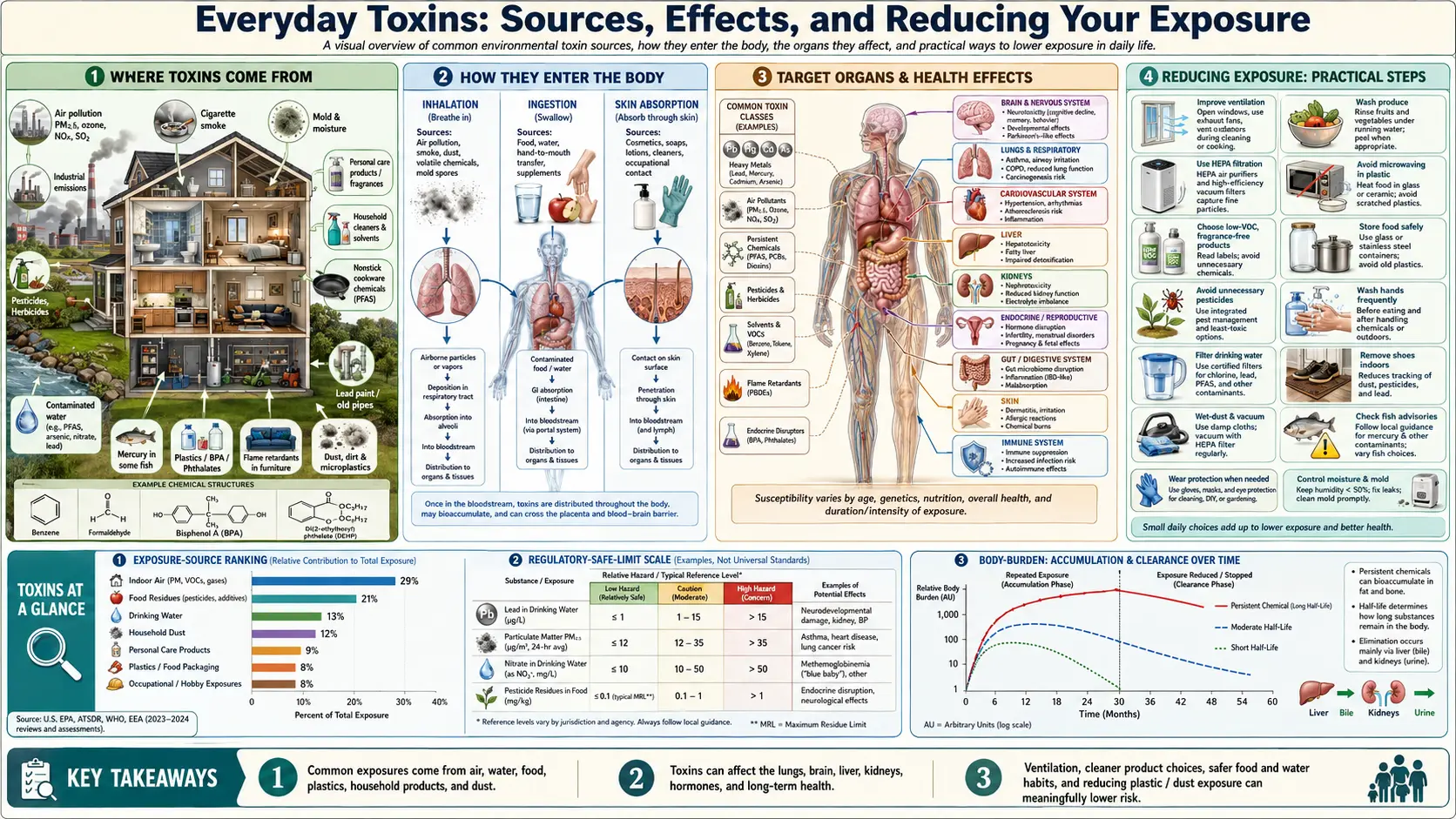

A comprehensive guide to hidden toxins in our food supply, homes, and environment. Understanding what you're exposed to is the first step toward reducing your toxic burden and protecting your health.
Food Toxins
- Ultra-Processed Foods (UPF) — The NOVA classification and the hyperpalatable-food problem
- Seed Oils — Canola, soybean, corn: linoleic acid, oxidation, and what the evidence actually says
- Artificial Sweeteners — Aspartame, sucralose, acesulfame potassium
- Food Additives — Azodicarbonamide, brominated vegetable oil, potassium bromate
- Food Dyes — Red 3, Red 40, Yellow 5, and dyes banned worldwide
- Preservatives — BHA, BHT, sodium nitrite
- Processed Oils — Trans fats and industrial seed oils
- MSG — Monosodium glutamate and hidden sources
- Nitrates & Nitrites — The cured-meat preservative behind processed meat's cancer risk — yet the same nitrate in vegetables is beneficial; the source is everything
- Pesticides — Glyphosate and agricultural chemicals
- Heavy & Toxic Metals — Lead, mercury, arsenic, cadmium and more — full coverage in the Toxic Minerals section
- BPA & Plastics — Microplastics and endocrine disruptors
- Banned Additives — US vs EU food safety standards
- Acrylamide — Cooking byproduct in French fries and coffee; IARC Group 2A carcinogen from the Maillard reaction
Environmental & Lifestyle Toxins
- Asbestos — Fibrous mineral in pre-1980s buildings — the cause of mesothelioma, asbestosis, and lung cancer, with decades-long latency
- Benzene — A Group 1 carcinogen in gasoline, tobacco smoke, and some recalled aerosol products; linked to leukemia (AML)
- Carbon Monoxide — The silent killer — a colorless, odorless gas from faulty furnaces, generators, and cars that starves the body of oxygen
- Formaldehyde — An indoor-air irritant and Group 1 carcinogen off-gassing from pressed-wood furniture, some cosmetics, and smoke
- VOCs (Volatile Organic Compounds) — The off-gassing indoor-air chemicals from paints, cleaners, air fresheners, and new furniture; how to test and ventilate
- Radon — A radioactive soil gas that seeps into homes — the #2 cause of lung cancer after smoking, and both testable and fixable
- Secondhand Smoke — Involuntary tobacco smoke with no safe level — a proven cause of lung cancer and heart disease, and especially harmful to children
- Microplastics & Nanoplastics — In blood, placenta, testes, and atherosclerotic plaque
- PFAS (Forever Chemicals) — In 98% of Americans; linked to cancer, thyroid disease, and elevated cholesterol
- Fluoride in Water — Neurotoxicity, thyroid disruption, and filtration
- EMF Exposure — Electromagnetic fields from devices and cell towers
- Mold & Mycotoxins — CIRS, water-damaged buildings, and detox protocols
- Household Chemicals — Cleaning products, fragrances, PFAS, and flame retardants
- Flame Retardants — PBDEs and organophosphates in furniture foam and electronics; house dust is the main exposure route, and the trend is encouraging
- Heavy Metals in Cosmetics — Lead in lipstick, mercury in creams, safer alternatives
- Phthalates — PVC plasticizers in food packaging and personal care; DEHP, DBP, BBP suppress testosterone and disrupt hormones
- Parabens — Cosmetic preservatives (methylparaben, propylparaben) that mimic estrogen and accumulate in breast tissue
- Triclosan — The antibacterial-soap chemical the FDA pulled from consumer washes in 2016 — plain soap works just as well
- Glyphosate — The world's most-used herbicide (Roundup); an honest look at the IARC-versus-regulators cancer debate
- Perchlorate — A rocket-fuel and water contaminant that blocks the thyroid's iodine uptake
- Air Pollution — PM2.5 — Fine combustion particles ≤2.5 µm; cardiovascular, neurological, and lung cancer risk; WHO guideline 5 µg/m³
Featured Resource
Lead Safe Mama - Independent Consumer Safety & Childhood Lead Prevention
Run by federal award-winning advocate Tamara Rubin, Lead Safe Mama (tamararubin.com) is a community-funded, independent testing and advocacy organization dedicated to protecting children from Lead poisoning and toxic consumer goods. With over 4,500 free articles, independent third-party lab reports on foods, supplements, and household products, and a track record of triggering six FDA and CPSC product recalls, it is one of the most comprehensive and trusted resources for families seeking science-based consumer safety information.